
24/7 Customer Support

Free returns

Same-day & Next-day Delivery

Quality Guaranteed

Unlock Your Welcome Offers: FREE Delivery | Up to 80% OFF | Free 30-day JoyPlus trial
Download the APP
In competitive gaming, a fraction of a second can be the difference between victory and defeat. Your reaction time is crucial, but so is the responsiveness of your equipment. A heavy, laggy mouse can lead to missed shots and physical fatigue during long sessions. For players seeking to refine their aim and speed, a lightweight wireless gaming mouse is no longer a luxury but a core component of a high-performance setup.
This guide is designed to help you navigate the key specifications of modern gaming mice. We will break down the technology that matters—from polling rates to switch types—and provide clear, practical advice to help you find a mouse that complements your playstyle, without the marketing fluff.
When selecting an esports gaming mouse, focusing on a few key performance indicators can help you make an informed decision.
The trend towards an ultralight gaming mouse is driven by performance. A mouse weighing under 65 grams reduces the inertia you have to overcome, allowing for quicker flicks and smoother tracking. This reduction in weight also minimises strain on your wrist and arm, which is a significant factor for comfort and consistency during marathon gaming sessions. Look for models in the 50-60g range for a noticeable improvement in agility.
Polling rate measures how many times per second your mouse reports its position to your computer, measured in Hertz (Hz). The standard for gaming mice has long been 1000Hz (1ms response time). However, newer models now offer a true 8K wireless gaming mouse experience, reporting 8000 times per second (0.125ms response time). For players using high-refresh-rate monitors (144Hz and above), this can translate to visibly smoother cursor movement and a more direct, one-to-one connection with your in-game actions. It is worth noting that 8KHz polling can demand more CPU resources, so it is most beneficial on modern gaming systems.
The switches beneath the main buttons determine the feel and durability of your clicks. A modern optical switch gaming mouse uses a beam of light to register actuation. This method is incredibly fast as it has no debounce delay and eliminates the risk of accidental double-clicking that can develop in mechanical switches over time.
Finally, a long battery life gaming mouse is essential for uninterrupted, cord-free play. Advances in power efficiency mean you no longer have to trade performance for longevity. Some current models offer hundreds of hours of use on a single charge, even at a 1000Hz polling rate, freeing you from the anxiety of a mid-match power down.
Here are our recommendations for lightweight wireless gaming mice that deliver on key performance metrics for competitive players.
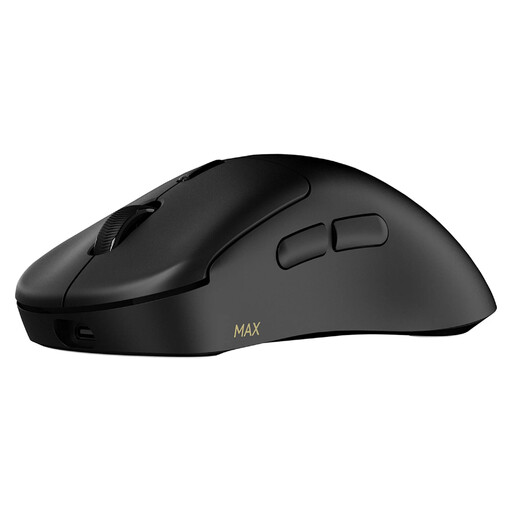
Why It Stands Out: The VT3 MAX combines three highly sought-after features into one package: an extremely low weight, a native high-frequency polling rate and exceptional battery endurance. It achieves its remarkable battery performance thanks to the integrated Nordic nRF54L15 MCU, which provides ultra-low-power wireless technology without compromising on connection stability.
Pros:
Who is it for? This mouse is built for the serious competitive gamer who demands top-tier specifications across the board. If your priorities are minimal weight, near-instantaneous response and freedom from frequent charging, the VT3 MAX is a compelling option.
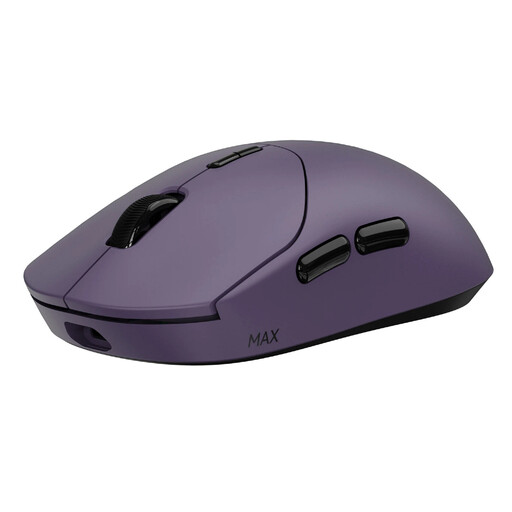
Why It Stands Out: The VT2 MAX offers the same core performance technology as the VT3 MAX, including the 53g weight and 8K wireless capability, but in a vibrant purple colourway. It is a programmable gaming mouse that doesn't compromise on speed or endurance, featuring the same long-lasting optical switches and impressive battery life.
Pros:
Who is it for? Gamers who want the flagship performance specifications—ultralight design, 8K polling and optical switches—but prefer a more expressive and colourful aesthetic for their setup.
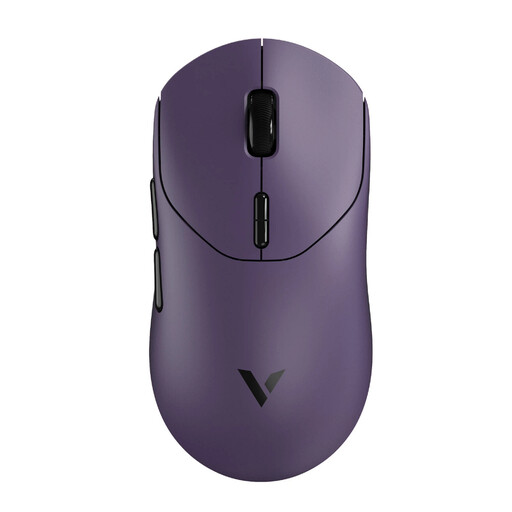
Why It Stands Out: The VT2 provides an alternative for players who prefer the classic feel of mechanical switches. It retains the standout features of the MAX series, including the 53g weight, 8K wireless polling rate and 750-hour battery life, but swaps optical switches for tactile 100-million click mechanical switches. This makes it a unique offering for those who value traditional click feedback.
Pros:
Who is it for? This mouse is ideal for competitive players who want the modern benefits of an ultralight, high-polling-rate wireless mouse but are unwilling to give up the satisfying tactile and audible feedback of traditional mechanical switches.
While these mice represent some of the most advanced options for competitive gaming, we understand every player's setup is unique. If you're exploring other wireless solutions for your desk, from ergonomic peripherals to smart home integrations, you can browse our wider collection.
For competitive players using high-refresh-rate monitors (144Hz, 240Hz or higher), an 8K polling rate can provide a tangible advantage. It results in smoother cursor motion and reduces micro-stutters during fast movements, making tracking targets feel more responsive. For casual gaming on a standard 60Hz monitor, a 1000Hz polling rate is generally sufficient.
Optical switches register a click by breaking a beam of infrared light. This process is nearly instantaneous and eliminates issues like debounce delay and the potential for double-clicking over time. Mechanical switches rely on a physical metal contact to complete a circuit. They provide a more traditional tactile "click" feel but can be prone to wear and tear, which may eventually lead to inconsistent performance.
Weight is a critical factor in fast-paced FPS and MOBA games. A lighter mouse (typically under 65g) reduces physical fatigue and allows for faster acceleration and deceleration. This makes it easier to perform rapid "flick" shots and precisely track moving opponents, giving you greater control over your aim.