
24/7 Customer Support

Free returns

Same-day & Next-day Delivery

Quality Guaranteed
Download the APP
Categories
In competitive gaming, your peripherals are not just tools; they are an extension of your reflexes. A split-second delay or a moment of imprecision from your mouse can be the deciding factor in a crucial match. For players of fast-paced FPS and MOBA titles, the search for a lightweight wireless gaming mouse that offers both freedom of movement and flawless accuracy is constant. The market is filled with technical jargon and ambitious claims, making it difficult to identify the features that truly matter.
This guide is designed to help you navigate the key specifications of modern gaming mice. We will break down what makes a great esports gaming mouse and present a few of our top recommendations to help you find a device that complements your skill.
Before diving into specific models, it's useful to understand the core features that impact performance. Focusing on these three areas will help you make a more informed choice.
The most significant trend in competitive mice is the move towards ultralight designs. An ultralight gaming mouse, typically weighing under 80 grams, can have a noticeable impact on gameplay. Lighter mice require less force to move and stop, enabling faster flicks and more precise micro-adjustments. This reduction in physical strain can also lead to less fatigue during long gaming sessions, helping you maintain peak performance. Shape is equally important, as it must suit your grip style (palm, claw or fingertip) to ensure comfort and control.
The old debate of wired versus wireless is largely settled. Modern wireless technology now delivers performance that is on par with, and sometimes exceeds, wired connections. The key metric to watch is the polling rate, measured in Hertz (Hz). This indicates how many times per second the mouse reports its position to the computer. While 1000Hz has been the standard, the emergence of the 8K wireless gaming mouse (8000Hz) offers significantly smoother cursor movement and lower click latency, providing a tangible edge for a pro gaming mouse. A low latency gaming mouse ensures your actions are translated on-screen almost instantaneously.
The sensor is the heart of a gaming mouse. While many brands advertise a high DPI mouse, what matters more for competitive play is sensor accuracy, maximum tracking speed (IPS) and acceleration. A high-quality sensor will track your movements flawlessly without prediction or smoothing. Alongside the sensor, the switches determine the feel and responsiveness of your clicks. An optical switch mouse uses a beam of light to register clicks, which eliminates the debounce delay found in mechanical switches and prevents accidental double-clicking issues over time, making them a durable and reliable choice.
Here are a few standout options that balance weight, performance and features for the competitive gamer.
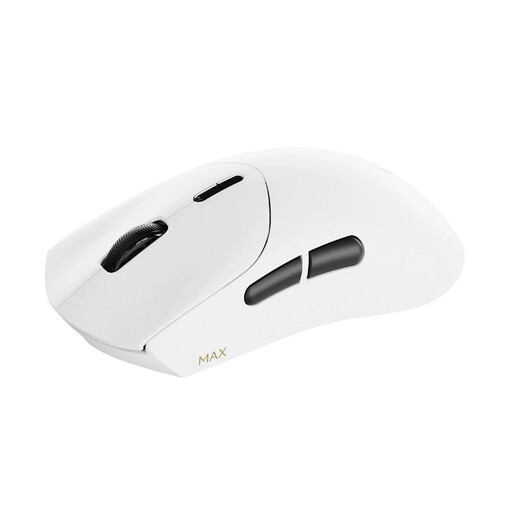
Why It Stands Out The RAPOO VT7 MAX is a remarkable contender, focusing on two areas where many wireless mice compromise: battery life and polling rate. It delivers a native 8000Hz wireless polling rate for exceptionally smooth tracking. What truly sets it apart is its battery performance. Thanks to an ultra-low-power MCU, it can achieve up to 750 hours of use at a 1000Hz polling rate, practically eliminating charging anxiety. At just 53g, it is firmly in the ultralight category.
Pros
Who is it for? This mouse is ideal for gamers who demand elite wireless performance and an ultralight feel but do not want the hassle of frequent charging. It's a strong choice for those who play for long hours and value both endurance and speed.
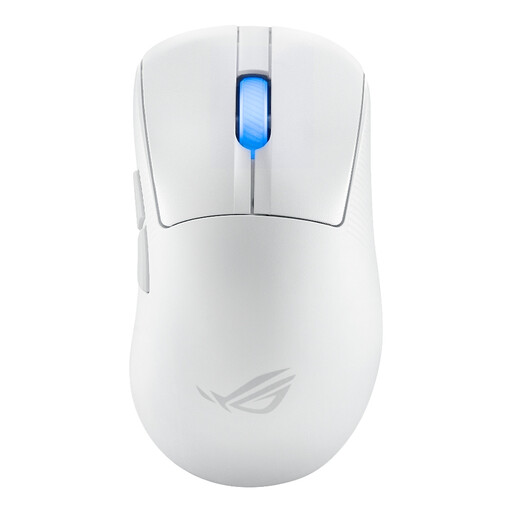
Why It Stands Out Engineered with input from esports professionals, the ASUS ROG Harpe II is built for one purpose: competitive dominance. It achieves an astonishing 48g weight without resorting to a honeycomb shell, using an innovative bio-based nylon material that maintains structural integrity. It features the ROG AimPoint Pro optical sensor with a 42,000 DPI resolution and ROG SpeedNova 8K wireless technology, ensuring flawless tracking and a near-instantaneous connection in both wireless and wired modes.
Pros
Who is it for? This is a fast wireless mouse for FPS and MOBA players at the highest level. If you are a serious competitor seeking the lowest possible weight combined with a cutting-edge sensor and wireless technology, the Harpe II is engineered for you.
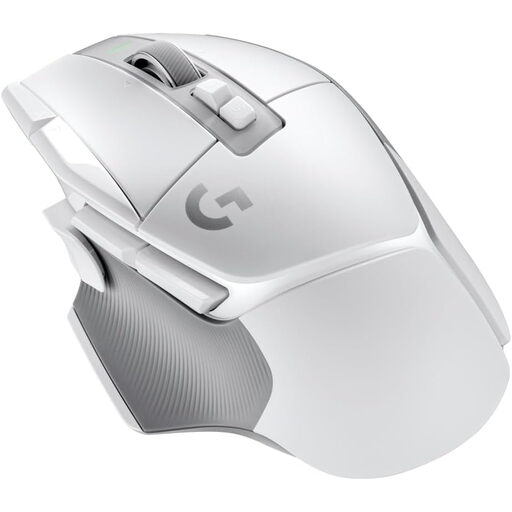
Why It Stands Out The G502 X LIGHTSPEED is the evolution of an iconic shape, updated for the modern era. While not an ultralight mouse at 102g, it offers a different proposition: versatility and features. It introduces LIGHTFORCE hybrid optical-mechanical switches, which provide the tactile feel of mechanical switches with the speed of optical ones. With 13 programmable buttons, a dual-mode hyper-fast scroll wheel and the proven HERO 25K sensor, it's a powerful all-rounder.
Pros
Who is it for? This mouse is for the gamer who loves the classic G502 shape and wants a feature-rich wireless mouse that excels across multiple genres, not just pure esports. Its extra buttons and versatile scroll wheel make it a great choice for gaming, content creation and general use.
If our top recommendations don't quite fit your setup, or if you're curating a clean, all-white aesthetic for your desk, we have a wider selection available. Exploring our full range of high-performance gaming mice can help you find the perfect match for your specific needs and preferences.
Discover more in our white mouse collection.
For fast-paced games like FPS and MOBAs, a lighter mouse can reduce wrist fatigue and allow for quicker, more precise movements. This often translates to better aiming consistency and faster reactions. However, the ideal weight is subjective and also depends on your grip style and personal preference.
Not necessarily. While a high DPI mouse offers greater sensitivity, most professional players use moderate DPI settings (e.g., 400-1600) combined with in-game sensitivity adjustments for better control. Sensor accuracy, consistency and a lack of smoothing are far more critical for performance than a maximum DPI number.
Absolutely. Modern low-latency wireless technologies, such as those offering 1ms response times and polling rates up to 8000Hz, provide performance that is indistinguishable from their wired counterparts. This allows you to enjoy a clutter-free setup without any competitive disadvantage.