
24/7 Customer Support

Free returns

Same-day & Next-day Delivery

Quality Guaranteed

Unlock Your Welcome Offers: FREE Delivery | Up to 80% OFF | Free 30-day JoyPlus trial
Download the APP
For competitive gamers in the UK, a mouse isn't just a peripheral; it's a direct extension of your reaction time and precision. The market for a lightweight wireless gaming mouse is crowded with bold claims and technical jargon, making it easy to invest in a device that underdelivers. Before you commit, it's crucial to understand the common pitfalls that can hold your performance back.
Many gamers are drawn in by flashy marketing, only to be disappointed by a few recurring issues. Firstly, the promise of an ultralight gaming mouse can sometimes come at the cost of build quality, resulting in a flimsy device with switches that fail after a few intense months. Secondly, not all high polling rates are created equal; some rely on software interpolation that can introduce instability during crucial moments. Finally, impressive battery life figures often only apply in low-power modes, not at the peak performance settings you need for competitive play.
Navigating these challenges is key to finding a mouse that truly enhances your gameplay.
To make an informed choice, let's break down the technical features that have the biggest impact on performance. Focusing on these core parameters will help you see past the marketing and select a mouse that fits your needs as an esports mouse.
The polling rate, measured in Hertz (Hz), is how many times per second your mouse reports its position to your computer. While 1000Hz has been the standard for years, the new frontier is the 8K polling rate mouse (8000Hz). This provides eight times the data, resulting in exceptionally smooth cursor movement and the lowest possible latency between your physical action and the on-screen response.
The critical factor here is a native 8K wireless connection. This means the mouse and its dongle are engineered to handle this data rate without relying on software tricks or extra hardware, ensuring a stable and reliable connection, even in environments with a lot of wireless interference, like a tournament hall.
The trend towards an ultralight gaming mouse—typically weighing between 45g and 65g—is driven by the need for faster flicks and reduced wrist fatigue during long sessions. However, weight is only half the story. An ergonomic gaming mouse designed for your grip style (be it palm, claw or fingertip) is essential for comfort and control.
Look for models that use advanced materials like magnesium alloy skeletons. These can achieve a very low weight without sacrificing the structural integrity of the mouse, preventing the creaks and flex that can plague poorly designed lightweight models.
The mouse switches are your primary point of contact. There are two main types:
For a wireless device, a long battery life mouse is non-negotiable. Look for models equipped with power-efficient microcontrollers (MCUs). Some can offer over 700 hours of use at a 1000Hz polling rate. It's also important to have a programmable gaming mouse with onboard memory, allowing you to customise buttons and DPI settings and save them directly to the device.
Instead of a one-size-fits-all approach, we've matched some standout models to specific gamer profiles.

Why This Fits Their Persona: This user prioritises raw performance above all else. The VT7 MAX is built for the competitive stage, where every millisecond and gram counts. Its combination of low weight, instant response and reliable connection is tailored for high-stakes FPS and MOBA gameplay.
It features a true 8K wireless polling rate for stable, ultra-low latency and uses durable 120-million click optical switches, addressing the common pitfalls of unstable connections and premature hardware failure.
An extremely light 53g weight reduces fatigue, while the optical switches provide near-instantaneous click registration without risk of double-clicking.
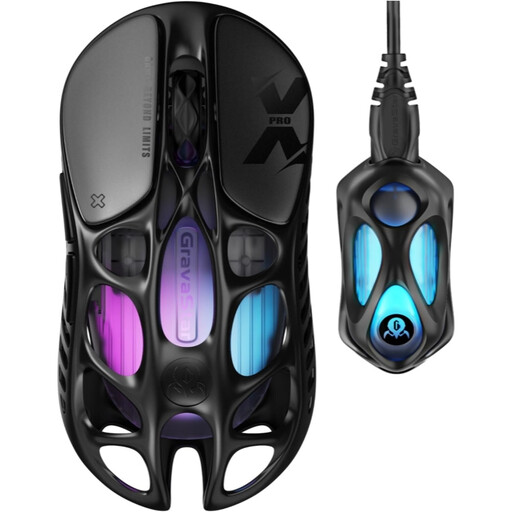
Why This Fits Their Persona: This gamer wants cutting-edge performance that also makes a statement. The Mercury X Pro's unique aesthetic, premium materials and top-tier specifications appeal to those who appreciate both form and function in their setup.
Its magnesium alloy hollow skeleton achieves an exceptionally low 49g weight without the flimsiness of cheaper plastic designs, directly countering the pitfall of sacrificing durability for weight.
Features a top-of-the-line PAW 3950 sensor with a very high DPI of 32,000 and a native 8000Hz polling rate, offering elite tracking precision alongside its standout design.
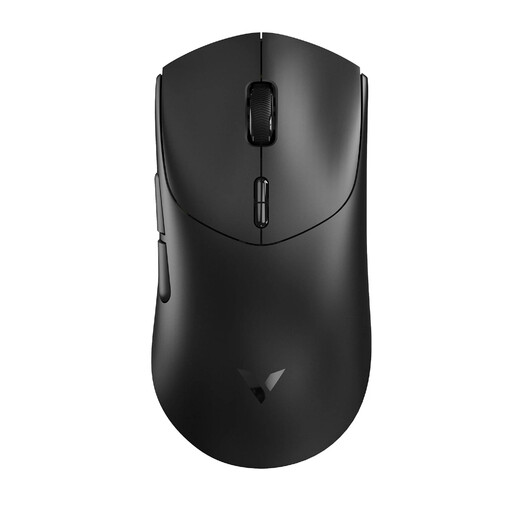
Why This Fits Their Persona: This user plays for long hours and needs a mouse that won't die mid-session. They want high-end features like a low weight and high polling rate, but battery endurance is their top priority, alongside a more traditional click feel.
It directly addresses misleading battery claims by offering a massive 750-hour battery life (at 1000Hz) thanks to its ultra-low-power MCU, ensuring you spend more time gaming and less time charging.
Provides many of the same core benefits as premium models—53g weight, true 8K polling rate—but with durable 100-million click mechanical switches for those who prefer that tactile feedback.
We have compiled a complete, real-time list of products that fully satisfy these strict selection criteria and UK safety regulations.
For competitive players using high-refresh-rate monitors (144Hz or higher), an 8K polling rate mouse can offer a tangible advantage. It reduces the delay between your movement and the cursor's response, leading to smoother tracking and aiming in fast-paced games. However, it does require more CPU resources, so for casual gaming or on older systems, a standard 1000Hz mouse is more than adequate.
The lifespan is determined by its switches and battery. A quality mouse should provide several years of service. Optical switches, often rated for 100 million clicks or more, are generally more durable than their mechanical counterparts as they have no metal contacts that can wear out. The internal battery should retain a high percentage of its capacity for at least 2-3 years of regular charging cycles.
To customise features like button assignments, macros and specific DPI levels, you will need to use the manufacturer's software. However, a key feature to look for is onboard memory. This allows you to save your profiles directly onto the mouse, meaning your custom settings will work on any computer without needing the software to be installed or running.