
24/7 Customer Support

Free returns

Same-day & Next-day Delivery

Quality Guaranteed

Unlock Your Welcome Offers: FREE Delivery | Up to 80% OFF | Free 30-day JoyPlus trial
Download the APP
A lightweight waterproof camping tent needs to do more than look compact in a product photograph. For UK hikers, backpackers, couples and festival-goers, the real decision usually comes down to three questions: will it keep rain out, can it be carried comfortably, and can it be pitched without unnecessary frustration?
Marketing descriptions can make these points difficult to compare. A tent labelled “waterproof” may have limited information about its hydrostatic head rating, while an “instant tent” may be convenient but too bulky for a long walk. Before buying, check the details below rather than relying on headline claims.
A coated flysheet and bathtub-style groundsheet can help manage rainfall and damp ground, but no tent is suitable for every condition. Waterproof ratings are usually measured in millimetres, such as PU2000mm or PU3000mm. This indicates the pressure of water the fabric can withstand in laboratory-style testing; it does not guarantee performance in prolonged heavy rain, poor pitching or worn fabric.
The seams, zips, floor design and correct use of guy lines also affect practical weather protection. For typical three-season use, look for a separate flysheet, taped or carefully constructed seams, and a groundsheet that extends high enough to reduce splashback.
A compact camping shelter may fit neatly into a bag but still be tiring to carry if the poles and accessories add considerable weight. Compare the total packed weight, not just the fabric weight. Pegs, poles, guylines and storage bags should be included where the specification provides them.
For a two-person tent, a weight around 1–3kg can suit different types of trips. An ultralight backpacking tent prioritises low weight and compactness, whereas a pop-up camping tent may trade extra bulk for faster setup.
A fully sealed tent can feel warm and damp inside, particularly after cooking nearby, storing wet clothing or sleeping through a still night. Look for mesh panels, adjustable vents and a gap between the inner tent and flysheet. A breathable tent does not remove all condensation, but it can improve airflow when pitched correctly.
Also check the internal dimensions. A stated “two-person tent” may suit two sleeping mats but offer limited room for bags. Couples planning longer stays may prefer extra vestibule space or a larger 2-person or 3-person design.
The outer fabric rating is only one part of the weatherproofing system. For example, a PU2000mm flysheet is designed with a polyurethane coating rated to that figure, while a higher-rated floor may provide additional protection from wet grass and morning dew. Always pitch on reasonably level ground and use a footprint or groundsheet where appropriate to reduce abrasion.
For UK three-season hiking, a double-wall design is generally more practical than a single skin if ventilation and condensation management matter. In colder or wetter conditions, leave suitable airflow around the flysheet rather than sealing every vent.
Aluminium poles are commonly selected for a balance of weight and structural support. Lightweight nylon and polyester fabrics can reduce carrying weight, but they require careful handling around sharp stones, brambles and rough surfaces.
A compact packed size is particularly useful for public transport, bike panniers and smaller car boots. Compare measurements in centimetres and check whether the pole sections fit inside the supplied carry bag.
A two-person tent with front and rear doors can make access easier and allow cross-ventilation. By contrast, an instant tent or hydraulic pop-up design may be more suitable for festivals, family car camping and short walks from the vehicle.
Setup instructions still matter. Even an easy-setup tent should be pegged securely, tensioned correctly and checked after strong gusts. A wind-resistant tent depends on its pitch, guy-line placement and the conditions it encounters, not just the fabric or pole label.
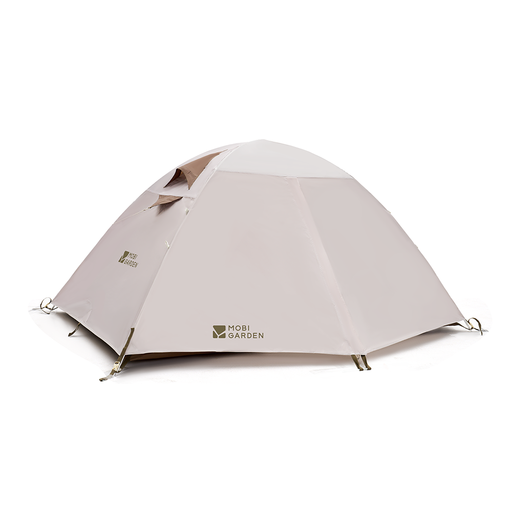
Why This Fits Their Persona: This 2-person camping tent suits new hikers, weekend campers and couples seeking a practical three-season shelter without moving to the lightest specialist equipment.
The specification states a 2.64kg total weight, 41 × 16 × 16cm packed size and separate waterproof ratings for the outer and inner sections, making comparison more straightforward.
68D tear-resistant polyester; PU2000mm outer tent and PU4000mm inner tent; 210 × 140 × 110cm dimensions.
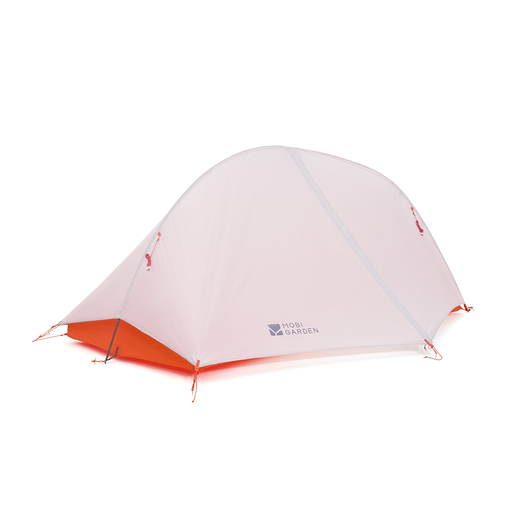
Why This Fits Their Persona: Long-distance backpackers and two-person hikers who prioritise low carried weight, ventilation and compact storage may find this format more suitable for three-season routes.
Its stated net weight is approximately 1.18kg, while the mesh inner and double doors address the common problem of poor airflow in a compact shelter.
20D ripstop nylon; ultralight aluminium poles; PU2000mm flysheet; 48 × 11 × 11cm packed size.
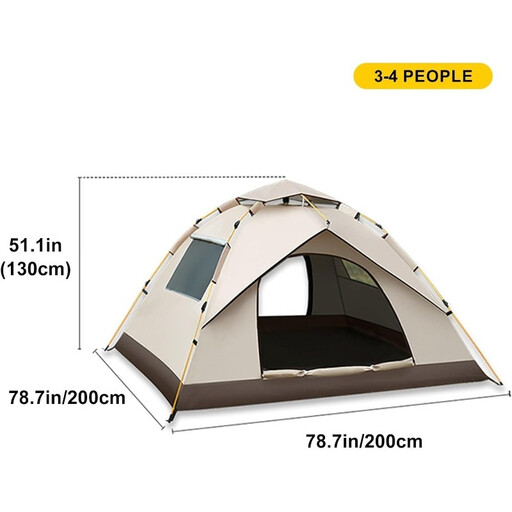
Why This Fits Their Persona: Festival-goers, families and car campers who value quick pitching and interior room over ultralight backpacking weight may prefer this instant tent format.
The pre-attached hydraulic system reduces assembly steps, while the two-layer structure, detachable outer canvas and durable groundsheet provide more flexibility than a basic single-layer pop-up tent.
Approx. 3kg weight; 210T polyester with stated water-resistance index up to 3000mm; two doors and two windows; 210 × 200 × 135cm size.
Practise pitching your tent at home before a first trip. On location:
These steps help protect waterproof coatings and lightweight fabrics. A three-season tent should not be treated as a winter shelter for blizzards or extreme storms.
We have compiled a complete, real-time list of products that fully satisfy these strict selection criteria and UK safety regulations.
It can be suitable for ordinary three-season conditions when it has a suitable flysheet, protected seams, a water-resistant floor and is pitched correctly. Waterproof ratings are not a promise against flooding, driving rain or prolonged exposure, so site selection and tensioning remain important.
Usually, an instant tent is more convenient for festivals, family camping and vehicle-based trips than long-distance backpacking. Its pre-attached frame can simplify setup, but the packed weight and shape may be less comfortable to carry than an ultralight backpacking tent.
Lifespan depends on UV exposure, pitching surfaces, weather, packing habits and storage. Dry the shelter completely after each trip, avoid sharp ground and inspect poles, seams, zips and coatings before use. Replace or repair damaged components rather than continuing to use a compromised shelter in poor weather.