
24/7 Customer Support

Free returns

Same-day & Next-day Delivery

Quality Guaranteed

Unlock Your Welcome Offers: FREE Delivery | Up to 80% OFF | Free 30-day JoyPlus trial
Download the APP
Choosing Lily's Kitchen adult dog food can seem straightforward until you compare wet recipes, grain-free formulas, multipacks and portion sizes. The right option depends on your dog’s age, weight, activity level, food sensitivities and whether the food will be served as a complete meal or an occasional treat.
This guide highlights the buying details that matter, helping UK dog owners avoid attractive packaging, unsuitable formats and misleading assumptions about natural dog food.
Terms such as “natural”, “proper food” and “freshly prepared meat” describe ingredients or production positioning, but they do not automatically mean a food provides everything an adult dog needs. Look for the statutory description “complete pet food for adult dogs” if the product is intended to form the main diet.
Complementary foods, including many treats, should not replace a complete and balanced dog food. For example, the Little Sausages with Duck & Venison and Beef Mini Burgers are treats, so they should be fed alongside, rather than instead of, a complete meal.
Grain-free dog food removes ingredients such as rice, wheat or barley, but it is not a universal solution for digestive problems or allergies. Dogs can react to particular proteins or other ingredients, and grain-free recipes may still contain peas, lentils or potato.
Some products are made in factories handling grains, meaning traces may be present. Check the product label carefully and seek veterinary guidance if your dog has recurring digestive symptoms or a diagnosed allergy.
A 150g tray, 400g pack and 1kg bag serve different shopping needs. Smaller portions may be convenient for occasional feeding or smaller dogs, while larger packs can reduce packaging and restocking frequency. However, opened wet food generally needs refrigeration and should be used within the timeframe shown on the label.
Compare the price per kilogram, the daily feeding guide and storage requirements rather than judging value from the shelf price alone.
For an adult dog aged four months or older, check that the product is labelled as a complete food for adult dogs. Feeding quantities should be adjusted according to body weight, activity and body condition. A sedentary small dog and an active larger dog will not have the same daily requirement.
If your dog is overweight, some feeding guides recommend using target weight when calculating portions. Monitor body condition and ask a vet for individual advice where needed.
Compare the named meat ingredients rather than relying only on front-of-pack wording. Examples include:
A single-protein recipe may make ingredient tracking easier, while a multi-protein recipe offers more variety but may be less suitable for an elimination diet.
The guaranteed analysis provides practical comparison points. For instance, the 400g Sunday Lunch recipe lists 10.1% crude protein, 5.1% crude fat and 91 kcal per 100g, while the dry Countryside Casserole lists 23.5% crude protein, 12% crude fat and 359 kcal per 100g.
These figures cannot be compared directly without considering moisture content: wet food contains substantially more water than dry food. Use the manufacturer’s feeding guide and consider total daily calories, particularly for dogs needing weight management.
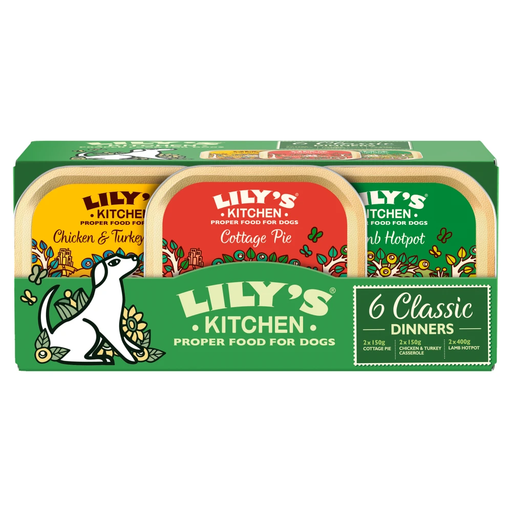
Why This Fits Their Persona: Six 150g trays provide a practical way to compare beef, chicken, turkey and lamb recipes before committing to larger quantities.
The multipack makes flavour comparison easier and reduces the risk of buying a large supply your dog will not eat.
Includes several complete adult wet food recipes; individual 150g portions can help with serving control.
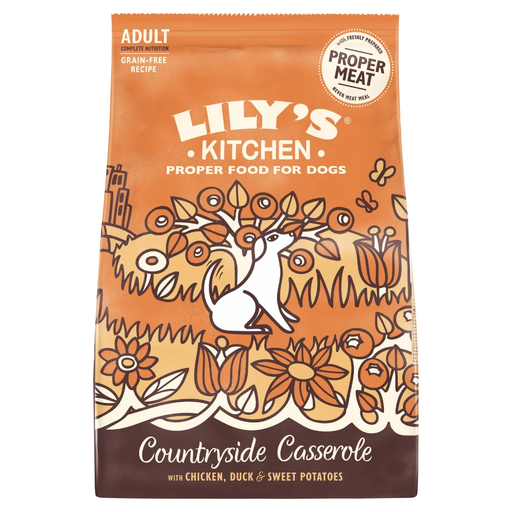
Why This Fits Their Persona: A 1kg dry format suits owners who want a grain-free recipe with clearly listed chicken and duck ingredients for regular feeding.
The ingredient percentages and analytical constituents are provided, so “rich in chicken and duck” can be checked against the composition.
Grain-free recipe; contains prebiotics, salmon oil and a listed joint care mix.
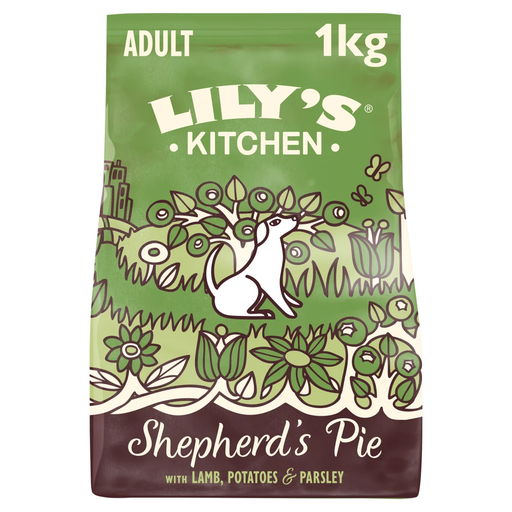
Why This Fits Their Persona: Owners managing portions or feeding a larger adult dog may prefer a 1kg recipe with a stated low-fat positioning and lamb as the principal animal protein.
The listed 27% lamb and stated low-fat formulation give buyers more useful information than a general “healthy” label.
Grain-free lamb recipe; includes prebiotics and a listed glucosamine, chondroitin and MSM mix.

Why This Fits Their Persona: A 400g wet format with venison, pheasant and salmon offers a different flavour profile for adult dogs that respond well to recipe rotation.
The product is clearly identified as complete grain-free food, rather than leaving buyers to infer its feeding status from the recipe name.
Contains 40% venison, 15% pheasant and 10% salmon; moisture content is listed at 77%.
We have compiled a complete, real-time list of products that fully satisfy these strict selection criteria and UK safety regulations.
Some grain-free recipes may suit dogs that need to avoid particular grains, but “grain-free” does not guarantee suitability for every sensitive dog. Check all ingredients, introduce the food gradually and consult a vet if your dog has persistent symptoms, allergies or a prescribed diet.
Several listed wet recipes, including Sunday Lunch, Cottage Pie, Chicken & Turkey Casserole and Wild Campfire Stew, are described as complete food for adult dogs. Always confirm the statutory wording on the current packaging, as recipes and labelling can change.
Storage instructions vary by product. The supplied product information commonly advises refrigeration and use within two days for opened wet food. Keep the pack sealed, follow the label and discard food if its appearance or smell changes.