
24/7 Customer Support

Free returns

Same-day & Next-day Delivery

Quality Guaranteed

Unlock Your Welcome Offers: FREE Delivery | Up to 80% OFF | Free 30-day JoyPlus trial
Download the APP
Choosing Lily's Kitchen dog food can seem straightforward until you compare wet recipes, dry food, grain-free options, multipacks and treats. Packaging often highlights attractive ingredients, but the details that affect suitability are usually found in the small print.
For UK dog owners, three buying traps are particularly common:
The practical approach is to start with your dog’s age, body condition, activity level and known sensitivities, then check the product’s statutory feeding category and composition.
Look for wording such as “complete pet food” or “complete wet dog food” when selecting a main meal. A complete food is formulated to provide the nutrients required when fed according to the manufacturer’s guidance.
Treats such as beef mini burgers, pork sausages and duck with venison sausages are labelled as complementary pet food. They can be useful for training or occasional rewards, but their calories should be counted as part of the daily intake. The product information for the beef mini burgers, for example, recommends feeding up to five treats daily and adjusting main meals accordingly.
The primary protein can help you narrow down choices:
Do not judge suitability from the front label alone. Read the full composition, particularly if your dog has previously reacted to a specific meat or plant ingredient.
Wet food contains a high proportion of water, so the feeding amount by weight can look large compared with dry food. The listed energy values also vary between recipes. For example, the supplied Lily’s Kitchen wet recipes range from approximately 91 to 130 kcal per 100g, depending on the recipe.
Portion guidance should be adjusted for your dog’s weight, activity and target body condition. For a dog needing weight management, feeding according to target weight may be more appropriate, but individual advice should come from a vet.
Pack size affects convenience and waste:
Once opened, refrigerate wet food and follow the label’s use-by guidance. Serve it at room temperature where instructed, and always provide fresh drinking water.
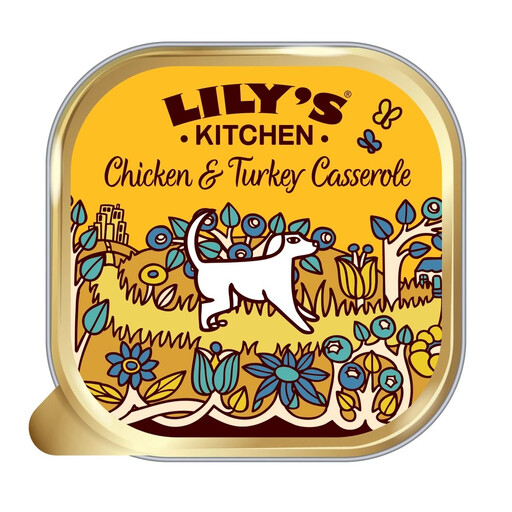
Why This Fits Their Persona: The smaller 150g format lets first-time buyers assess portion size and acceptance without committing to a larger supply.
It is identified as a complete pet food for adult dogs, avoiding the mistake of using a treat as a main meal.
Contains chicken and turkey, with brown rice and pearl barley; listed at 92 kcal per 100g.
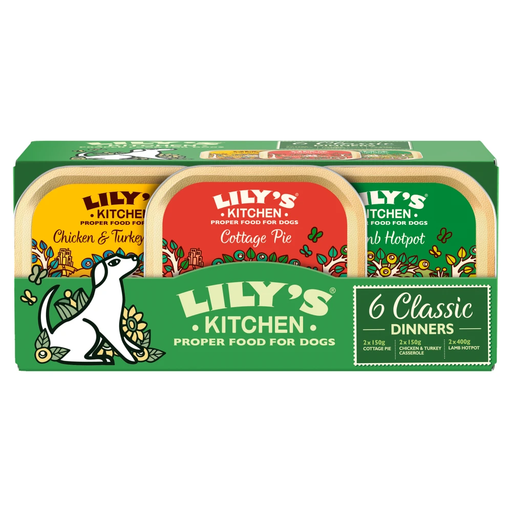
Why This Fits Their Persona: Owners who value recipe variety can rotate among cottage pie, chicken and turkey casserole and lamb hotpot in smaller portions.
The pack lists complete recipes and their compositions, rather than relying only on broad “natural” wording.
Six 150g portions; includes beef, poultry and lamb recipes with listed vitamins and minerals.
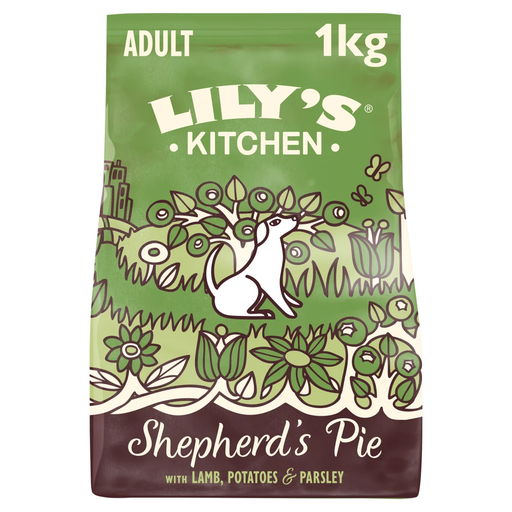
Why This Fits Their Persona: A larger dry-food format suits households feeding a regular grain-free diet and wanting straightforward cupboard storage.
The recipe is presented as complete grain-free food, while the feeding guidance still requires portion adjustment by size and activity.
Contains lamb and lamb liver; includes prebiotics and a listed joint-care mix.
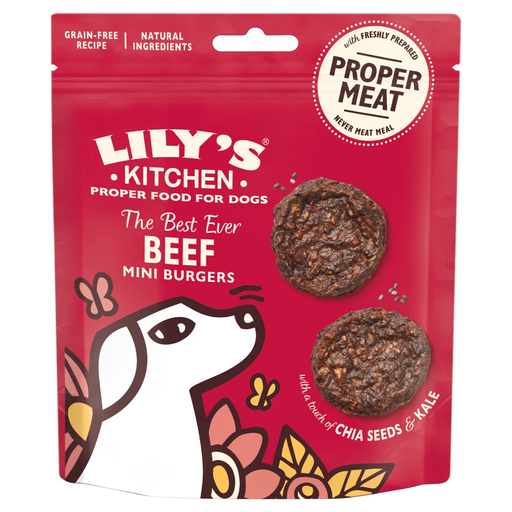
Why This Fits Their Persona: Small, resealable treats are convenient for lead training, walks and occasional rewards.
The product is clearly a complementary treat, so it is less likely to be mistaken for a nutritionally complete meal.
Contains 80% beef; grain-free recipe; resealable 70g packaging.
We have compiled a complete, real-time list of products that fully satisfy these strict selection criteria and UK safety regulations.
Several listed Lily's Kitchen wet recipes, including Sunday Lunch, Cottage Pie and Chicken & Turkey Casserole, are described as complete pet food for adult dogs. Always check the exact pack, as treats and sausages are complementary rather than complete.
A grain-free recipe may be useful for an individual dog that does not tolerate grains, but it is not automatically suitable for every sensitive dog. Check all ingredients, introduce the food gradually over five to seven days, and ask a vet for guidance where allergies or ongoing digestive problems are suspected.
Compare the price per 100g rather than only the pack price, then use the feeding guide for your dog’s target weight and activity. Larger multipacks can reduce shopping frequency, while 150g portions may reduce opened leftovers. Treat calories should also be included in the daily allowance.