
24/7 Customer Support

Free returns

Same-day & Next-day Delivery

Quality Guaranteed
Download the APP
Categories
If you live in a hard water area, you're all too familiar with the chalky, white residue that dulls your taps, clouds your shower screen and leaves stubborn stains in your toilet bowl. This is limescale, and it can make even the cleanest bathroom or kitchen look neglected. With so many products on the market, choosing an effective limescale remover can feel overwhelming.
As the Joybuy Product Recommendation Officer, my role is to help you navigate the options. This guide cuts through the clutter to offer practical advice and highlight a few standout products, helping you find a solution that restores the sparkle to your home.
Before you pick a product, it's helpful to consider what you need it to do. A little thought now can save you time and effort later. Here are a few key points to consider.
The format of a cleaner often dictates how it's best used.
Limescale removers work because they are acidic, but this means they aren't always suitable for every surface. Materials like chrome, stainless steel, ceramic and glass are generally fine, but more delicate surfaces like marble, natural stone, or enamel can be damaged by harsh formulas. Always check the product label for its recommended uses to avoid causing any unintended harm to your fixtures and fittings.
Your ideal bathroom cleaner for limescale might need to do more than just remove mineral deposits. Some formulations include disinfectant properties to kill germs and bacteria, offering a two-in-one solution for hygiene. Alternatively, if you prefer a greener approach, an eco friendly limescale remover made with plant-based, biodegradable ingredients can be just as effective without the harsh chemicals, and is often a better choice for homes with septic tanks.
Based on their formulation, features and intended use, here are our recommendations to help you tackle hard water stains.
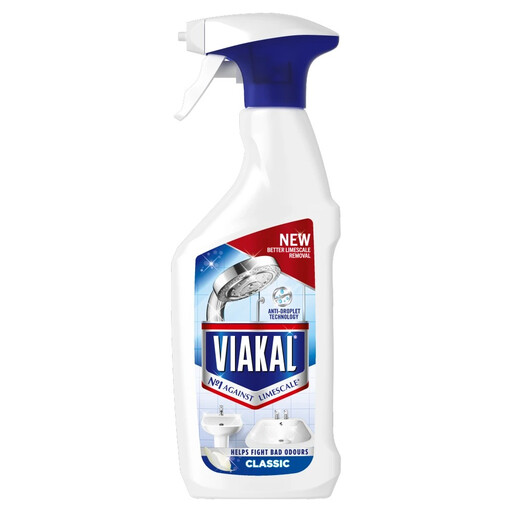
Why It Stands Out: Viakal is a well-regarded name in the fight against limescale, and this spray is designed not only to clean but also to protect. Its formula aims to leave a film on surfaces that helps prevent future water marks from forming, contributing to long-term limescale prevention. This dual-action approach makes it a very practical choice for maintaining shine.
Pros:
Who is it for? This is a great option for those who want to restore a high shine to their taps, sinks and shower doors and want a product that helps keep them looking clean for longer.
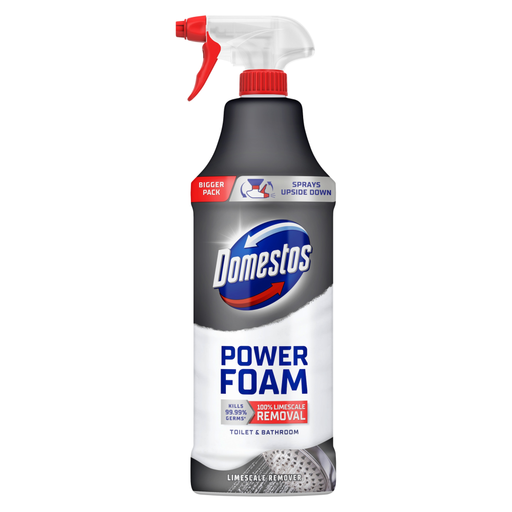
Why It Stands Out: This product combines the power of a hard water stain remover with the hygienic properties of a disinfectant. The power foam formula is designed to cling to surfaces, even upside down, making it particularly effective for cleaning inside the toilet bowl and under the rim. According to the manufacturer, it kills 99.99% of germs.
Pros:
Who is it for? Households looking for a single, powerful product that can deep-clean the toilet, tackle limescale on various bathroom surfaces and provide the reassurance of disinfection.
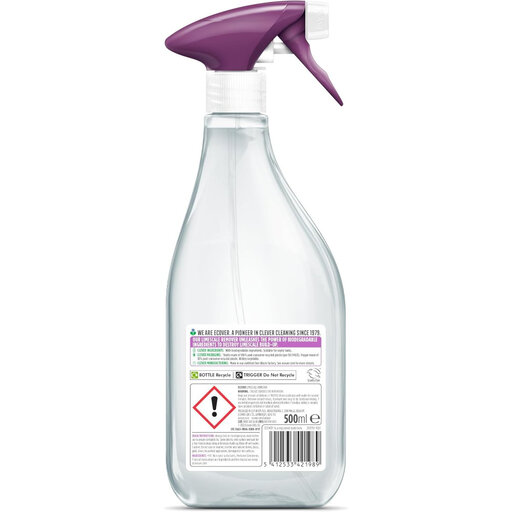
Why It Stands Out: For those who prioritise environmental responsibility, the Ecover Limescale Remover offers an effective solution. It uses plant-based, biodegradable ingredients to dissolve limescale without relying on harsh chemicals. It is produced in a certified Zero Waste factory and is suitable for homes with septic tanks, making it a conscientious choice.
Pros:
Who is it for? Environmentally conscious individuals or families, especially those with septic systems, who need an effective eco friendly limescale remover that aligns with their values.
While these three products address some of the most common needs, they are just a starting point. Every home is different, and you may be looking for a different formulation or a product for a specific material.
To see a wider selection, explore our full range of limescale remover solutions and find the perfect match for your cleaning routine.
The key to how to remove limescale is giving the product enough time to work.
A general bathroom cleaner is formulated primarily to tackle soap scum, grime and everyday dirt. A limescale remover is specifically formulated with a lower pH (it is more acidic) to chemically react with and dissolve the calcium carbonate and magnesium deposits that form limescale. While some products do both, a dedicated limescale remover is usually more effective on heavy mineral buildup.