
24/7 Customer Support

Free returns

Same-day & Next-day Delivery

Quality Guaranteed

Unlock Your Welcome Offers: FREE Delivery | Up to 80% OFF | Free 30-day JoyPlus trial
Download the APP
Living in the UK, particularly in a hard water area, means that battling limescale is a constant chore. Those chalky white deposits don't just make your taps, shower screens and kettle look dull; they can reduce the efficiency and lifespan of your appliances. With so many products on the shelf, it’s easy to grab one that promises the world but fails to deliver, or worse, damages your surfaces.
As the Joybuy Product Recommendation Officer, my role is to help you navigate the options and find a solution that works for your specific needs, without falling for common marketing traps.
Before you buy, be aware of a few common issues that lead to wasted money and frustration:
eco-friendly descaler is an excellent choice for many, some formulations are simply not potent enough for the stubborn hard water stains found in many UK homes. This can lead to using more product and more effort, which isn't very efficient or environmentally friendly in the long run.shower screen cleaner, but it will run straight off a curved tap or the underside of a toilet rim. Choosing the wrong format—be it spray, gel or liquid—means the active ingredients don't get enough contact time to work effectively.To ensure you get the right product for the job, focus on these two key parameters.
The physical form of a limescale remover is just as important as its chemical makeup. Each is designed for a different application.
limescale remover spray provides even coverage quickly. Foaming sprays are particularly good as they cling for longer than a standard liquid spray.tap cleaner or as a toilet limescale remover, as they can be applied directly under the rim and won't immediately slide away.kettle descaler or coffee machine descaler often comes in liquid or pre-measured sachet form, ensuring you use the correct, food-safe dilution to protect the internal components of your appliance descaler needs.The cleaning power of a descaler comes from its active ingredients, which are usually acidic. Understanding the differences is key to avoiding damage.
hard water stain remover tasks on ceramic, glass and chrome, but you must follow the contact time instructions carefully to prevent corrosion.toilet limescale remover products where extreme build-up is an issue. It should never be used on taps, shower fittings or other sensitive surfaces. Always check the product label for surface compatibility warnings.Instead of a generic list, here are a few recommendations matched to specific household needs.
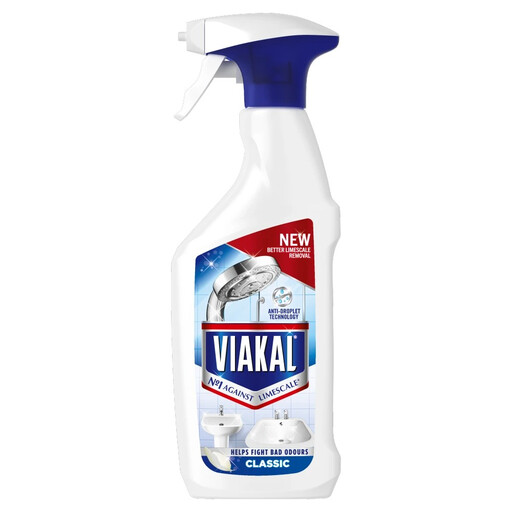
Why This Fits Their Persona: This user needs a quick, reliable solution for weekly cleaning of taps, tiles and shower screens to prevent build-up. The convenient spray format is perfect for covering large areas and maintaining a consistent shine in the bathroom.
It avoids the "one-size-fits-all" trap by being specifically formulated as a bathroom limescale remover. It is not intended for appliances, ensuring you use the right tool for the job.
Its formula includes anti-droplet technology, which helps to create a barrier that prevents new water marks from forming, reducing future cleaning time.
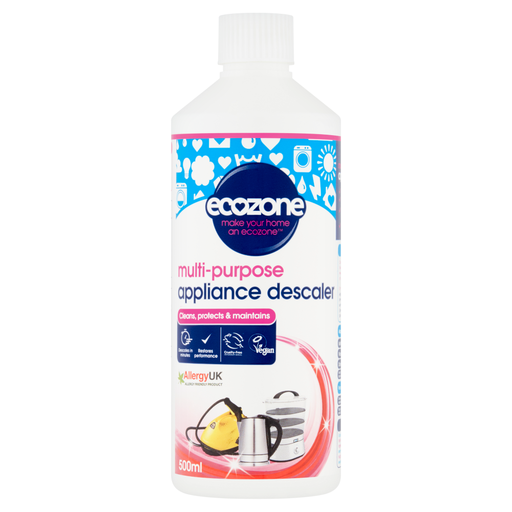
Why This Fits Their Persona: This person wants to protect their kettle, coffee machine and washing machine from limescale to prolong their life and maintain efficiency. They prioritise using products that are safe for internal components and prefer plant-based ingredients.
It sidesteps the "weak eco-product" trap by being a fast-acting liquid specifically designed for appliances. It is also clearly marketed as an appliance descaler, not a general cleaner, avoiding surface compatibility issues.
Made with plant-based, biodegradable ingredients, it is a responsible choice for appliances that handle food or water. It is also Allergy UK approved and certified by Cruelty-Free International.
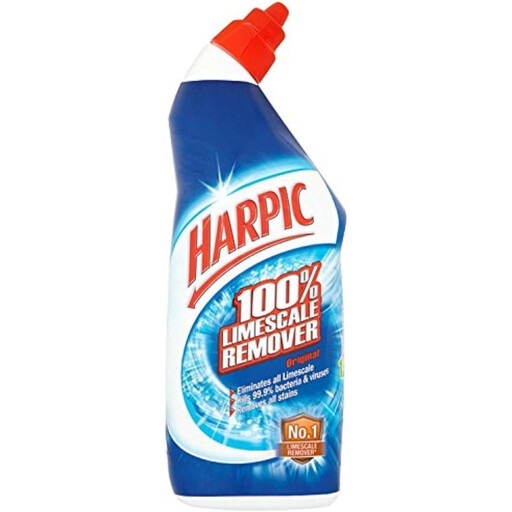
Why This Fits Their Persona: Living in an area with very hard water, this user faces thick, stubborn limescale rings and stains in the toilet bowl that weaker cleaners cannot shift. They need a powerful, targeted solution for maximum effect.
This product is highly specific. As a dedicated toilet limescale remover, it doesn't make misleading "all-purpose" claims. Its powerful hydrochloric acid formula is appropriate for the non-porous ceramic of a toilet bowl.
The thick gel formula clings to the bowl and under the rim, allowing the active ingredients extended contact time to dissolve tough, accumulated limescale deposits effectively.
We have compiled a complete, real-time list of products that fully satisfy these strict selection criteria and UK safety regulations.
For those living in hard water areas across the UK, it is advisable to descale your kettle every one to two months. Regular descaling prevents a thick layer of limescale from forming, which can slow down boiling times, increase electricity usage and eventually cause the heating element to fail.
It is strongly advised not to. A bathroom limescale remover contains chemicals and fragrances that are not food-safe and can leave harmful residues. Furthermore, these powerful formulas can corrode the delicate internal components of a coffee machine. Always use a dedicated coffee machine descaler that is specifically formulated to be safe and effective for that appliance.
Most bathroom cleaners are formulated to be safe on chrome, provided you follow the instructions. The key is to not leave the product on for longer than the recommended time and to rinse the surface thoroughly with water afterwards. For a tap cleaner, a gel or foam spray is often a good choice as it clings without dripping onto other surfaces. Always test on a small, inconspicuous area first if you are unsure.