
24/7 Customer Support

Free returns

Same-day & Next-day Delivery

Quality Guaranteed

Unlock Your Welcome Offers: FREE Delivery | Up to 80% OFF | Free 30-day JoyPlus trial
Download the APP
Limescale is a familiar problem in many UK homes, particularly in hard-water areas. White deposits can cloud shower screens, restrict tap flow, leave toilets looking stained and reduce the efficiency of kettles and coffee machines. However, choosing a limescale remover based only on a bold front-label claim can lead to wasted money or damaged surfaces.
The right product depends on where the deposit has formed, how long you can leave it to work and whether you need a routine cleaner or a concentrated descaler.
Bathroom sprays may be suitable for ceramic, glass, chrome or stainless steel, but that does not mean they are safe for every finish. Natural stone, marble, brass, copper, linoleum and some sensitive metals may be marked or dulled by acidic or corrosive ingredients.
Always read the label and look for specific exclusions. If the instructions recommend a patch test, apply a small amount to a hidden area before cleaning the whole surface.
A daily shower cleaner is designed to reduce soap scum and fresh water marks before they become difficult deposits. It may not be appropriate for thick toilet scale or a heavily affected kettle.
Conversely, a strong hard water stain remover may be unnecessary for light bathroom marks and could require more careful handling. Check the stated contact time, rinsing requirements and intended use rather than choosing solely by the word “power” on the packaging.
Some products include anti-droplet or protective features intended to help water marks return less quickly. These can support regular cleaning, but they do not remove the need to wipe wet surfaces or clean areas exposed to constant moisture.
A product described as an anti-limescale cleaner should therefore be viewed as part of a cleaning routine, not a substitute for ventilation, drying and periodic descaling.
For bathroom cleaning, check whether the product is suitable for the exact material. Commonly listed surfaces include ceramic toilets, tiles, glass, acrylic, porcelain, chrome and stainless steel. Avoid using an acidic bathroom cleaner on natural stone unless the label specifically permits it.
Citric-acid-based formulas, such as Ecozone Limescale Remover Tough, are intended to dissolve mineral deposits through their descaling action. Other formulas combine surfactants with active cleaning or biocidal ingredients. Read the hazard information carefully, particularly where the product may irritate skin or eyes.
A trigger spray is convenient for sinks, taps and vertical shower surfaces, but contact time still matters. Some formulas are designed to work within one to three minutes, while heavier deposits may require up to five or ten minutes. Toilet foam products can offer better coverage under the rim because they cling to the bowl.
Do not let a product remain on a surface longer than instructed. Wipe, rinse and dry according to the label, especially on metal fittings.
Choose a bathroom limescale remover, limescale remover spray or shower limescale remover for hard bathroom surfaces. For kettles, coffee machines, steam irons and some shower heads, use a dedicated descaler for kettles or appliance descaler and follow the appliance manufacturer’s instructions.
Pre-measured sachets can help avoid using too much solution. Larger bottles may be more practical for frequent bathroom cleaning, while a compact 500ml spray may suit occasional use or smaller homes.
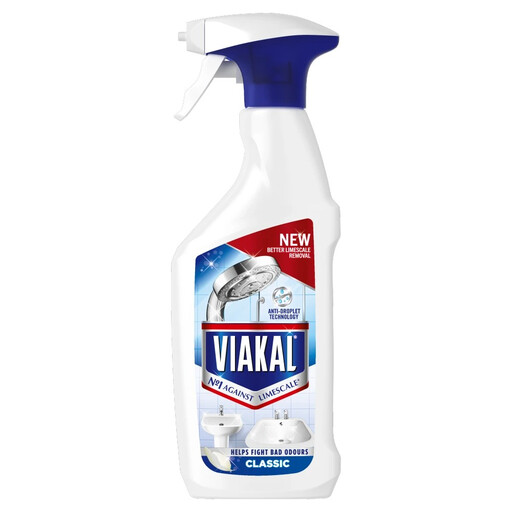
Why This Fits Their Persona: A 500ml format suits renters, smaller households and shoppers wanting a straightforward spray for taps, tiles, ceramics and shower doors.
The instructions specify a short one-to-three-minute contact time and warn against natural stone and sensitive metals, helping set realistic usage expectations.
Trigger-spray format; designed for limescale, soap scum and water marks on several common bathroom surfaces.
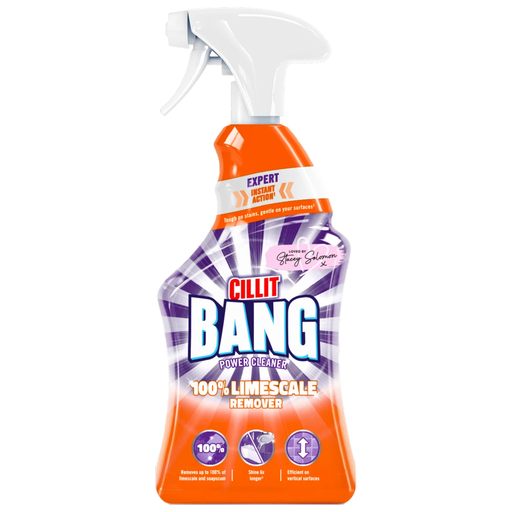
Why This Fits Their Persona: A larger 750ml bottle and vertical-surface trigger application suit households carrying out frequent, thorough bathroom cleaning.
Its directions state a maximum five-minute application period and clearly exclude natural stone, brass, copper, linoleum and textiles.
750ml capacity; spray design intended for sinks, toilets, glass, tiles, baths, showers and stainless-steel taps.
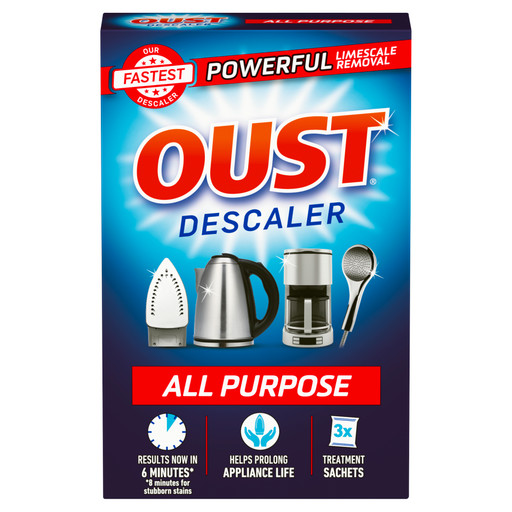
Why This Fits Their Persona: Suitable for households managing scale in kettles, coffee machines, steam irons or shower heads rather than only bathroom surfaces.
Pre-measured 25ml sachets reduce guesswork. The instructions specify checking appliance guidance and rinsing thoroughly after treatment.
Three 25ml sachets; stated working time of six minutes for most appliances and up to eight minutes for stubborn deposits.
For a toilet-focused product, Domestos Power Foam Toilet & Bathroom Cleaner Spray uses an upside-down trigger intended to reach beneath the rim. Its label advises allowing the foam to sit for up to 15 minutes and not mixing it with other cleaning products.
For routine post-shower maintenance, Mr Muscle Platinum Shower Shine Cleaning Spray is intended for use after every shower. Its instructions describe a spray-and-leave approach for surfaces including tiles, glass, chrome, plastics and acrylics.
Shoppers who prefer a citric-acid formula may consider Ecozone Limescale Remover Tough, 500ml. Its instructions allow five to ten minutes for stubborn deposits, while its product information advises using protective gloves and eye protection.
A shower head with filtration, such as the Cobbe Hard Water-Optimised Water-Saving Shower Head, is a different type of purchase. It does not replace a limescale remover, but it includes a 20-stage filtration system and a replaceable filter. The supplied instructions recommend replacing the filter every three to four months, or when water pressure drops.
We have compiled a complete, real-time list of products that fully satisfy these strict selection criteria and UK safety regulations.
A limescale remover dissolves or loosens mineral deposits created by hard water. Depending on its formulation, it may also target soap scum, water marks and bathroom grime. Always match the product to the surface and application described on the label.
Frequency depends on water hardness, ventilation and how quickly deposits appear. Light daily or weekly maintenance may be suitable for showers and taps, while heavier toilet or appliance deposits may need occasional treatment. Avoid repeated use on unsuitable materials.
Only use a product that specifically states it is suitable for kettles or follow the kettle manufacturer’s instructions. After descaling, rinse the appliance thoroughly as directed before boiling water for drinking.