
24/7 Customer Support

Free returns

Same-day & Next-day Delivery

Quality Guaranteed

Unlock Your Welcome Offers: FREE Delivery | Up to 80% OFF | Free 30-day JoyPlus trial
Download the APP
A good lined notebook feels like a dependable partner. It captures your thoughts, organises your projects and keeps your plans on track. Yet, finding the right one can be surprisingly difficult. Many of us have been let down by a purchase that looked promising online but failed in practice. Before you add another notebook to your basket, let’s look at the common issues that lead to disappointment and wasted money.
As a Joybuy Product Recommendation Officer, my role is to help you see past the marketing and focus on the features that truly matter. Here are the key pitfalls to be aware of:
To avoid these traps, you don't need to be a stationery specialist. You just need to know what to look for. Focusing on a few core parameters will ensure your next lined notebook is a purchase you won't regret.
The single most important factor for a good writing experience is the paper. This is measured in Grams per Square Metre (gsm).
student notebooks and notepads. It's perfectly adequate for ballpoint pens and pencils, but gel pens and fountain pens may cause "ghosting" (visible on the reverse) or bleed-through.thick paper journal or premium office notebook. This heavier paper provides a smoother writing surface and significantly reduces the risk of ink bleeding through, making it ideal for those who enjoy using fountain pens, markers or inky gel pens. The paper is often described as cream or ivory, which can be easier on the eyes than brilliant white.How a notebook is held together determines its durability and how it behaves in use.
spiral notebook is excellent for students and professionals who need their book to lay completely flat or fold back on itself. This makes it easy to write on any surface, even without a desk. Look for sturdy wire binding that won't easily bend or crush.hardcover journal offers superior protection for your notes. It’s the go-to choice for an executive notebook or a personal writing journal that needs to last. The rigid cover prevents pages from getting bent or damaged in a briefcase or backpack.The format of your notebook should match its purpose.
A4 project book or desktop notebook. It offers ample space for detailed notes, diagrams and project planning, making it a staple for school supplies and office environments.A5 journal is large enough for meaningful entries but small enough to be portable. It strikes a balance for daily journaling, meeting notes and general organisation.notebook with dividers are invaluable for organising multiple projects or subjects in one place. Other practical additions include an elastic closure band to keep the notebook secure, a ribbon bookmark to hold your place and internal pockets for loose papers.Based on these practical criteria, here are a few recommendations matched to different user needs.
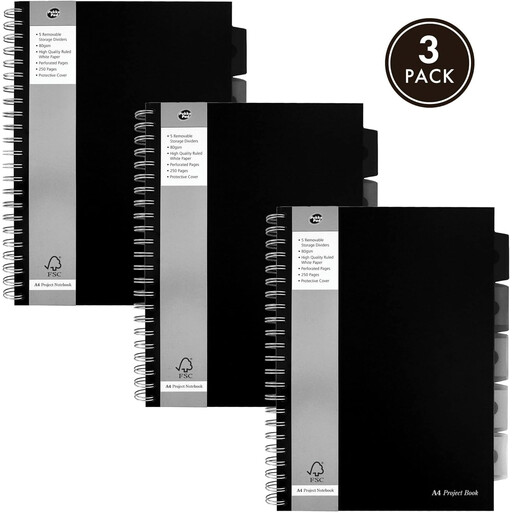
Why This Fits Their Persona: Ideal for professionals and students managing multiple complex subjects. The A4 size provides ample room for comprehensive notes, while the built-in organisation system keeps everything separate and easy to find.
It directly counters the "one-size-fits-all" myth. The five colour-coded, repositionable dividers with storage pockets allow you to create a customised system within a single, robust notebook.
The wipe-clean polypropylene cover offers excellent durability and the 250 pages per book provide substantial capacity. Perforated pages allow for clean removal and filing.
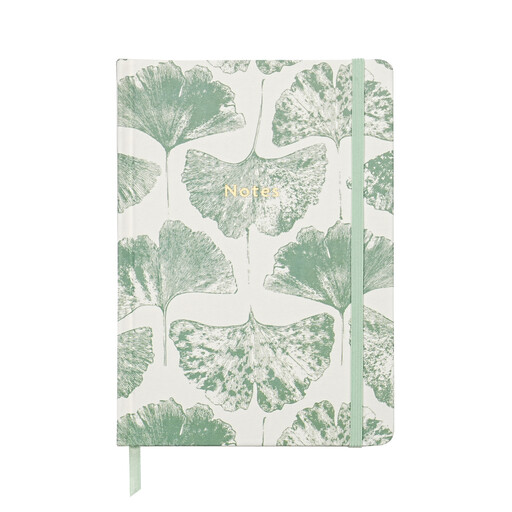
Why This Fits Their Persona: For those who appreciate a premium writing experience and sophisticated design. This A5 journal is perfect for personal reflection, creative writing or as a stylish accessory for important meetings.
It solves the paper problem with high-quality 100g wood-free ivory paper. This thick, smooth paper is designed to handle various inks with minimal bleed-through, ensuring every page is usable.
The elegant fabric hardcover with foil or debossed detailing provides a tactile, premium feel. The durable hardcover construction protects the 96 sheets inside, making it a lasting choice.
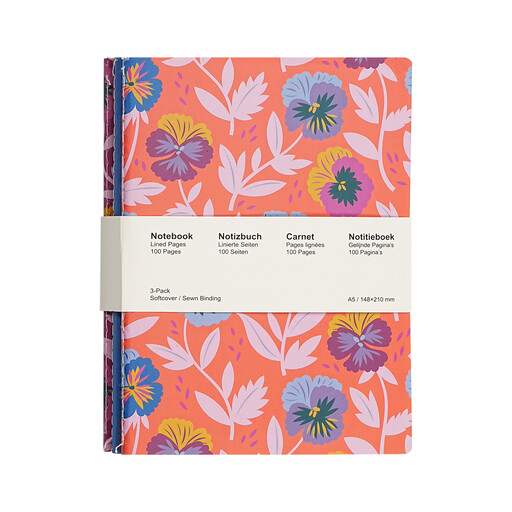
Why This Fits Their Persona: This multi-pack offers excellent value for students or anyone needing separate, lightweight notebooks for different subjects or projects. The A5 size is easy to carry between lectures or meetings.
It avoids the durability deception of many softcover books. The stitch binding is both durable and flexible, allowing the notebook to lay flat for easy writing without the spine cracking or pages falling out.
The 80gsm cream-coloured paper is a step up from basic notepad paper, offering a good balance of quality and affordability. The 3-pack configuration provides excellent value for money.
We have compiled a complete, real-time list of products that fully satisfy these strict selection criteria and UK safety regulations.
GSM stands for 'Grams per Square Metre' and is a measure of paper density and thickness. For a lined notebook, a higher GSM (like 100 gsm) means the paper is thicker and more opaque. This makes it more resistant to ink bleeding through from pens, which is why it's a feature of a thick paper journal. A lower GSM (70-80 gsm) is thinner and lighter, suitable for everyday notes with a ballpoint pen or pencil.
This depends on your work style. A spiral notebook is practical if you need to take notes away from a desk, as it can be folded back on itself for a sturdy writing surface. An executive notebook with a hardcover offers better protection for your notes during transit and presents a more formal, professional appearance in meetings. If you need to frequently remove pages to file them, a spiral notebook with perforated pages is more convenient.
The most effective way is to choose a notebook with higher-quality paper, specifically one with a weight of 100 gsm or more. This provides a physical barrier that most inks cannot penetrate. If you are using a notebook with thinner paper (around 80 gsm), consider using ballpoint pens or fine-tipped gel pens, as they deposit less ink than fountain pens or broad markers.