
24/7 Customer Support

Free returns

Same-day & Next-day Delivery

Quality Guaranteed

Unlock Your Welcome Offers: FREE Delivery | Up to 80% OFF | Free 30-day JoyPlus trial
Download the APP
Choosing between lined notebooks and project books is not simply a matter of picking a colour or cover design. The right format depends on how you write, where you carry it and whether your notes need to be filed, shared or separated by subject.
Students may need a compact book for lectures, while office professionals could benefit from perforated pages, storage pockets or repositionable dividers. Before buying, it is worth checking the specifications carefully rather than relying on phrases such as “professional quality” or “extra durable”.
A product may advertise a large number of pages, but the practical capacity depends on the paper thickness, binding and whether dividers or pockets take up internal space. Also check whether the listing refers to sheets or pages. One sheet has two sides, so these terms are not interchangeable.
For example, a hardcover A5 notebook with 96 sheets offers a different writing experience from a project book with 250 pages. The former may be easier to handle during daily journalling, whereas the latter is designed for longer-term organisation.
A spiral notebook or wirebound notebook can open flat, which is useful for lectures and meetings. However, wire can bend if the book is forced into an overfilled bag. If you regularly remove pages, check whether they are perforated and whether they retain a standard filing size after removal.
A notebook with a tear-out margin may be more useful than one with a simple glued binding if you need to distribute meeting notes or transfer work into a ring binder.
Paper measured in gsm indicates weight per square metre, not a universal guarantee that every pen will behave perfectly. Heavier paper, such as 100gsm, can feel smoother and may reduce show-through compared with lighter paper. Still, ink type, pressure and writing on both sides affect the result.
If you use gel pens, fountain pens or highlighters, check the paper description and consider testing a small area before filling the notebook. Keep all paper products away from drinks and damp conditions, as moisture can damage pages regardless of gsm.
A ruled notebook with 8mm lines is suitable for conventional handwriting and structured notes. A lined notepad can be more convenient for quick lists, especially when pages are perforated. Compare the line spacing, total pages and paper weight rather than relying on the cover appearance.
For longer projects, look for a project notebook with dividers. Repositionable dividers allow you to change sections as a course, client brief or home project develops. Storage pockets can also prevent receipts, handouts and loose pages from disappearing inside a bag.
A hardcover notebook offers a firm writing surface and can protect pages in daily use. Textured lamination may help the cover resist light scuffs, but it should still be kept dry and wiped according to the product instructions.
A polypropylene cover is flexible and wipe-clean, making it suitable for classrooms, shared desks and busy office environments. Wirebound formats are convenient when a book needs to lie flat, while spiral binding requires sensible handling to avoid bending the wire.
For paper sourced from responsibly managed forests, look for FSC certified paper where this is stated in the product details. FSC certification relates to sourcing standards; it does not mean the notebook is waterproof, tear-proof or suitable for every writing instrument.
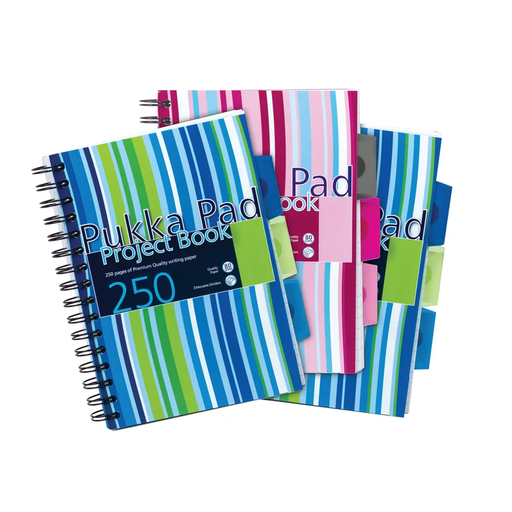
Why This Suits Their Persona: The A5 format is easy to carry to school, university, work or a home office, while the pack of three provides separate books for different subjects or tasks.
It combines a stated 250 pages per book with three repositionable dividers and storage pockets, so organisation is not dependent on the cover design alone.
A5 dimensions, 80gsm FSC certified ruled paper, repositionable dividers and pockets.
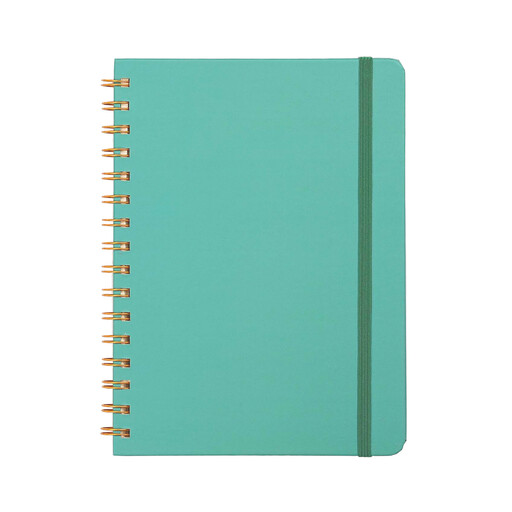
Why This Suits Their Persona: This compact hardcover journal suits writers, home-office users and shoppers looking for a practical notebook gift with a more structured feel.
Its specifications clearly state the A5 size, 96 sheets and 100gsm cream ruled offset paper, rather than leaving paper quality unspecified.
Hardcover with textured lamination, twin-wire spiral binding, elastic closure and 100gsm cream paper.
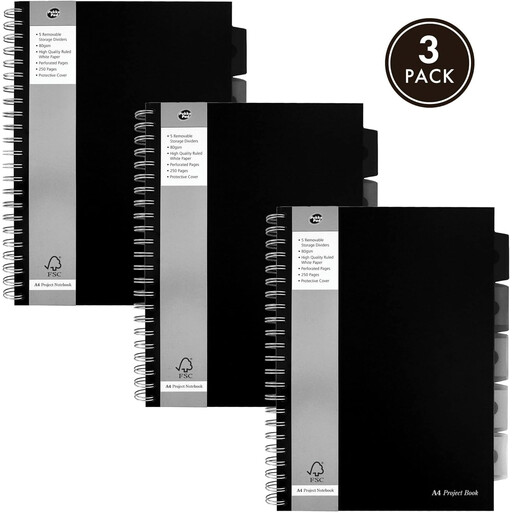
Why This Suits Their Persona: A4 capacity and sectioned storage suit project managers, teachers, office professionals and anyone maintaining detailed meeting notes or client work.
The listing specifies five repositionable dividers, storage pockets and clean-tear perforated pages, addressing common filing and organisation problems.
250 pages per book, 8mm feint ruling, FSC certified 80gsm paper and wipe-clean polypropylene covers.
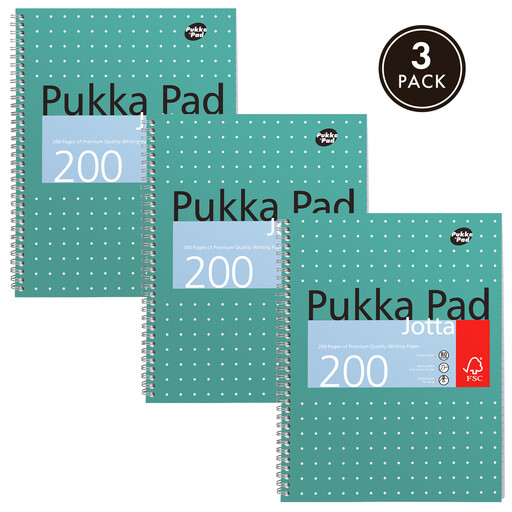
Why This Suits Their Persona: This format is suited to students and professionals who write in full A4 and need to remove pages for filing after meetings, classes or personal projects.
The added four-hole punched margin is specified to help pages tear out to true A4 size, making the filing function clear.
Pack of three, 200 pages per notepad, 8mm lines, wirebound construction and four-hole punched margins.
We have compiled a complete, real-time list of products that fully satisfy these strict selection criteria and UK safety regulations.
Yes. An A5 notebook is convenient for short notes and commuting, while an A4 notebook provides more room for diagrams, detailed minutes and documents. A B5 project book offers a middle-ground option for students who need capacity without carrying a full A4 book.
Lifespan depends on daily handling, page usage and storage. A wipe-clean cover can help protect against everyday marks, while wirebound books should not be overfilled or bent. Keeping notebooks dry and using the dividers properly can reduce unnecessary strain on the binding.
Perforated pages are useful when notes must be shared, filed or rearranged. They are particularly practical for office notebooks, meeting notes notebooks and coursework. If you rarely remove pages, a standard ruled notebook may provide a simpler and more economical format.