For a straightforward start, choose a desktop with Linux preinstalled, or check the exact configuration against Ubuntu certification before installing it yourself. A configurable tower gives you more control over cooling and future changes, but a quiet case alone does not establish how noisy the finished PC will be. Plan memory and storage around any virtual machines or containers you intend to run.
Who is this desktop for?
First-time Linux learners
If you want to begin commands, programming exercises or coursework without installing an operating system first, consider a Linux-preloaded desktop. Lenovo UK describes Ubuntu-preloaded models, while Canonical lists desktop configurations certified for Ubuntu; check the precise configuration you would buy.
People studying in quiet rooms
Fan noise during reading and light coding may matter more to you than a case's quiet branding. Check cooling and fan control alongside any available noise measurements; demanding work still needs adequate airflow.
Learners planning virtual labs
If you will test distributions in virtual machines or use containers, plan for those workloads when choosing memory and storage. Docker states that Docker Desktop for Linux runs a virtual machine; check the requirements of the tools you actually intend to use.
What matters when choosing?
Settle on a Linux setup you can manage, then assess cooling in your study space and capacity for the labs you plan to run.
Linux-preloaded desktop
Choose when: You want to start using Linux without installing it yourself; Lenovo UK describes Ubuntu-preloaded desktops.
Keep in mind: Check the operating system and precise configuration offered, rather than assuming every desktop from the brand has the same setup.
Ubuntu-certified desktop
Choose when: You are willing to install Ubuntu but want to select hardware using Canonical's certified-desktop listings.
Keep in mind: Match the named configuration and supported release; certification does not automatically cover every variant in a model family.
Configurable tower
Choose when: Selecting the cooling arrangement or allowing for later component changes matters to your study plans.
Keep in mind: As be quiet!'s component guidance illustrates, airflow and fan noise need to be considered together; the case alone cannot establish the finished PC's noise.
| Concern | What to check | Who this matters to |
|---|
| Linux setup |
Check whether Linux is preinstalled; otherwise, match the exact configuration and Ubuntu release to certification or manufacturer compatibility information. |
If I want to start coursework without dealing with installation or uncertain hardware support, a documented Linux setup comes first. Around 37% of consumers put a compatible, straightforward start ahead of their other concerns. |
| Study-room noise |
Look for noise measurements under light use where available, and inspect the cooling arrangement and supported fan controls. |
In a quiet room, I would rather avoid distracting fan noise during reading and coding while still allowing the PC to cool itself. Roughly 36% of consumers make low-disruption operation their primary concern. |
| Virtual lab capacity |
Check processor virtualisation support, then choose memory and SSD capacity for the guest systems and images you plan to keep. |
If I plan to test distributions or keep lab environments, I need room beyond a single Linux installation. Around 27% of consumers prioritise virtual machine and container headroom. |
Buying mistakes to avoid
-
Assuming Linux support covers every model from a brand
Ubuntu certification and manufacturer compatibility lists identify particular configurations and releases. Different graphics or wireless hardware can change which information applies.
Match the full model and relevant components to Canonical's certification listing or the manufacturer's compatibility information before ordering.
-
Treating a quiet case as proof of a quiet PC
Fan behaviour depends on cooling, airflow and the heat produced by the selected components. A case label does not tell you how the complete machine sounds during study.
Look for measured noise information where available, and check the cooler, airflow and fan-control options for the configuration you choose.
-
Sizing the PC only for an initial Ubuntu installation
Virtual disks and container images add demands beyond ordinary desktop use. Docker Desktop for Linux also runs a virtual machine, according to Docker.
List the guest systems and tools you intend to use, then allow memory and SSD space for them as well as the host system.
-
Choosing workstation hardware without a workload for it
Professional workstation configurations address demands that command-line practice or coding exercises alone do not establish.
Consider workstation-class components when your planned virtual labs, graphics work or other applications call for them; otherwise, focus on Linux compatibility, suitable capacity and cooling.
Brands to consider for Linux desktops and quiet builds
Dell
A mainstream desktop route for comparing Ubuntu configurations.
- Dell UK offers an Ubuntu Linux filter for its desktop catalogue, and Canonical lists certified Dell hardware.
- Check the exact configuration; workstation specifications should not be treated as a requirement for ordinary Linux coursework.
Lenovo
Relevant when comparing Ubuntu-preloaded desktops and documented Linux compatibility.
- Lenovo UK describes desktops supplied with Ubuntu preloaded.
- Lenovo's compatibility information distinguishes named models and Linux distributions; check the intended configuration and release.
HP
Relevant if Linux learning is accompanied by work that calls for a professional workstation.
- HP UK lists Linux-ready Z workstation desktops.
- Consider whether your planned applications warrant a workstation rather than assuming that specialist hardware is needed to learn Linux.
be quiet!
A component option for a custom or configurable tower, not a complete Linux desktop.
- be quiet! explains airflow, static pressure and noise considerations in its fan guidance; its Silent Base line offers configurable panels.
- These component features do not establish the noise level of an assembled PC. Cooling must suit the selected hardware.
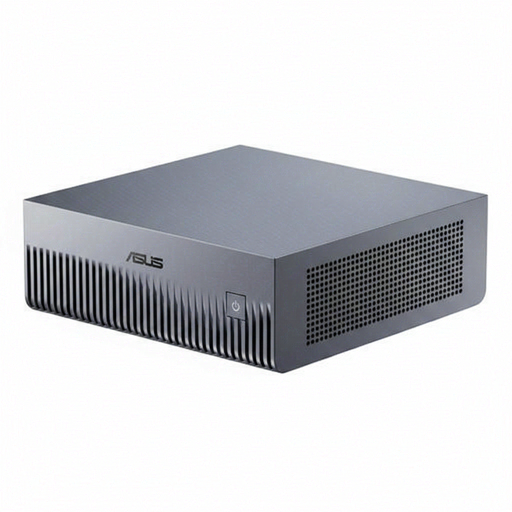
Joybuy Linux-preloaded desktop option
This Linux-preloaded model is aimed at substantial development work rather than basic coursework alone. Check software compatibility and measured noise before choosing it for a quiet study.
 No image available
ASUS Ascent GX10 NVIDIA GB10, 128GB, 1TB
Preinstalled NVIDIA DGX OS provides a Linux environment for learners planning substantial development work.
128GB unified memory and a 1TB NVMe SSD.
Check whether your intended learning software and virtual machine tools work with its Arm CPU. Check measured noise and whether a compatible 180W USB-C EPR power source is supplied.
Joybuy
Frequently asked questions
Should I buy a Linux-preloaded desktop or install Ubuntu myself?
Choose a Linux-preloaded desktop if avoiding the initial installation matters most; if you would rather install Ubuntu, check the exact model against Canonical's certification listings or manufacturer compatibility information. Ubuntu's installation guidance calls for a USB port or DVD drive when using installation media.
Do I need a workstation to learn Linux?
Ordinary commands and coding exercises do not, by themselves, call for a workstation. If your plans include several virtual machines or substantial development environments, size the desktop for those workloads; Docker states that Docker Desktop for Linux runs a virtual machine.
How can I choose a quieter desktop without neglecting cooling?
Check the complete cooling configuration rather than relying on a quiet-branded case. Look for measured noise information where available, consider the heat-producing components you select, and confirm that the motherboard or controller supports the intended fan controls.


