First-time Linux learners
If you would rather practise commands and desktop basics than diagnose hardware problems, start with the exact configuration, not just a familiar model name. Canonical lists desktops certified for Ubuntu.


For introductory Linux learning at a shared desk, start by looking for a compact desktop whose exact configuration is Ubuntu-certified or supplied with Ubuntu. An expandable tower makes more sense if several virtual machines, containers or future component upgrades are part of your plan; whichever route you take, check the desk layout, connections and supplied peripherals before ordering.
If you would rather practise commands and desktop basics than diagnose hardware problems, start with the exact configuration, not just a familiar model name. Canonical lists desktops certified for Ubuntu.
If another person's screen, keyboard or paperwork occupies the same surface, check where the computer, cables and power supply will go. A small-form-factor desktop is one option; Entroware lists these alongside larger systems.
If your plans include virtual machines, containers or substantial local development, check memory, storage and upgrade options before settling on a compact design. Lenovo's ThinkStation P350 Tower illustrates the sort of configurable workstation available, but its specifications should not be assumed for another model.
Decide what would most affect your first months of Linux learning, then check that the exact desktop also fits the shared space and the projects you intend to try.
| Concern | What to check | Who this matters to |
|---|---|---|
| Linux compatibility | Look up the exact configuration in Canonical's Ubuntu certification catalogue, ask about Ubuntu preinstallation, or test the intended distribution using a live installer. | I want to start practising Linux rather than spend my first sessions troubleshooting the display or network. Around 33% of consumers would make a workable Linux setup their primary concern. |
| Shared-desk space | Measure the available position and cable routes; check display connections, USB ports and where the power supply will sit. | Another person needs room at this desk, so the computer and its cables cannot take over the workspace. Preserving that space comes first for around 25% of consumers. |
| Project headroom | Match installed memory and storage to your planned work, then check whether the chosen model allows later upgrades. | I expect to move on to virtual machines, containers or larger projects and do not want to replace the desktop to do so. Around 25% of consumers would prioritise that headroom. |
| Keeping the setup affordable | Account for any monitor, input devices or adapters you need, as well as the time involved in testing an existing PC. | I would rather use suitable hardware I already own than buy capacity my first Linux projects will not use. Keeping the initial setup affordable would lead the decision for around 17% of consumers. |
Compatibility depends on the exact hardware and the distribution you intend to run. Canonical's certification applies to listed Ubuntu configurations, not automatically to every variant in a product family.
Check the precise configuration. If you plan to install Linux yourself, keep a way to recover your existing system and test the display, network and other devices you need before committing to the installation.
A compact case does not resolve a missing monitor connection or an awkward cable layout. Lenovo's ThinkStation P350 Tower page, for example, identifies pictured input devices and a monitor as separately sold items.
List what is already on the desk, then confirm the chosen desktop's display outputs, included items and any adapters needed for your setup.
Introductory terminal and desktop practice does not, by itself, establish a need for workstation expansion. Ubuntu's installation guidance specifies at least 25GB of storage for installation; that minimum is not a long-term storage recommendation.
Choose an expandable tower when virtual machines, containers or planned upgrades make its additional room useful, rather than treating a workstation specification as a starting requirement.
A configured order calls for a close look at the seller's cancellation terms. Separately, GOV.UK states that faulty, misdescribed or unfit goods have refund protections; a seller's change-of-mind policy is not the whole picture.
Confirm the agreed configuration and cancellation terms in writing before ordering, and keep the order details if the delivered desktop does not match them.
A reference point for conventional desktops offered with Ubuntu configurations.
Relevant when comparing compact ThinkCentre desktops with larger ThinkStation workstations.
A Linux-specialist supplier offering Ubuntu-based desktop configurations, including small-form-factor systems.
These compact desktops give you hardware to assess for a shared desk. The SOYO and Lenovo models are candidates for installing Linux yourself; the ASUS model lists NVIDIA DGX OS and is aimed at a different, AI-focused use case. Check your intended distribution and learning software against the exact device before choosing any of them for Linux study.
 No image available
A mini PC to consider if you can test the Linux distribution you intend to install.
The title lists 24GB LPDDR5 memory, a 512GB SSD and six USB 3.2 ports.
Check Linux compatibility, monitor and peripheral inclusion, and the Ethernet specification before ordering; the supplied product information gives conflicting Ethernet speeds.
 No image available
This Windows 11 Pro mini PC is a candidate for a shared desk if you are prepared to check its suitability for Linux yourself.
The title lists 16GB LPDDR5 memory, a 512GB NVMe SSD and Wi-Fi 6E.
Test the intended distribution's display, network, audio and USB functions, and confirm what monitor connections and peripherals your setup requires.
 No image available
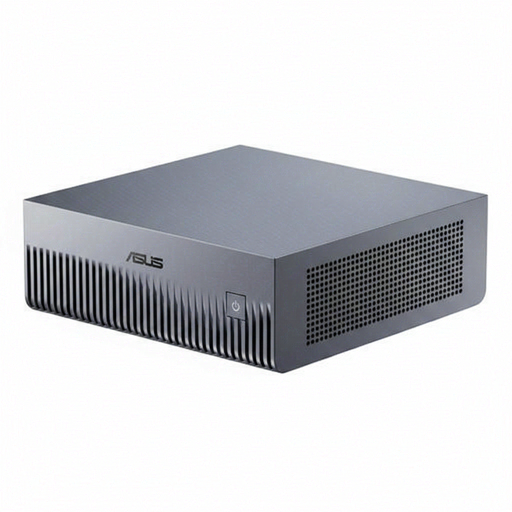
Consider this AI-focused DGX OS desktop only if that environment matches the technical work you plan to learn; it is not a substitute for checking support for your intended distribution.
The title lists NVIDIA GB10 Grace Blackwell, 128GB unified memory, a 1TB NVMe SSD and NVIDIA DGX OS.
Confirm compatibility with your learning materials, display and peripherals, and check the upgrade arrangements if future changes matter to you.
 No image available
This Windows 11 mini PC is an option to assess for Linux installation where a smaller computer suits the shared workspace.
The title lists 16GB LPDDR4 memory, a 512GB SSD and HDMI 2.0, USB Type-C and DisplayPort 1.4 connections.
Test the intended Linux distribution on this configuration and confirm the supplied peripherals and connections for your monitor.
 No image available
This IdeaCentre Mini PC is another compact desktop to assess if you intend to install Linux yourself.
The title specifies an Intel Core 5 processor, 16GB RAM and a 512GB SSD.
Check Linux compatibility for variant 91B2000XUK, along with its monitor connections and supplied peripherals; certification of a different Lenovo model would not establish compatibility for this one.
No workstation-class specification is required just to begin with a Linux desktop and basic commands. Ubuntu's installation guide calls for at least 25GB of storage and recommends an installation flash drive of 8GB or more; choose greater memory, storage or expandability according to the projects you actually plan to run.
Look for the exact configuration in Canonical's Ubuntu certification catalogue rather than relying on the product-family name. If you intend to install Ubuntu on another device, try it before replacing the existing system and check the display, network, audio, USB and other functions you depend on.
Copy any files you want to keep from the desktop to separate storage before changing its operating system. Also check the installation flash drive: Ubuntu's installation instructions warn that creating the installer erases its contents.
Confirm the agreed components, included peripherals and the seller's cancellation terms before placing a configured order. For UK purchases, GOV.UK separately states that faulty, misdescribed or unfit goods have refund protections, so do not confuse change-of-mind terms with remedies for a problem with the goods.