What matters when choosing
Choose the architecture around what you intend to learn, then check the exact machine and the desk setup. ASUS documents Linux releases for cited NUC 13 Pro kits; Canonical lists Raspberry Pi 5 for Ubuntu 26.04 LTS; the cited Minisforum UM870 Slim page lists Windows 11 rather than an explicit Linux-support statement.
Documented x86 kit
Choose when: You want to follow PC-oriented Linux lessons on an exact model with a listed distribution.
Allow for: The cited ASUS NUC 13 Pro kits need separately supplied memory and storage, and ASUS describes support for validated Linux distributions as best-effort.
Raspberry Pi 5
Choose when: ARM Linux, image flashing or Raspberry Pi hardware work is itself your learning goal.
Allow for: x86-specific course materials may need ARM alternatives, and the board needs a suitable complete power and storage setup.
Expandable x86 mini PC
Choose when: Local virtual machines, containers or several services make memory and storage expansion a priority.
Allow for: The cited Minisforum UM870 Slim specification offers expansion options, but its product page does not establish Linux support or shared-office noise for your configuration.
| Concern | What to check | Who this matters to |
|---|
| Linux compatibility |
Match the full model identifier to the intended distribution and release; check what the kit includes. |
I want to spend my first sessions learning Linux rather than diagnosing basic hardware support. Roughly 46% of consumers would put documented, exact-model compatibility first. |
| Shared-desk practicality |
Check the required ports, cable placement and any locking arrangement; assess exact-model noise under the workloads you expect. |
At a desk used alongside colleagues, I need a workable layout without assuming a small computer will be quiet. For roughly 27% of consumers, the shared-workspace setup is the primary concern. |
| ARM learning |
Confirm ARM64 versions of your course tools and images, and plan the board’s power and storage setup. |
I want to learn how ARM Linux and Raspberry Pi projects work, even if an x86 tutorial needs adapting. That goal comes first for roughly 18% of consumers. |
| Local lab expansion |
Check memory and SSD slots and their stated limits against the virtual machines or services you plan to run. |
If my lessons involve several local services, I need room to configure the machine for them. Expansion is the leading need for roughly 9% of consumers. |
Joybuy products for this topic
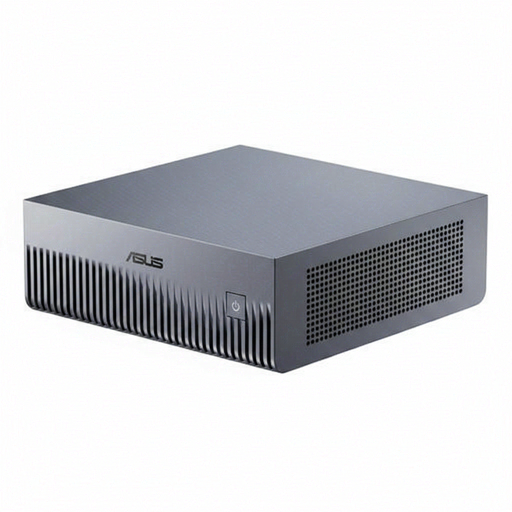
This ASUS system offers a stated Linux environment for a compact desktop setup, but its AI-focused configuration is a different proposition from a conventional x86 learning kit or Raspberry Pi project. Check your intended course software before choosing it for general Linux lessons.
 No image available
ASUS Ascent GX10 1TB, NVIDIA GB10, 128GB unified memory
Consider this system if you specifically want to learn in its NVIDIA DGX OS environment; check that your intended Linux course, distribution and software suit it before buying.
The product name specifies a 1TB NVMe SSD and 128GB unified memory. Confirm whether a compatible USB-C power source meeting the stated 180W EPR PD 3.1 requirement is supplied, and assess noise under your intended shared-office workload.
View on Joybuy
Questions before you buy
Will any Windows mini PC work well for learning Linux?
Do not assume so from the processor or brand alone. Check the exact model and intended Linux release, including wireless, display and suspend behaviour. ASUS says its Linux validation applies to some NUCs and is best-effort; the cited Minisforum UM870 Slim page lists Windows 11 without an explicit Linux-support statement.
When should I choose Raspberry Pi 5 instead of an x86 mini PC?
Choose Raspberry Pi 5 when ARM Linux, image flashing or hardware projects are part of what you want to learn. Canonical lists it for Ubuntu 26.04 LTS, but check ARM64 availability for your tutorials and software images before treating it as a substitute for an x86 course machine.
Does Raspberry Pi 5 need cooling at a shared desk?
Choose cooling according to the enclosure and workloads you intend to use rather than assuming a bare board will suit sustained heavy work. Raspberry Pi presents its Active Cooler for heavy-load use; check the resulting setup’s noise separately before using it alongside colleagues.
Is the mini PC alone enough to assess a shared workstation?
No. The Health and Safety Executive includes hot-desking in its display-screen equipment guidance, so the display and overall workstation arrangement matter as well as the computer. If the desk is used for work, check the applicable workplace assessment arrangements.


