
24/7 Customer Support

Free returns

Same-day & Next-day Delivery

Quality Guaranteed

Unlock Your Welcome Offers: FREE Delivery | Up to 80% OFF | Free 30-day JoyPlus trial
Download the APP
Finding the right tool to create eye-catching displays can be a challenge. Whether you are a café owner updating your daily specials, a teacher preparing a classroom board or a crafter decorating your windows for the season, you need markers that are vibrant, reliable and easy to use. Smudged lettering, faint colours and marks that refuse to erase can turn a creative project into a frustrating task.
This guide is designed to help you navigate the options available for writing on non-porous surfaces. We will explore the key features to look for in liquid chalk pens and other specialised markers, helping you find a suitable choice for your specific needs, from temporary window art to permanent industrial labelling.
Before selecting a marker, it is helpful to consider a few key factors. Understanding these details will ensure the product you choose performs as expected on your intended surface.
The most critical factor is the type of surface you will be writing on. Liquid chalk pens, also known as chalkboard markers, are specifically formulated for non-porous surface pens. This includes materials like:
Using these markers on porous surfaces like paper, wood, fabric or traditional slate chalkboards can result in "ghosting"—a faint residue that is difficult or impossible to remove. Always check that your surface is sealed and non-porous before application.
The type of ink determines how the marker is removed.
The nib (or tip) of the marker dictates the style of your lines. Many high-quality markers feature reversible nib markers, offering two tips in one. A common combination is a bullet tip for consistent, rounded lines and a chisel tip for creating both broad strokes and fine lines, offering great versatility for lettering and drawing.
Here are some noteworthy options, each suited to different applications and surfaces.

Why It Stands Out: This set is a classic choice for creating vivid, opaque displays. The liquid chalk formula provides smooth, consistent flow, and its wet-erase capability means you can update signs and designs with just a damp cloth. The inclusion of a reversible nib adds a layer of versatility, allowing you to switch between bold headlines and finer details effortlessly.
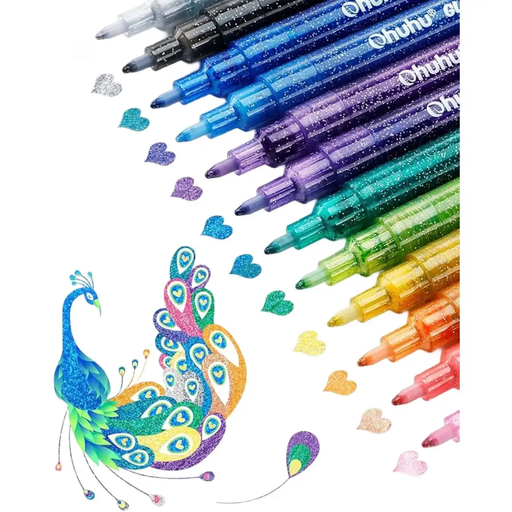
Why It Stands Out: For projects that require a touch of sparkle, these metallic markers from Ohuhu are an interesting option. While not a traditional liquid chalk, their water-based ink is highly pigmented and shows up well on dark surfaces, including black paper and card. The extra-fine 0.8mm tip is designed for detailed work.
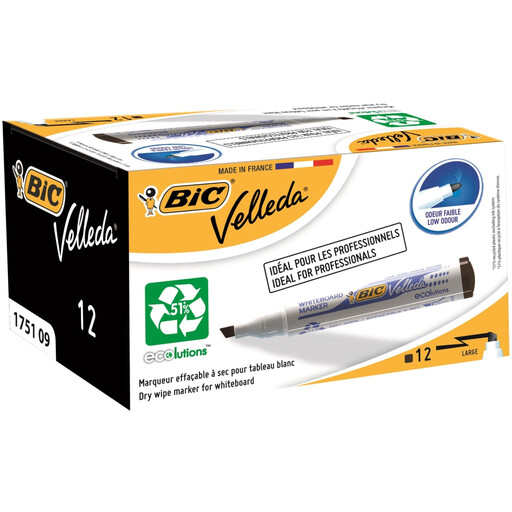
Why It Stands Out: If your primary surface is a whiteboard, a dedicated dry-erase marker is essential. The BIC Velleda 1751 is a dependable tool for office meetings and classroom teaching. Its low-odour, alcohol-based ink erases cleanly without heavy scrubbing. The wide chisel tip is practical for creating both visible headlines and smaller notes.
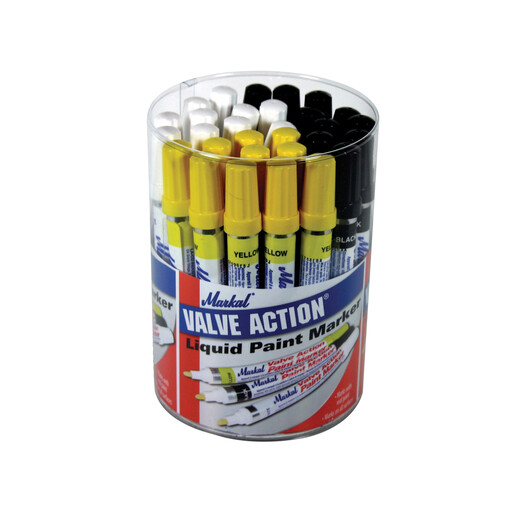
Why It Stands Out: When you need a mark that lasts, a permanent paint marker is the solution. The Markal Paint-Riter is designed for durability. Its weather-resistant paint adheres to a wide range of materials, including metal, wood, plastic and glass. The valve-action mechanism gives you precise control over the paint flow, ensuring a clean and permanent application.
If your project has specific requirements, such as needing a classic white felt tip pen or other specialised writing tools, you may find more choices in our broader collection.
Explore our full range of markers and writing supplies here.
1. Can you use liquid chalk pens on any chalkboard? No, it is not recommended. Liquid chalk pens are designed for non-porous chalkboards, often made of vinyl, acrylic or sealed surfaces. Using them on traditional porous slate chalkboards can cause the ink to absorb into the material, leaving a permanent stain or "ghosting" that cannot be erased.
2. How do you remove liquid chalk? For most wet erase pens, a simple damp cloth or paper towel is all that is needed. For stubborn marks, a small amount of household cleaner on the cloth may help, but always test on a small, inconspicuous area first. Always refer to the manufacturer's instructions for the specific product you are using.
3. Are liquid chalk pens the same as whiteboard markers? No, they are different. Liquid chalk pens typically use a wet-erase formula that is opaque and vibrant, ideal for dark surfaces and glass. Whiteboard markers use a dry-erase formula designed specifically to be wiped off a whiteboard with a dry eraser. Using the wrong pen on a surface can make it very difficult to clean.