
24/7 Customer Support

Free returns

Same-day & Next-day Delivery

Quality Guaranteed

Unlock Your Welcome Offers: FREE Delivery | Up to 80% OFF | Free 30-day JoyPlus trial
Download the APP
Liuzhou river snail rice noodles, also known as luosifen, have a distinctive combination of sour bamboo shoots, chilli oil, pickled vegetables and savoury broth. For UK shoppers, they offer a convenient way to enjoy regional Chinese food at home, but the large range of pack sizes and flavour descriptions can make comparison difficult.
Before buying, look beyond phrases such as “extra aromatic” or “authentic Chinese snail noodles”. The practical differences are usually found in the ingredients, allergen information, portion size and preparation method.
A colourful carton may contain several smaller packs, while a single 375g or 400g pack may provide a larger portion than expected. Check both the number of packs and net weight per serving. A gift box is useful for sharing or stocking up, but may not suit someone trying luosifen for the first time.
Some products use a river snail soup base, extract or stock, while others are described as artificial snail vermicelli and may focus on the characteristic sour and spicy flavour instead. Read the full ingredient list if the presence of snail matters to you. A product labelled with a snail flavour does not automatically mean it contains the same ingredients as a traditional soup.
The strong aroma mainly comes from fermented or pickled bamboo shoots, seasoning and chilli oil. “Extra spicy” versions can be intense, and the nutrition panel may show a relatively high salt value per 100g. If you prefer a milder bowl, add the chilli oil gradually and consider using only part of the soup base.
Look for the exact ingredients in the soup base, toppings and noodle packet, rather than checking only the front of the packaging. Common ingredients include rice, corn starch, bamboo shoots, pickled beans, peanuts, tofu skin and chilli oil.
Allergens vary between products. Depending on the recipe, labels may identify:
UK food labels should provide allergen information, but always check the current packaging, particularly if you have an allergy or are buying for someone else. Some products also state that the production line handles sesame, egg, shrimp or crustaceans.
Instant snail vermicelli is not always ready to eat straight from the packet. Most products require the rice noodles to be boiled separately, drained and combined with a freshly prepared broth. Preparation commonly takes 8–15 minutes, depending on noodle thickness and the instructions supplied.
Separate packets can improve control over texture and flavour. Peanuts and fried bean curd are usually better added at the end so they retain some crispness. A product with multiple topping sachets may provide a more varied bowl, while a simpler pack can be more convenient for a quick student or office meal.
Most dry Liuzhou luosifen products can be stored in a cool, dry place away from direct sunlight. Check the best-before date and do not use vacuum-sealed packets that appear bloated or damaged.
Nutrition information is normally listed per 100g, but the pack may contain several seasoning sachets with different weights. Compare the serving size, energy, fat and salt, rather than assuming the per-100g figure equals one finished bowl. Once prepared, consume the noodles promptly.

Why This Fits Their Persona: A single 400g pack gives first-time buyers a substantial portion without committing to a multi-pack or gift box. It suits students, flat-sharers and curious shoppers exploring sour and spicy noodles at home.
The listing provides a 400g net quantity and identifies peanuts and soy as allergens, helping shoppers check portion and dietary details before purchase.
Includes rice noodles, pickled bamboo shoots, pickled cowpea, peanuts and seasoning packets; cooking instructions specify boiling the noodles for 8–10 minutes.
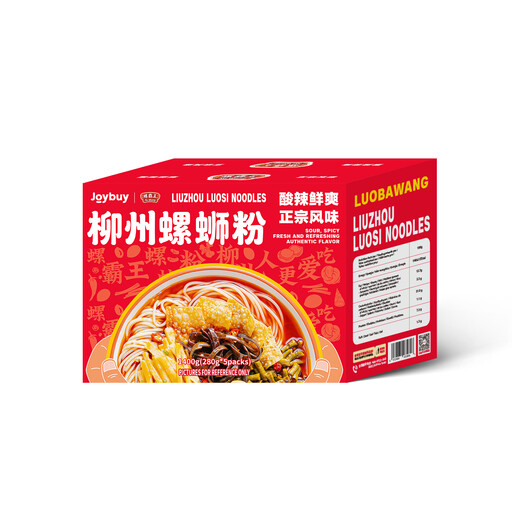
Why This Fits Their Persona: The five-pack format suits households, food-sharing occasions and gift buyers who want several individually portioned meals rather than one loose bulk bag.
The listing states five 280g packs, so the total 1,400g quantity is clear. It also identifies peanut as an allergen and includes river snail in the soup-base ingredients.
Eight ingredient packets include bamboo shoots, pickled vegetables, tofu skin, peanuts, chilli oil and vinegar; the box format is suitable for sharing or gifting.

Why This Fits Their Persona: Designed for shoppers who specifically want a mala or hot-pot-style bowl, with an indicated preparation time of around 15 minutes.
The hot-pot flavour and included mala soup packet are stated directly, reducing uncertainty for shoppers seeking a specific spicy profile rather than a classic broth.
Contains fried bean curd, sour bamboo shoots, pickled vegetables, peanuts, vinegar and chilli oil; the 247g pack includes separate components for customising the bowl.
We have compiled a complete, real-time list of products that fully satisfy these strict selection criteria and UK safety regulations.
For most packs, follow this sequence:
You can also add spring onions, leafy greens, a fried egg or cooked seafood. For a richer seafood variation, check allergen details carefully before adding shellfish ingredients such as clams, mussels or cooked snail meat.
It depends on the product. Some soup bases list river snail or snail extract, while others are labelled artificial snail vermicelli and concentrate on the sour, spicy aroma created by pickled vegetables and seasonings. Read the ingredients rather than relying on the product name.
Dry products are generally intended for cupboard storage, but the exact shelf life varies. Check the best-before date on the packaging, store the pack in a cool, dry place and consume the prepared noodles immediately.
Not all packs have the same heat level. Extra-spicy and mala versions are likely to provide more chilli and pepper flavour, while tomato or original-style versions may be easier to adjust. Add chilli oil in stages so the finished bowl matches your preference.