
24/7 Customer Support

Free returns

Same-day & Next-day Delivery

Quality Guaranteed

Unlock Your Welcome Offers: FREE Delivery | Up to 80% OFF | Free 30-day JoyPlus trial
Download the APP
A well-chosen living room sideboard can transform a space from cluttered and chaotic to organised and stylish. Yet, finding the right one can feel overwhelming. It needs to be more than just a storage unit; it should complement your decor, fit your space perfectly and meet your specific storage needs. As a Joybuy Product Recommendation Officer, my role is to help you navigate the options and find practical solutions that genuinely enhance your home. This guide cuts through the clutter, offering clear advice and a few standout recommendations for 2026.
Before diving into specific products, let's cover a few key considerations. Thinking about these points will help you narrow down your search for the ideal sideboard storage cabinet.
First, measure the wall space where you plan to place the sideboard. Note the maximum width, depth and height you can accommodate. Remember to leave enough room around it for clearance and to open doors and drawers comfortably. Consider its primary function. Will it be a living room sideboard for hiding away electronics and board games, a dining room sideboard for storing tableware or a slim hallway cabinet for keys and post? The intended use will heavily influence the size and type of storage you need.
A sideboard is a significant piece of furniture, so its style should harmonise with your room's aesthetic. For a clean, minimalist look, a modern sideboard with sleek lines or a scandi style buffet in light wood tones works beautifully. If you prefer a more traditional or rustic feel, a classic oak sideboard or a painted finish might be more suitable. Popular finishes like a white sideboard or a grey storage cabinet offer great versatility and can blend seamlessly into many different colour schemes.
Think practically about what you need to store. Do you have lots of small items that would be best organised in drawers? Or do you need larger cupboard spaces for things like serving platters, vinyl records or tall vases? Some sideboards offer a mix of both, while others feature glass doors, which are perfect for displaying decorative items you want to keep dust-free.
Here are a few recommendations that stand out for their design, functionality and quality construction.
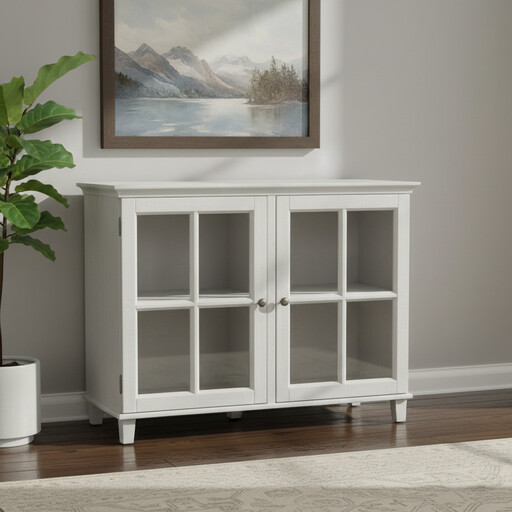
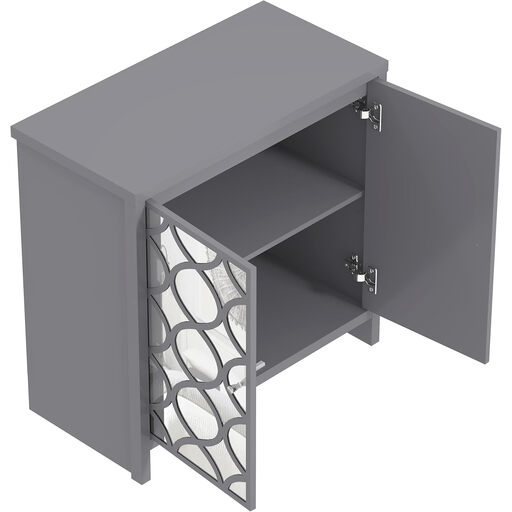
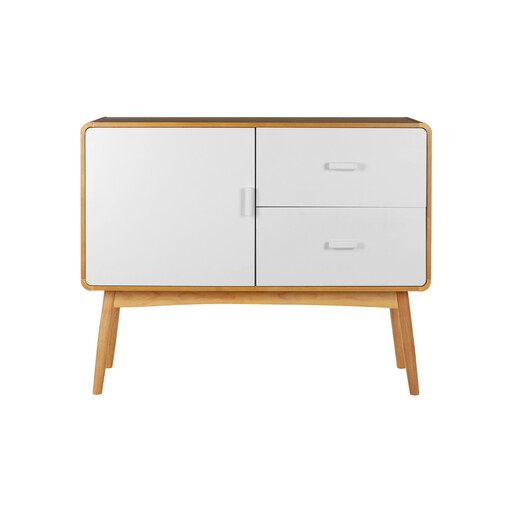
If our top picks aren't quite the right fit or if you have a specific finish in mind, there are many other styles to explore. For a clean and timeless look that complements almost any decor, you can browse a wide variety of white solid wood sideboard options to find the perfect match for your home.
1. What is the difference between a sideboard, a buffet and a credenza? Historically, these terms had distinct meanings based on their room placement and design. A sideboard was traditionally in the dining room for serving food, a buffet was similar but often larger and a credenza was a low-profile office cabinet. Today, the terms are used almost interchangeably to describe a long, low storage cabinet. The name often depends more on the retailer's description than any strict definition.
2. How do I choose the right size sideboard for my living room? A good rule of thumb is to choose a sideboard that is not wider than the main piece of furniture it's paired with, such as a sofa or a dining table. In terms of height, a standard sideboard is usually between 75-90 cm tall. Ensure it doesn't overwhelm the space but is substantial enough to provide the storage you need. Always leave at least 15-20 cm of empty wall space on either side to avoid a cramped look.
3. Can a sideboard be used as a TV stand? Yes, many modern sideboards are perfectly suitable for use as a TV stand, provided they are sturdy enough to support the weight of your television. Look for a model with a strong top surface and check its weight capacity. A sideboard can be a stylish alternative to a traditional media unit, offering more enclosed storage to hide cables, consoles and other media accessories.