
24/7 Customer Support

Free returns

Same-day & Next-day Delivery

Quality Guaranteed

Unlock Your Welcome Offers: FREE Delivery | Up to 80% OFF | Free 30-day JoyPlus trial
Download the APP
For UK shoppers seeking a low-calorie sparkling soft drink, Living Things probiotic soda offers a fruit-forward alternative to conventional fizzy drinks. The range includes live cultures, chicory root inulin and real fruit ingredients, with several flavours supplied in convenient 4 x 330ml soda multipacks.
However, functional soft drinks can be difficult to compare. Packaging may highlight “biotic” ingredients while making the actual sugar, fibre and serving information less prominent. Before buying, check these common pitfalls and match the drink to how you plan to use it.
“Probiotic”, “prebiotic” and “biotic” do not mean the same thing. A product containing live cultures is different from one containing prebiotic fibre, while some drinks include both. Look for the actual ingredient list rather than relying on front-of-pack wording.
The Living Things range lists Lactic Acid Bacillus as the live culture and chicory root inulin as the prebiotic plant fibre in selected flavours. These are product features, not a substitute for a varied, balanced diet.
A drink can be described as low-sugar soda while still containing naturally occurring sugars from fruit juice. Compare sugar per 100ml and per can, as a 330ml serving gives a more realistic picture of what you consume.
For example, 1.7g of sugar per 100ml equates to approximately 5.6g per 330ml can. The peach and blood orange version lists 1.5g per 100ml, or roughly 5g per can.
Flavour names can make a range appear uniform, but recipes and nutrition values differ. Some versions contain more fruit juice, while others list different quantities of chicory root inulin. If you have allergies, dietary restrictions or sensitivities to added fibre, read the label for the exact flavour before opening the multipack.
A low-calorie sparkling soft drink is generally easier to fit into a mindful refreshment routine, but compare like for like. The listed Living Things flavours provide:
The figures are based on 100ml, so multiply them by 3.3 to estimate the content of one 330ml can.
Peach & Blood Orange lists 2g of fibre per 100ml, providing approximately 6.6g per can. Rhubarb & Apple lists 2.2g per 100ml, or around 7.3g per can. The product descriptions identify these varieties as high-fibre soda options.
The products also state that each can contains 2 billion live cultures. As viability can depend on storage and shelf life, check the packaging date and follow the storage instructions. These drinks are not medical products, and individual tolerance of prebiotic fibre can vary.
The listed versions are made with carbonated water, fruit ingredients, natural flavourings, acids and live cultures. The product information states that they are suitable for vegan and vegetarian diets and contain no listed allergens, but formulations can change.
Store unopened cans in a cool, dry place away from direct sunlight. Refrigerating them before serving provides a colder, crisper drink. Peach & Blood Orange and Rhubarb & Apple should be shaken gently before opening, according to their product information. As the cans contain live cultures, check the individual label, including age guidance and storage details.
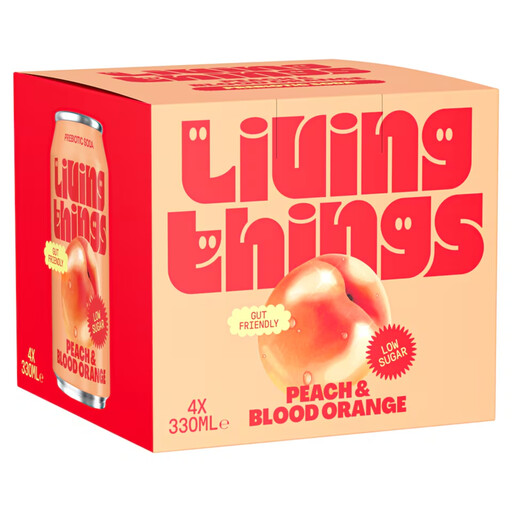
Why This Fits Their Persona: A practical starting point for shoppers wanting a fruit-flavoured vegan soft drink in a small four-can format for home, work or lunch.
The label provides specific values: 13 kcal, 1.5g sugar and 2g fibre per 100ml, rather than relying only on “biotic” front-of-pack language.
Peach juice contributes 13% of the listed ingredients; each 330ml can also contains stated live cultures.
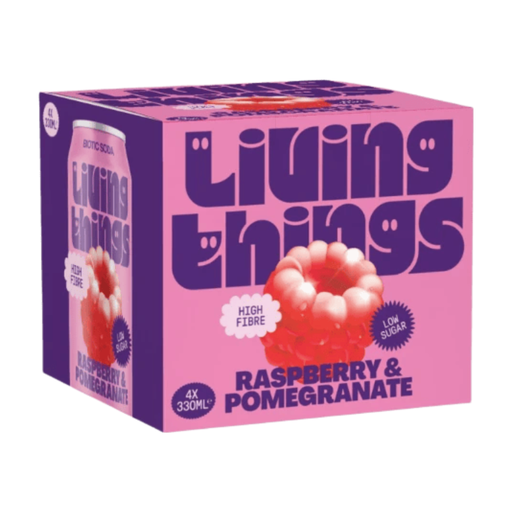
Why This Fits Their Persona: Suits adults who prefer a sharper, berry-led flavour for serving chilled with meals or using as a mixer.
Its listed nutrition gives a clear comparison point at 13 kcal and 1.7g sugar per 100ml, while the ingredient list identifies white grape juice concentrate and chicory root inulin.
Light carbonation, recyclable aluminium cans and stated suitability for vegan and vegetarian diets.
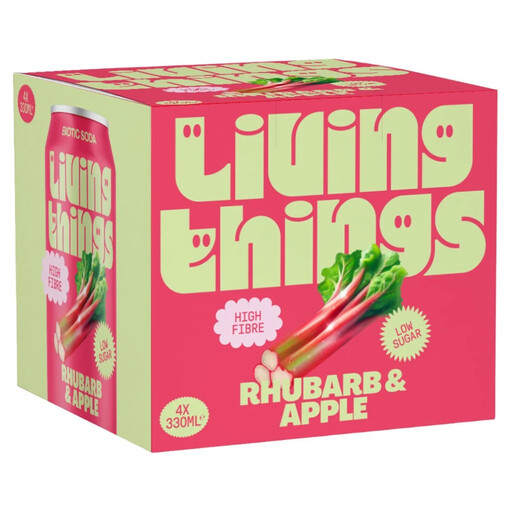
Why This Fits Their Persona: A suitable option for households or offices that prefer a tart, traditional fruit profile and want a high-fibre soda format.
The product information states 16 kcal, 1.7g sugar and 2.2g fibre per 100ml, allowing buyers to assess the drink beyond its functional positioning.
Each can lists 2.2g fibre per 100ml and combines rhubarb flavour with apple and white grape juice concentrates.
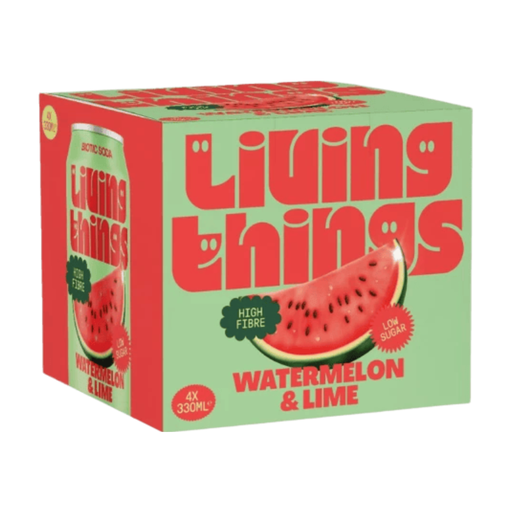
Why This Fits Their Persona: Works for shoppers wanting a lighter watermelon and lime soda to keep chilled for warm afternoons, packed lunches or informal gatherings.
The listed nutrition gives a measurable 13 kcal and 1.7g sugar per 100ml, while the ingredients identify watermelon juice at 1.5% and lime juice at 0.5%.
The product information states 2 billion live cultures per can and suitability for vegan, vegetarian and plant-based diets.
We have compiled a complete, real-time list of products that fully satisfy these strict selection criteria and UK safety regulations.
It can be used as a soft drink within a balanced diet, but it should not replace water or nutritious foods. Check the individual flavour’s sugar, fibre and calorie values, and follow the label guidance. People unaccustomed to chicory root inulin may prefer to start with a smaller amount because added fibre can cause temporary digestive changes.
Keep unopened cans in a cool, dry place away from direct sunlight and excessive heat. Refrigerate before serving for a colder drink. Always check the best-before or use-by information on the packaging, as live-culture products should be consumed according to the stated storage and shelf-life instructions.
The product information states that the aluminium cans are recyclable. Rinse empty cans and place them in the appropriate household recycling collection where accepted by your local council. Packaging rules and collection services can vary between UK areas, so check your council’s guidance.