Local party battle hosts
If three or more people regularly share one screen, the deciding details are each game’s single-system player limit, the controllers it needs and whether the room suits TV or tabletop play.


For regular battles with three or more people, consider Nintendo Switch 2 if your intended game supports the group size and runs properly on that console. For mainly two-player fighting, a PS5 or Xbox Series X may suit you if the chosen game offers local play on that platform. A dark room does not settle the choice: HDR, 4K and high-frame-rate output depend on the game and display, while controller requirements still need checking.
If three or more people regularly share one screen, the deciding details are each game’s single-system player limit, the controllers it needs and whether the room suits TV or tabletop play.
For head-to-head sessions, availability of your chosen game’s local mode and a second compatible controller matter more than support for a much larger group.
If you want to use a 4K or HDR display, check the game, the selected TV input and the supported output mode. Those features do not activate merely because the room is dark.
Choose the games and local group size first; a console’s display capabilities cannot make an unsuitable game or controller setup fit the session.
Consider it when: Group battles and the option to play on a TV or in tabletop mode are central to your plans.
Check first: A Nintendo Switch game’s Switch 2 compatibility, its local-player limit and the controllers needed for your group.
Consider it when: Your planned games support local head-to-head play on PS5 and you obtain games digitally.
Trade-off: It has no disc drive, and a two-player session needs two compatible controllers.
Consider it when: You prefer Xbox games and your shortlisted titles explicitly offer the local mode you want.
Check first: Xbox advises that 4K and HDR support can differ between inputs on the same TV.
| Concern | What to check | Who this matters to |
|---|---|---|
| Group size and game fit | Check each game’s platform, single-system player limit and Switch 2 compatibility where relevant. | If I regularly host a larger group, I need everyone to be able to join the same game rather than relying on the console’s general multiplayer description. Around 40% of consumers put group game fit first. |
| Two-player readiness | Confirm the intended game’s local fighting mode and whether you need another compatible controller. | For head-to-head evenings, I want the chosen game and two controllers ready for local play; around 30% of consumers prioritise two-player readiness. |
| Display compatibility | Match the game’s output modes to the TV’s selected HDMI input and supported resolution, HDR and refresh rate. | A dark-room TV setup makes display modes important to me, but only if my game and TV can use them. Display compatibility comes first for around 20% of consumers. |
| Game format and access | Decide whether you need a disc drive; check each game’s age rating and set controls before enabling online features or purchases. | If I share the console with children or keep boxed games, I need the format and access settings to suit the household. Around 10% of consumers make these their primary concern. |
Player limits belong to individual games. Nintendo lists Super Smash Bros. Ultimate for up to eight players on one system; a fighting game designed for two local players will not serve the same gathering.
Shortlist the games you intend to play, then check their platform, local-player count and controller requirements. Check Switch 2 compatibility separately for an existing Nintendo Switch game.
A larger group may need extra compatible controllers.
The intended game and display must support the mode too. Nintendo says Switch 2 output at 4K is limited to 60 fps, while Xbox Support notes that inputs on one TV can differ in their 4K and HDR capabilities.
Check the game’s supported modes, your TV manual and the HDMI input you will use before making display specifications a deciding factor.
PlayStation describes PS5 Digital Edition as having no disc drive, so it cannot take your boxed game discs.
If using physical games matters to you, choose a disc-capable console configuration instead.
A plan to play locally does not remove the need to consider each game’s content or any online features the household may later use. UK government guidance identifies PEGI as the game age-rating system.
Check the intended games’ ratings and content information, and configure household controls before allowing children to use online accounts, chat or purchases.
Relevant if TV and tabletop play, local group games and compatible Nintendo Switch titles shape your choice of Switch 2.
Relevant if your shortlisted PS5 games support the two-player local sessions you want.
Relevant if you prefer Xbox’s game catalogue and have confirmed local play in the titles you intend to use on Series X.
These Nintendo Switch 2 and PS5 consoles cover group-oriented and TV-based routes to local play. Choose between them by the games you intend to run, your group’s controller needs and whether physical discs matter to you.
 No image available
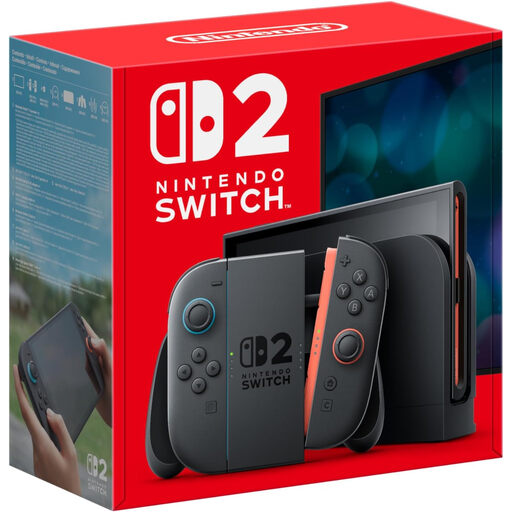
Consider this console for local group battles if your chosen games accommodate your usual number of players. Nintendo lists Super Smash Bros. Ultimate for up to eight players on one system, but check that this Nintendo Switch game works as needed on Switch 2 and that you have enough compatible controllers.
Nintendo specifies TV output up to 4K and HDR for supported games and displays; 4K output is capped at 60 fps. TV and tabletop play give you two ways to arrange a local session.
 No image available
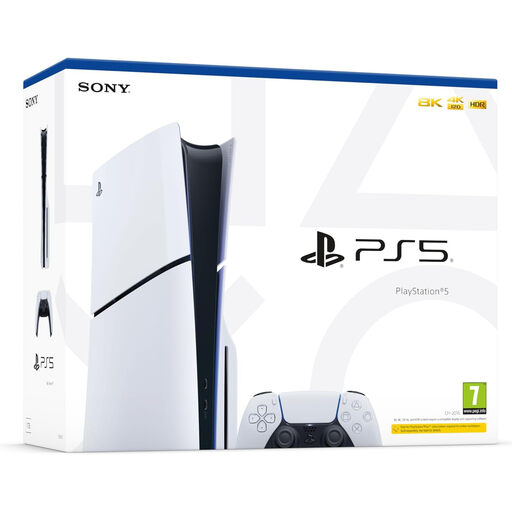
This disc-capable PS5 is a choice for TV-based local sessions if your intended game supports the required player count. Its Disc Edition format matters if you plan to use physical games.
Check the game’s local mode, whether you need a second compatible controller and whether your game and TV support the display mode you want.
 No image available
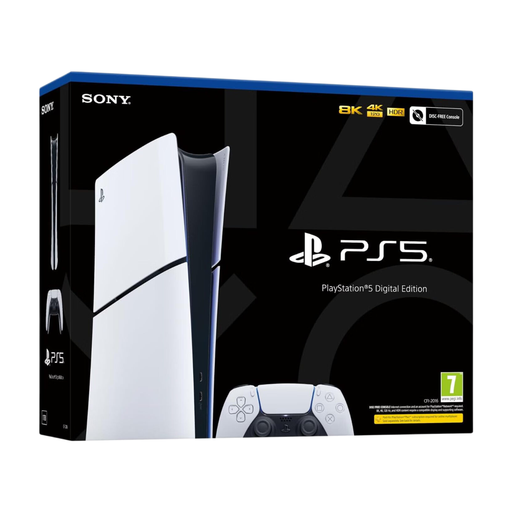
Consider this PS5 for local TV play if your chosen games offer the mode you need and you obtain games digitally. PlayStation states that the Digital Edition has no disc drive, so it cannot use physical game discs.
Before arranging a two-player session, check the game’s local-player listing and the need for another compatible controller. Check game and TV support separately for HDR or high-refresh output.
Yes, if the particular game supports eight players on one system and you have the required controllers. Nintendo lists Super Smash Bros. Ultimate for up to eight players on one system; if you plan to play the Nintendo Switch game on Switch 2, check its compatibility before relying on it for your group.
No. The game, console output mode and display must support the feature you want, and the selected TV input can matter. Nintendo says Switch 2 output at 4K is capped at 60 fps; Xbox Support advises checking which TV inputs support 4K and HDR.
No. PlayStation describes PS5 Digital Edition as a console without a disc drive. If you want to use boxed games, choose a disc-capable configuration and check that your intended games work on it.
Yes. Check the PEGI rating and content information for each game you plan to bring into the household, regardless of whether your usual sessions are local. If children may also use online features, review the platform’s account, chat and purchase controls.