
24/7 Customer Support

Free returns

Same-day & Next-day Delivery

Quality Guaranteed

Unlock Your Welcome Offers: FREE Delivery | Up to 80% OFF | Free 30-day JoyPlus trial
Download the APP
Applying your foundation in the morning only to find it has faded, creased or transferred onto your collar by lunchtime is a common frustration. The search for a reliable long lasting foundation can feel endless, with countless products making bold claims. As the Joybuy Product Recommendation Officer, my role is to help you navigate the market and find a foundation that genuinely works for your lifestyle, without falling for the usual marketing hype.
Before you make your next purchase, let's look at the most common pitfalls that lead to disappointment and wasted money.
To ensure your foundation stays put from your morning coffee to your evening commute, focus on these three core parameters.
The foundation's formula is the primary determinant of its performance and suitability for your skin.
These are the features that deliver true staying power against daily challenges.
Modern foundations often do more than just cover.
Here are a few recommendations that align with these practical criteria, matched to different user needs and priorities.
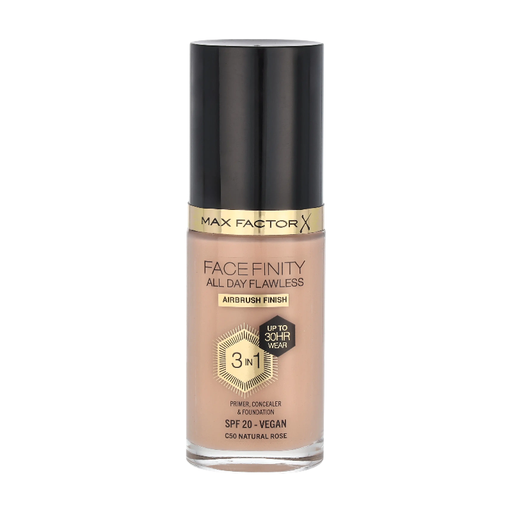
Why This Fits Their Persona: This is for the person who needs a reliable, no-fuss solution for long workdays. The 3-in-1 formula saves precious time in the morning, and its climate-proof properties mean it holds up during a hectic commute, whether it's a hot day or a rainy one.
It combines primer, concealer and foundation, providing buildable full coverage without the heavy, cakey feel of older long-wear formulas. The built-in primer helps it adhere smoothly to the skin.
Climate-proof protection (waterproof, heat-proof and humidity-proof) and SPF 20 make it a practical all-rounder. It's also a vegan foundation.
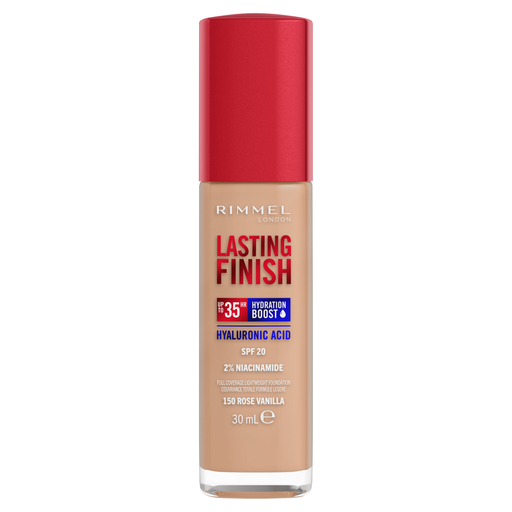
Why This Fits Their Persona: For those who need their makeup to last from dawn until well after dusk. This user prioritises maximum wear-time and resistance above all else, needing a foundation that won't budge through long events, travel or unpredictable days.
It directly counters the "unrealistic wear-time" pitfall by being specifically formulated for endurance. Crucially, it avoids the "drying" trap of older long-wear formulas by including a hydrating complex of hyaluronic acid and vitamin E.
Its multi-resistant properties (waterproof, crease-resistant, transfer-resistant) provide confidence. The inclusion of 2% niacinamide and SPF 20 adds valuable skin benefits.
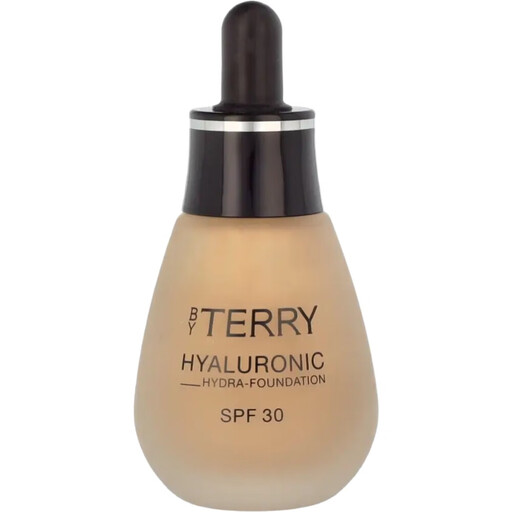
Why This Fits Their Persona: This user sees makeup as an extension of their skincare. They want a foundation that not only perfects their complexion but also actively nourishes and protects it. They are willing to invest in a premium formula that feels comfortable and beneficial for their skin.
It completely sidesteps the pitfall of ignoring skin's needs. As a skincare-foundation hybrid, its primary purpose is to hydrate with hyaluronic acid, ensuring a smooth, plump base that prevents the foundation from looking dry or cakey.
The formula provides a weightless, "second-skin" feel with buildable coverage and a radiant matte finish. It also offers a higher level of sun protection with SPF 30.
We have compiled a complete, real-time list of products that fully satisfy these strict selection criteria and UK safety regulations.
Proper skin preparation is the most critical step. Always start with a clean, well-moisturised face. Applying a primer suited to your skin type (hydrating for dry skin, mattifying for oily skin) will create a smooth canvas and give the foundation something to grip onto. After application, a light dusting of translucent setting powder, particularly on the T-zone, can help lock everything in place for hours.
Not necessarily. Many modern formulas are specifically designed to be non-comedogenic, meaning they are formulated in a way that does not block pores. If you have oily or acne-prone skin, look for oil-free options. The most important factor in preventing clogged pores is diligent removal. At the end of the day, use an oil-based cleanser or micellar water followed by a gentle face wash to ensure every trace of makeup is removed.
First, determine your skin's undertone. Look at the veins on your wrist: if they appear blue, you likely have a cool undertone; if they look green, you have a warm undertone. If it's a mix, you're probably neutral. Brands often label their shades with C, W or N to indicate this. Looking at online swatches on individuals with a similar skin tone to yours can also be very helpful. When in doubt, choosing a shade that appears slightly lighter is often a safer bet, as you can add warmth with bronzer or blush.