Families preparing dairy-free snacks
For cereal, porridge, baking or drinks, compare sugars, ingredients and the uses stated on the carton. If cupboard space matters, check whether the unopened product can be stored at room temperature.


For cereal, baking and drinks during half term, choose a long-life oat drink by its nutrition panel and storage instructions rather than assuming “filtered” means lower sugars or longer storage. If it will be a regular milk alternative for a child aged 1 or over, UK child-focused guidance favours an unsweetened, fortified plant drink; protein, energy and the child’s wider diet also matter, particularly where allergies or dietary restrictions are involved.
How the oat drink will be used makes a difference: an occasional ingredient for snacks calls for different checks from a child’s regular milk alternative.
For cereal, porridge, baking or drinks, compare sugars, ingredients and the uses stated on the carton. If cupboard space matters, check whether the unopened product can be stored at room temperature.
When oat drink is a regular alternative to cow’s milk, check fortification alongside protein and energy. A child with a restricted diet, growth concerns or cow’s-milk allergy needs advice suited to their circumstances.
A long-life carton may suit tea, cereal or cooking without taking up fridge space before opening. Check the nutrition panel for 0 g sugars if that is the requirement, and follow the pack’s instructions once opened.
Start with the intended use and the nutrition panel, then check fortification, ingredients and storage on the exact product you plan to buy.
| Priority | What to check | Your needs |
|---|---|---|
| Sugars | Read sugars per 100 ml, not just a front-of-pack phrase. Check the ingredients if sweeteners or added sugars matter to you. | I want a carton labelled no sugars for everyday cereal or drinks, rather than assuming “no added sugars” means 0 g sugars. |
| Fortification | Look for calcium and iodine in the nutrition information. Check the exact carton for vitamin D, riboflavin and vitamin B12, as formulations differ. | If this regularly replaces dairy in a child’s diet, I need to know what the drink provides, not just that it is made from oats. Kingston and Richmond NHS Foundation Trust highlights calcium and iodine fortification when a child cannot consume dairy. |
| Regular use by children | For a child aged 1 or over, compare protein and energy per 100 ml as well as sugars and fortification. Consider the child’s wider diet and any allergy-related restrictions. | A snack ingredient is one thing; for a regular milk alternative, I want advice that fits my child. The British Society for Allergy & Clinical Immunology recommends unsweetened, fortified plant drinks for children aged 1 or over, while NHS North West guidance notes that fortified oat alternatives have a lower protein content. |
| Storage | Confirm that the carton is long-life and permits room-temperature storage before opening. Read its refrigeration and use instructions for after opening. | I would like to keep unopened cartons in the cupboard for half-term snacks, then store an opened carton as its pack directs. |
| Intended use | Check whether the product is described for cereal, cooking or hot drinks. Compare the nutrition panel separately if considering a barista formulation for family snacks. | For baking and cereal, I care about the ingredients and nutrition; foam for hot drinks is a separate reason to choose a barista carton. |
| Ingredients and allergens | Read the current ingredients and allergen statement. Do not use an unexplained “filtered” description as a substitute for those details. | If someone in my household has an allergy or needs to avoid particular ingredients, I need to check the exact carton before using it. |
The word alone does not tell you the drink’s sugars, fortification, ingredients or allergen information.
Compare those details and the storage instructions on the exact carton instead.
Barista drinks are intended for hot-drink texture, which is a different buying priority. Minor Figures lists 5 g sugars per 200 ml for its Barista Oat.
If 0 g sugars is your requirement for cereal or drinks, check the nutrition panel rather than choosing by the barista label.
Alpro lists 65 kcal, 1.3 g protein and 2.5 g sugars per 100 ml for its Growing Up Oat drink. Those figures do not determine whether it suits an individual child’s regular diet.
For a child who regularly needs an alternative to cow’s milk, consider their wider diet and seek individual professional advice where growth or dietary restrictions are a concern.
Oat drinks do not all list the same nutrients, which matters more when a drink regularly replaces dairy than when it is used occasionally in a recipe.
Check the exact product’s calcium and iodine information. Kingston and Richmond NHS Foundation Trust identifies both as relevant when a child cannot consume dairy.
These examples show why it is worth comparing specific cartons rather than treating a brand name as a single formulation.
Oatly describes its Oat Drink No Sugars as suitable for drinking, cooking and baking, with room-temperature storage before opening.
Alpro offers distinct Oat No Sugars and Growing Up Oat products; their labels address different buying considerations.
Minor Figures positions Barista Oat for lattes and cappuccinos, where hot-drink texture is the main consideration.
These long-life oat drinks offer cartons for cereal, drinks and other snack preparation. Two are labelled no sugars; the Original option has a different sugars value, so compare the exact pack against your needs.
 No image available
A long-life option for cereal, smoothies or hot drinks when 0 g sugars is a priority. The listed nutrition panel gives 0.0 g sugars, and the drink is fortified with calcium and iodine. Refrigerate after opening and use within 5 days, according to the product instructions; check the current carton before use.
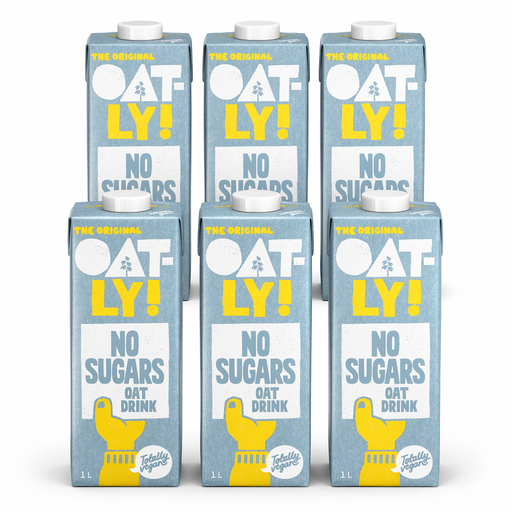 No image available
For a no-sugars oat drink that can be kept at room temperature until opened, this six-carton pack lists 0 g sugars and includes calcium and iodine in its ingredients. Follow the current carton’s refrigeration and use instructions after opening.
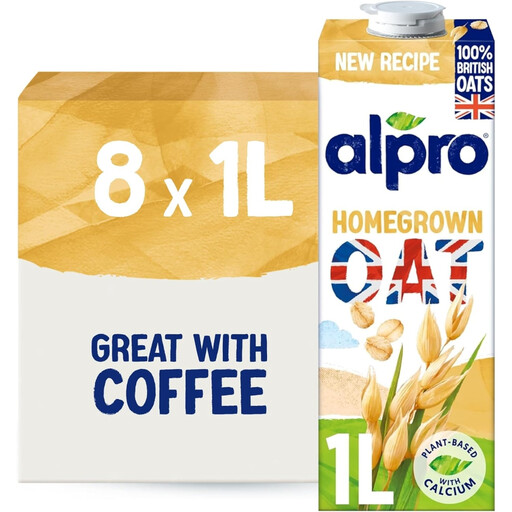 No image available
A long-life drink listed for cereal, smoothies and hot drinks. Its nutrition panel gives 3.2 g sugars per 100 ml despite the no-added-sugars wording, so it is not a 0 g-sugars option. The listing states calcium and iodine fortification and identifies gluten-containing oats; check the current carton if allergen information matters to your household.
No: the word alone does not establish a drink’s sugar content, fortification, allergy suitability or storage conditions. Compare the nutrition panel, ingredients, allergen statement and instructions on the exact carton.
An unopened carton can be kept at room temperature when its product instructions permit it. Oatly says this applies to its ambient Oat Drink No Sugars; check the pack you buy and follow its instructions after opening.
For a child aged 1 or over who uses a plant drink, the British Society for Allergy & Clinical Immunology recommends choosing an unsweetened, fortified option. Consider protein, energy and the child’s wider diet too; seek individual advice if there are growth concerns, multiple dietary restrictions or a transition from prescribed formula.
Do not assume so from the organic label. If oat drink regularly replaces dairy for a child, check the exact carton for calcium and iodine; Kingston and Richmond NHS Foundation Trust identifies these nutrients as relevant when a child cannot consume dairy.
No. Read the current ingredients and allergen information on the exact product before using it. A dairy-free description does not establish suitability for every allergy or gluten-related dietary restriction.