
24/7 Customer Support

Free returns

Same-day & Next-day Delivery

Quality Guaranteed

Unlock Your Welcome Offers: FREE Delivery | Up to 80% OFF | Free 30-day JoyPlus trial
Download the APP
Navigating the world of long life plant based milk can feel overwhelming. The shelves are packed with options, from UHT oat milk to almond, soya and coconut, all promising to be the perfect dairy free milk for your lifestyle. Yet, many of us have been left disappointed by a carton that splits in our morning tea, a "barista" version that refuses to foam or a multipack that ends up gathering dust.
As the Joybuy Product Recommendation Officer, my role is to help you see past the marketing and make choices that genuinely fit your needs. Let's look at the common pitfalls when buying a vegan milk alternative and how to ensure your pantry is stocked with a product you'll actually use and enjoy.
The "Barista" Label Misconception: The term "barista" is not a regulated standard. Many brands use it to signify a creamier product, but it doesn't guarantee performance. A common issue is "splitting" or curdling when added to hot, acidic coffee. This happens when the proteins in the milk react to heat and acidity, leaving you with an unappetising cup. A true barista oat milk is formulated to prevent this, but many all-purpose milks with the label are not.
The Hidden Sugar and Additive Trap: In the search for a healthier option, it's easy to overlook the ingredients list. Some plant-based milks contain surprisingly high levels of added sugar to improve their taste. Others have a long list of thickeners and stabilisers that can result in a chalky or slimy texture, detracting from the experience of your cereal or smoothie.
The Premature Bulk Buy: Committing to an Oatly bulk buy or an Alpro long life multipack seems like a smart, economical choice. However, if the product doesn't suit your taste or intended use, you are left with eight or twelve litres of an unsuitable drink. This is a frequent issue for those new to a particular type of non dairy milk multipack.
To avoid these issues, focus on a few key parameters. Understanding these will empower you to select the right shelf stable milk UK residents can rely on.
The primary ingredient dictates the milk's flavour, texture and best use case.
UHT oat milk is a popular choice for cafés and home baristas.almond milk 1L carton is often favoured for smoothies, pouring over cereal or as a light refreshment on its own.Seeing ingredients like dipotassium phosphate or gellan gum can be off-putting, but they serve a crucial purpose.
barista oat milk from splitting in your coffee. It works by balancing the pH level of the milk so it doesn't curdle when it hits the acidic coffee.This distinction is vital for health-conscious consumers.
Instead of a generic list, we've matched specific products to the people who will get the most value from them.

Why This Fits Their Persona: This user wants to replicate a café-quality coffee at home. They need a reliable, foamable milk that won't ruin their flat white. This multipack ensures their coffee station is always stocked.
It is specifically formulated with acidity regulators to prevent splitting in hot coffee, directly countering the "Barista Label Misconception" where all-purpose milks fail.
Creates a stable, velvety microfoam perfect for latte art. The flavour is neutral, complementing coffee rather than overpowering it.

Why This Fits Their Persona: This user prioritises clean eating, scrutinising labels for sugar content and unnecessary additives. They use milk for smoothies, protein shakes and cereals where a clean, light taste is essential.
It directly solves the "Hidden Sugar Trap" by containing 0g of sugar and no sweeteners. The label is clear and transparent, appealing to those who want to know exactly what they are consuming.
Completely sugar-free and low in calories (20 kcal per 100ml). It is also fortified with vitamins B2, B12 and D, supporting a balanced diet.
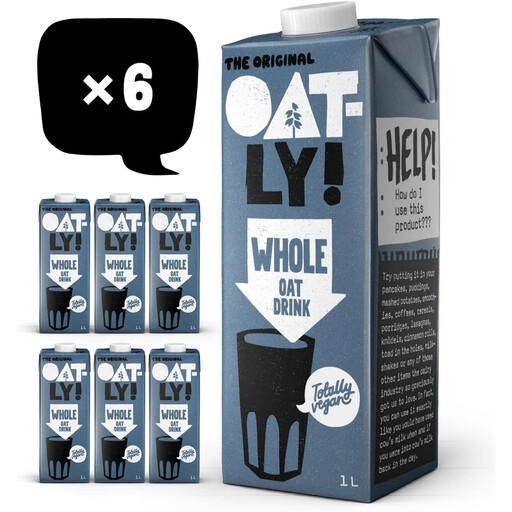
Why This Fits Their Persona: This household needs a reliable all-rounder for everyone. It's for the kids' cereal, the parents' tea and for use in cooking and baking. They need a crowd-pleasing texture and taste that works as a direct dairy replacement.
By being a highly versatile, richer product, it avoids the "Premature Bulk Buy" trap. Its all-rounder nature means it is far less likely to be disliked or go unused compared to a more niche-flavoured milk.
Its higher fat content (3.0g/100ml) gives it a creamy, rich mouthfeel similar to whole dairy milk. It is fortified with calcium, iodine and vitamins D2, B2 and B12.
We have compiled a complete, real-time list of products that fully satisfy these strict selection criteria and UK safety regulations.
This is usually caused by a reaction between the milk's proteins and the heat and acidity of your drink. To prevent this, choose a dairy free milk specifically labelled as a "barista" edition, as these contain acidity regulators (like potassium phosphates) to maintain stability. Alternatively, try letting your hot drink cool for a minute before adding the milk.
Yes, buying a non dairy milk multipack typically offers a lower price per litre and the convenience of always having a supply. However, before committing to a large purchase, it is wise to buy a single carton to ensure you like the taste and it performs as you need it to.
UHT stands for Ultra-High Temperature processing. The milk is heated to a very high temperature for a few seconds and then cooled rapidly. This process sterilises the milk, allowing it to be stored for months at room temperature before opening. It is a standard and safe food preservation method used worldwide that helps make shelf stable milk UK a convenient pantry staple.