For a regular vegan dairy alternative that can be kept in the cupboard before opening, look for a UHT soya drink labelled suitable for vegans, then check its current carton for calcium, vitamin D, vitamin B12 and iodine. Compare the sugars line if you want an unsweetened drink, and check allergens and after-opening storage separately: neither a vegan label nor UHT treatment answers those questions.
Who is this for?
Vegans replacing everyday dairy milk
If you use soya drink in cereal, cooking or hot drinks, check the individual carton’s fortification and sugars rather than assuming all plant drinks have the same composition. The NHS recommends including fortified dairy alternatives, such as soya drinks, in a vegan diet.
Shoppers keeping unopened cartons in the cupboard
A UHT or long-life label helps you identify a drink intended for storage before opening. If you also want no sugars, compare that claim with the nutrition panel and follow the carton’s separate instructions once opened.
Vegan households buying for young children
Check age-specific wording on the exact product. Sainsbury’s says its unsweetened soya drink can form part of a balanced diet from age one but is not suitable as a main milk alternative for children under two; Waitrose says its Essential Unsweetened Soya Drink is not suitable for children under two.
What should you check?
Start with the carton’s vegan and long-life wording, then compare nutrition and allergen details for the way you plan to use the drink.
| Priority |
What to check |
Your needs |
| Fortification |
Look for calcium, vitamin D, vitamin B12 and iodine on the exact carton. The UK SACN and COT assessment says plant drinks vary considerably in nutrient content and that UK organic plant drinks cannot be fortified with nutrients. |
If I use soya drink regularly instead of dairy milk, I want to know which nutrients this particular drink lists, not rely on its vegan or organic wording. |
| Sugars |
Read the ‘of which sugars’ value on the nutrition panel, using the same quantity basis when comparing cartons. Check whether the product is labelled unsweetened or no sugars. |
For cereal or cooking, I may prefer a drink without the sweetness of a sweetened option. |
| Vegan and allergen labels |
Check the vegan statement, ingredients, highlighted allergens and any ‘may contain’ wording separately. GOV.UK warns that vegan labelling does not guarantee the absence of animal-origin allergens through cross-contact. |
I need a drink suitable for vegan shopping, but if someone also has an allergy, I cannot use ‘vegan’ as a substitute for allergen information. |
| Storage |
Confirm that the carton says UHT or long-life. Read its refrigeration and use-within instructions for after opening; unopened and opened storage are different. |
I want cartons I can keep unopened in the cupboard, with a size I can use according to the instructions once opened. |
| Use for children |
Read the exact product’s age and main-drink guidance. Sainsbury’s and Waitrose give different product-specific wording for young children. |
If I am buying for a child under two, I need to check whether this particular drink is suitable at all and whether it can be used as a main milk alternative. |
Common buying mistakes
-
Assuming every soya drink is fortified
The UK SACN and COT assessment says nutrient content varies considerably between plant drinks; UK organic plant drinks cannot be fortified with nutrients.
If fortification matters to your choice, compare calcium, vitamin D, vitamin B12 and iodine on the current carton.
-
Using ‘vegan’ as an allergy-safety claim
GOV.UK says vegan labelling does not guarantee that animal-origin allergens are absent through cross-contact. Soya itself is an allergen that must be declared when used as an ingredient.
Read the ingredients and precautionary allergen statements for the person who will drink it.
-
Choosing by the front-of-pack name alone
‘Plant-based’ does not tell you the sugars value of a particular soya drink.
If sweetness matters, compare the ‘of which sugars’ line on the nutrition panels using the same quantity basis.
-
Leaving a UHT carton in the cupboard after opening
Long-life treatment describes storage before opening; opened cartons have their own refrigeration and use-within instructions.
Follow the directions on your carton and choose a size you can use within its stated period.
Brand and product-line references
These examples illustrate label differences between named drinks; check the exact carton rather than applying one product’s details to a whole brand.
Alpro
Alpro’s Soya No Sugars is a branded long-life soya option.
- Alpro describes its Soya No Sugars drink as containing no sugars or sweeteners; the Waitrose listing for its long-life no-sugar drink lists added calcium, iodine and vitamins B2, B12 and D2.
- Check the exact Alpro variant and pack rather than assuming the same formulation across its range.
Tesco
Tesco lists a 1L long-life unsweetened soya drink suitable for vegans.
- Its listing identifies added calcium, iodine, vitamin B12, riboflavin and vitamin D2.
- Use the current carton to check ingredients and nutrition when buying.
Sainsbury’s
Sainsbury’s lists an ultra-heat-treated, unsweetened long-life soya drink with added calcium, iodine, vitamin D and vitamin B12.
- The labelled fortification gives regular users specific nutrients to compare with other cartons.
- Sainsbury’s says its unsweetened soya drink is not suitable as a main milk alternative for children under two.
Asda
Asda Plant Based Soya Unsweetened is a vegan-labelled chilled drink, rather than a long-life cupboard option.
- It offers an unsweetened soya option for shoppers who plan to buy a chilled drink.
- Asda says it is delivered chilled, contains soya and may contain nuts.
M&S
M&S Plant Kitchen Soya Drink is a long-life vegan-friendly option.
- The M&S listing identifies added calcium, iodine, vitamin D and vitamin B12.
- M&S instructs shoppers to refrigerate it after opening and consume it within three days.
Waitrose
Waitrose Essential Unsweetened Soya Drink is a UHT option labelled suitable for vegans.
- The listing identifies added calcium, vitamin D, vitamin B12, vitamin B2 and iodine.
- The product warning says it is not suitable for children under two.
Joybuy soya drink options
This Joybuy option is a vegan UHT soya drink for shoppers considering an unopened, long-life carton. Check its current label for the fortification you want in a regular dairy alternative.
 No image available
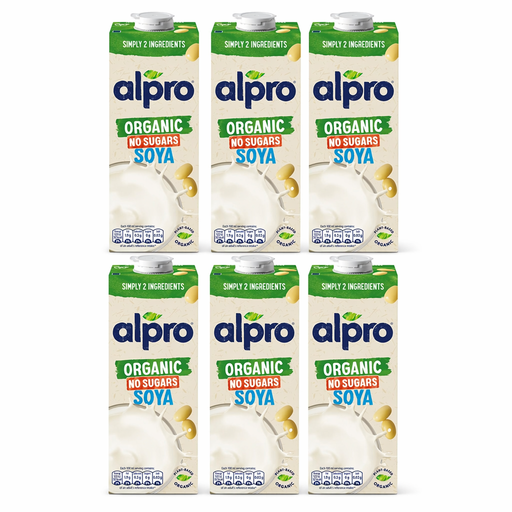
Alpro Soya Drink OG — 6
For vegan shoppers wanting an unopened long-life carton, this listing describes a vegan UHT soya drink. It states 0g sugars and 3.3g protein per 100ml, and lists water and hulled soya beans among its ingredients. It contains soya; check the carton for calcium, vitamin D, vitamin B12 and iodine, and confirm what the ‘6’ in the listing includes. Refrigerate after opening and follow its stated five-day use period.
View on Joybuy
Questions about long-life soya drink
Does a vegan label mean a soya drink is safe for someone with a milk allergy?
No. GOV.UK says vegan labelling does not guarantee the absence of animal-origin allergens through cross-contact. Check the ingredients, any ‘may contain’ statement and whether the product gives the allergen assurance you need.
Must soya be declared on a UK prepacked drink?
Yes. GOV.UK identifies soya beans among the allergens that must be clearly labelled in the ingredients list when used in a prepacked food or drink.
What matters if soya drink regularly replaces dairy milk?
Check the current carton for calcium, vitamin D, vitamin B12 and iodine, alongside its sugars value. The NHS recommends fortified dairy alternatives such as soya drinks in a vegan diet, while the UK SACN and COT assessment says nutrient content varies between plant drinks.
Can these drinks be a child’s main milk alternative before age two?
Do not assume so: Sainsbury’s says its unsweetened soya drink can form part of a balanced diet from age one but is not suitable as a main milk alternative for children under two. Waitrose warns that its Essential Unsweetened Soya Drink is not suitable for children under two. Check the exact product’s age guidance.
Can long-life soya drink stay in the cupboard after opening?
No—follow the carton’s after-opening instructions. For example, M&S says to refrigerate its Plant Kitchen Soya Drink after opening and consume it within three days; another product may give a different period.


