Runners using drink-based carbohydrate
For longer sessions, you may want a ready-to-drink product that supplies carbohydrate as well as fluid. Check its nutrition panel rather than assuming every drink sold in a multipack has the same role.


For a long run where you plan to get carbohydrate from your drink, check the carbohydrate and sodium information before choosing a multipack for its can format. Tesco lists Lucozade Sport Orange as a bottled sports drink with carbohydrate, while its Lucozade Energy cans are a different, caffeinated glucose drink with only trace sodium. Bottles offer a ready-to-drink option; powder needs mixing with water, and the amount you drink should be worked out during training rather than copied from another runner.
The useful choice depends on whether the drink is part of your fuelling plan, how you carry it and what you need for different sessions.
For longer sessions, you may want a ready-to-drink product that supplies carbohydrate as well as fluid. Check its nutrition panel rather than assuming every drink sold in a multipack has the same role.
Pre-mixed bottles avoid preparation. Powder takes less ready-to-drink storage space but requires water and mixing, so consider where you will prepare and carry each serving.
A zero-sugar sports drink may fit a session where carbohydrate comes from elsewhere. Tesco describes Lucozade Sport Zero Sugar as designed for low-intensity exercise; it is not interchangeable with a carbohydrate-containing drink in a plan that relies on drink-based fuel.
Decide what the drink needs to contribute during the session, then compare labels on the same serving or volume basis. Only after that should pack format settle the choice.
| Priority | What to check | Your needs |
|---|---|---|
| Carbohydrate | Read carbohydrate per 100 ml or serving and consider how much you intend to drink. Tesco describes Lucozade Sport Orange as providing about 16 g per 250 ml; its zero-sugar version serves a different purpose. | I plan to get some carbohydrate from my drink during a long run, rather than carry all of it separately. |
| Sodium | Check whether sodium is stated and compare products using the same volume. Tesco lists sodium as trace for Lucozade Energy Original cans, so their glucose content alone does not make them equivalent to a carbohydrate-electrolyte sports drink. | When a session involves substantial sweating, I want to know what the drink contains before fitting it into my plan. |
| Preparation and carrying | Check bottle size, pack count and whether you need water to prepare each serving. Consider how you will carry or access the drink on your route. | A bottle is useful when I want to open a prepared drink; powder is worth considering when I can mix it and prefer to store servings before preparation. |
| Drink type | Read the product description, ingredients and caffeine information. Tesco identifies Lucozade Energy Original cans as a sparkling glucose drink containing caffeine, not the same product as Lucozade Sport Orange. | If I am drawn to a multipack of cans, I want its contents to fit the session—not just its packaging. |
Tesco describes Lucozade Energy Original cans as a sparkling glucose drink containing caffeine and only trace sodium. That is a different profile from a sports drink selected for both carbohydrate and electrolytes.
Compare the exact product description, carbohydrate, sodium and caffeine information before using a can in place of a planned sports drink.
A zero-sugar drink cannot fill the same drink-based carbohydrate role as a carbohydrate-containing sports drink. Tesco positions Lucozade Sport Zero Sugar for low-intensity exercise.
If your long-run plan relies on carbohydrate, check how much comes from the drink and what you intend to carry separately.
The American College of Sports Medicine notes that sweat rates and sweat electrolyte content vary between people and conditions. A fixed quantity taken from someone else may not fit your session.
Try your chosen drink and carrying method during training, and adjust your plan for the session and conditions.
These examples illustrate different product formats; the brand name alone does not establish what a particular drink contributes.
Tesco lists Lucozade Sport Orange in a 4 × 500 ml ready-to-drink bottle pack.
Tesco lists Golden Mango and Berry & Tropical Fruits isotonic sports drinks in 4 × 500 ml bottle packs.
Gatorade UK presents Hydration Booster as a product mixed with water, rather than a ready-to-drink can.
These multipacks are bottled drinks to consider if a prepared drink suits your marathon-training routine. None is a can multipack; compare the exact variant and label with the carbohydrate and sodium role you have planned.
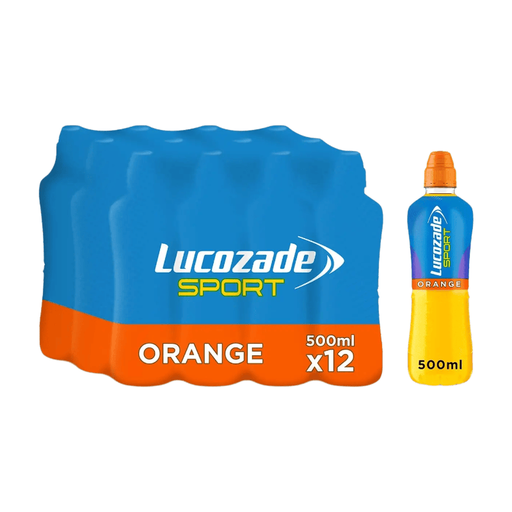 No image available
A ready-to-drink bottle pack to consider when stocking up for repeated training sessions.
The pack contains 12 × 500 ml, not cans. Check the current label for the carbohydrate and sodium information you need for your plan.
 No image available
This smaller ready-to-drink bottle pack is an option when you want to try the Orange variant across training sessions.
Tesco describes the same 4 × 500 ml variant as providing about 16 g carbohydrate per 250 ml. Use the current pack label when working out how it fits your session.
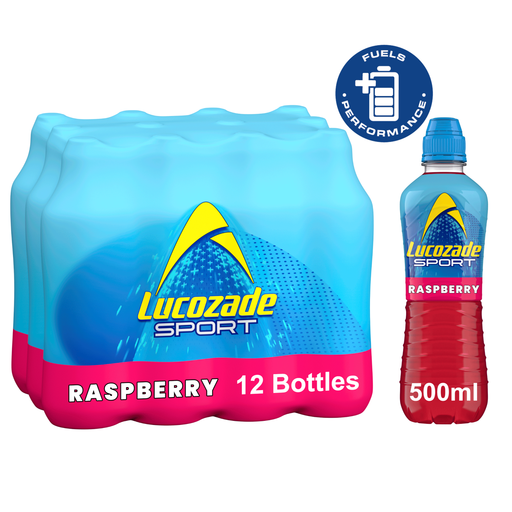 No image available
This Raspberry bottle multipack offers prepared servings for repeated sessions, rather than cans.
Check the label for sodium and ingredients before comparing it with your planned drink; the product information flags phenylalanine as relevant for people with phenylketonuria.
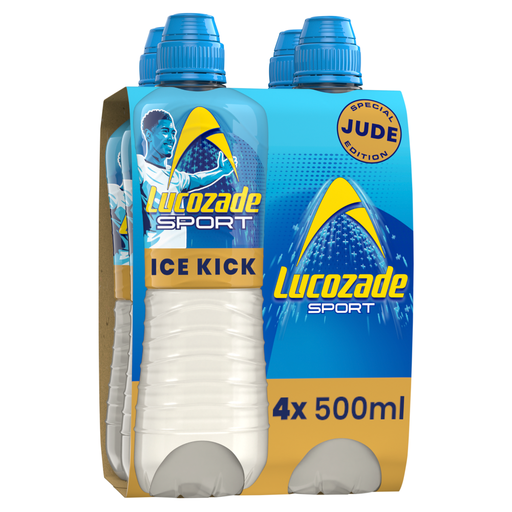 No image available
A 4 × 500 ml ready-to-drink bottle pack to consider if this variant suits your training routine.
Check its own carbohydrate, sodium and ingredient information rather than assuming it matches the Orange variant; the product information flags a source of phenylalanine as relevant for people with phenylketonuria.
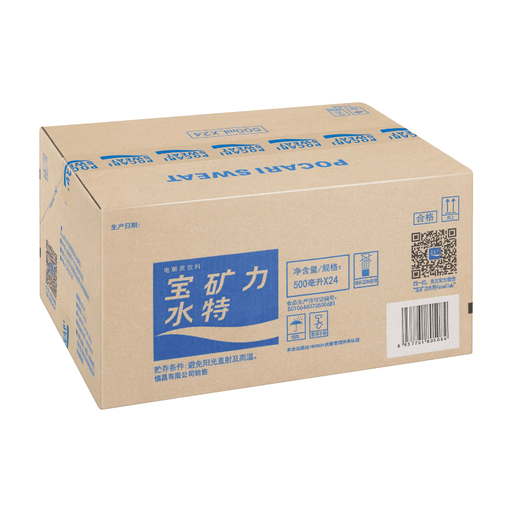 No image available
This larger ready-to-drink bottle pack may suit repeated sessions if you have space to store it.
It contains 24 × 500 ml bottles, not cans. Read the current nutrition label before deciding how its carbohydrate and sodium fit your plan.
Choose by the drink’s contents and how you will carry it, not by the can alone. Tesco lists Lucozade Sport Orange and Powerade sports-drink multipacks as bottles, while its Lucozade Energy Original cans are a caffeinated glucose drink with only trace sodium.
It cannot serve as the drink-based carbohydrate part of a plan that requires carbohydrate. Tesco positions Lucozade Sport Zero Sugar for low-intensity exercise; if you choose it for a longer session, account separately for the carbohydrate you intend to use.
They can both be considered when you want a drink for training, but preparation differs: a bottle is ready to open, while powder must be mixed with water. Check each product’s prepared serving and nutrition information, as well as where you will obtain and carry water.
Do not assume their quantity fits your session. The American College of Sports Medicine notes that sweat rate and sweat electrolyte content vary between people and conditions; try your drink and carrying arrangement during training.