For a child aged 1 or over who needs a plant-based drink, the British Society for Allergy and Clinical Immunology advises choosing an unsweetened, fortified option; “filtered” wording is not a substitute for checking the carton. Long-life storage can make breakfast preparation easier, but the drink’s sugars, added nutrients, age guidance and place in the child’s wider diet still matter. North East London NHS Foundation Trust advises against using a plant-based drink as the main replacement for breast milk or infant formula before age 1.
Who is this for?
Parents choosing a plant-based breakfast drink for a child aged 1 or over
If cow’s milk is absent from your child’s diet, consider what the drink contributes alongside the rest of their food. The UK Office for Health Improvement and Disparities notes that other foods and drinks need to replace the nutrients cow’s milk would otherwise provide.
Families keeping breakfast supplies in the cupboard
A long-life carton can be stored at room temperature before opening when its label permits it. Check the sugars, fortification and age guidance as well as the storage instructions.
Parents checking oat, gluten or milk allergens
Milk-free does not mean oat-free or gluten-free. The Food Standards Agency identifies oat as an allergen in its own right, so check the exact carton and follow the child’s allergy plan where one applies.
What should you check?
Start with how the drink will be used at breakfast, then compare the carton’s nutrition, ingredients and storage instructions.
| Priority | What to check | Your needs |
|---|
| Age and use |
Read the age guidance. Distinguish a little oat drink used in food from a drink intended to replace the child’s main milk. |
I need to know whether this is going on cereal or replacing a regular milk drink. North East London NHS Foundation Trust says plant-based milks can be used in weaning foods from 6 months, but should not replace breast milk or formula as the main milk drink before age 1. |
| Fortification |
Compare the carton’s calcium, iodine, vitamin D, riboflavin (B2) and vitamin B12 information. Check what else the child eats if cow’s milk is absent. |
When cow’s milk is not part of breakfast, I want to understand which nutrients the drink supplies. The UK Office for Health Improvement and Disparities notes that plant-based drinks vary considerably in fortification and that the wider diet matters. |
| Sugars and ingredients |
Read the “of which sugars” value per 100ml and the ingredients, rather than relying on “no added sugars” or toddler-themed packaging. |
I would prefer an unsweetened drink for regular use. The British Society for Allergy and Clinical Immunology advises aiming for 0g sugars when choosing a plant-based drink for a child aged 1 or over. |
| Long-life storage |
Confirm that the carton is UHT or suitable for room-temperature storage before opening; follow its instructions after opening. |
Keeping unopened cartons in the cupboard would help with breakfast, but “filtered” alone would not tell me how to store the drink or what nutrients it contains. |
| Allergens |
Check the current oat, gluten and milk statements on the exact carton, including any relevant nursery requirements. |
If my child has a food allergy, I cannot assume a milk-free oat drink meets every restriction. The Food Standards Agency states that oat remains an allergen even in food labelled gluten-free. |
Common buying mistakes
-
Taking “plant-based” to mean a complete milk replacement
Oat drinks differ in their nutrients. The UK Office for Health Improvement and Disparities says that, for children aged 1 to 5, other foods and drinks must replace the nutrients supplied by cow’s milk if it is removed from the diet.
Consider the child’s whole diet, particularly if the drink will be their main milk alternative. Seek individual dietetic advice for a restricted diet or growth concern.
-
Choosing a growing-up drink because of its age-themed label
A toddler label does not establish that the drink is the appropriate everyday choice. The British Society for Allergy and Clinical Immunology advises against making growing-up plant-based drinks the default because of free-sugar concerns.
Compare its sugars and ingredients with an unsweetened, fortified drink; follow individual advice from a relevant clinician or dietitian where needed.
-
Reading “no added sugars” as “0g sugars”
Those statements answer different questions. A drink may have a sugars value on its nutrition panel even when no sugar has been added as an ingredient.
Check both the “of which sugars” line per 100ml and the ingredients. The British Society for Allergy and Clinical Immunology advises aiming for 0g sugars for plant-based drinks used by young children.
-
Assuming dairy-free covers every allergy requirement
An oat drink can be free from milk while containing oats. The Food Standards Agency identifies oat as an allergen in its own right.
Read the current allergen statement on the exact carton and follow the child’s allergy plan and nursery policy where applicable.
Brand and product-line references
Products from the same brand can differ in sugars, fortification, storage and age guidance, so compare the particular carton rather than the brand name alone.
Oatly
Oatly No Sugars is an ambient oat drink before opening. Tesco’s UK label lists 0g sugars and calcium, iodine, vitamins D2, B2 and B12 per 100ml.
- The No Sugars product combines long-life storage with the listed fortification.
- Oatly Whole is a different, chilled product: Tesco lists 3.4g sugars per 100ml for that drink.
Alpro
Alpro UK lists calcium, iodine and vitamins B2, B9 and D2 for Oat No Sugars. Its growing-up oat drink is a separate long-life product marketed for young children.
- Alpro UK lists 0.0g sugars per 100ml for Oat No Sugars.
- Vitamin B12 does not appear in Alpro UK’s listed ingredients for Oat No Sugars; check the current carton if B12 fortification matters to your choice.
- The British Society for Allergy and Clinical Immunology does not recommend making growing-up plant-based drinks the default.
Sainsbury's
Sainsbury’s Long Life Oat Drink is a UHT option listed with calcium, iodine, vitamin D and B12 fortification.
- Its product information identifies long-life storage and the listed nutrients.
- Sainsbury’s says it can be part of a balanced diet from age 1 but is not suitable as a main milk-drink alternative for children under 3.
M&S
M&S Only 3 Ingredients Oat Drink illustrates why a short ingredients list is not enough to judge its use as a dairy replacement.
- M&S lists water, oats and sea salt as its ingredients.
- M&S states that this drink is not fortified and is not recommended as a dairy replacement for children under 36 months.
Long-life oat drinks on Joybuy
These oat drinks are long-life options for families considering a plant-based drink at toddler breakfast. Compare the current carton and the child’s wider diet before treating either as a regular milk alternative.
 No image available
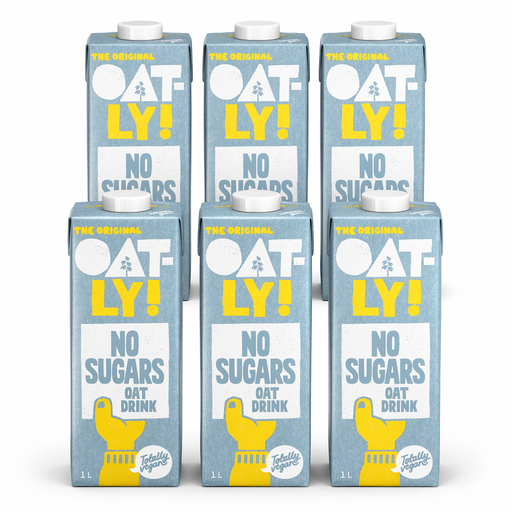
Oatly No Sugars Oat Drink, 6 x 1L
For breakfasts where an unopened long-life carton is useful, Oatly describes this drink as suitable for room-temperature storage before opening. Tesco’s label for Oatly No Sugars lists 0g sugars per 100ml, calcium, iodine and vitamins D2, B2 and B12. It contains oats; check the carton’s allergen and storage instructions.
Joybuy
 No image available
Alpro Oat No Sugars Long Life Drink, 8 x 1L
A long-life oat drink to compare for breakfast cereal. Alpro UK lists calcium, iodine and vitamins B2 and D2 for Oat No Sugars. Check the exact carton’s sugars declaration and vitamin B12 information before relying on either for your choice; Alpro UK’s listed ingredients do not include B12. Check its oat allergen statement too.
Joybuy
Frequently asked questions
Does “filtered” tell me whether an oat drink suits a toddler’s breakfast?
No suitability conclusion follows from that word alone. For a child aged 1 or over, check the exact carton’s sugars, fortification, ingredients and age guidance; if cupboard storage matters, check that it is long-life or UHT.
Can an oat drink replace breast milk or infant formula before age 1?
Not as the main milk drink. North East London NHS Foundation Trust says plant-based milks may be used in weaning foods from 6 months, but should not replace breast milk or formula as the main milk drink before the child turns 1.
Can any long-life oat drink be a toddler’s main milk alternative?
No: follow the particular product’s age guidance and consider the child’s wider diet. Sainsbury’s, for example, says its Long Life Oat Drink can be part of a balanced diet from age 1 but is not suitable as a main milk-drink alternative for children under 3.
Does dairy-free oat drink avoid all relevant allergens?
No. Oatly No Sugars is labelled free from milk but contains oats, and the Food Standards Agency identifies oat as an allergen in its own right. Check the current label against the child’s specific allergy requirements.


