Organisers counting individual servings
An 80-tea-bag pack gives a meeting organiser a stated bag count without requiring loose-leaf brewing equipment. Check the count on the exact pack before ordering.


If the meeting needs a literal box of 80 individually portioned servings, choose 80 tea bags rather than loose-leaf tea. Loose leaf suits a hosted tea break when someone can measure and brew it in a teapot, then strain the leaves; for bagged tea, choose a decaffeinated or hard-water-specific variant only when that need applies.
An 80-tea-bag pack gives a meeting organiser a stated bag count without requiring loose-leaf brewing equipment. Check the count on the exact pack before ordering.
Loose leaf suits a hosted break when someone can measure the leaves, provide a teapot and strainer or infuser, allow brewing time and clear away the used leaves. It is not the same format as 80 individual tea bags.
A labelled decaffeinated pack gives attendees a distinct alternative to ordinary tea. A hard-water-specific blend is worth considering only when the workplace water condition is known.
Choose when: The requirement is 80 individually portioned tea bags for a shared meeting refreshment point.
Trade-off: This meets the bag-count requirement but does not provide a loose-leaf service.
Choose when: A host can prepare and serve tea from a pot rather than leave individual portions for attendees.
Trade-off: Leaves need measuring and filtering, and a pack sold by weight does not supply 80 tea bags.
| Priority | What to check | Your needs |
|---|---|---|
| Pack format | Look for “80 tea bags” on the exact pack if the count is fixed. Loose-leaf packs are labelled by weight instead. | I need 80 separate bags that attendees can use at the meeting or shared tea point. |
| Preparation | For loose leaf, plan for measuring, a teapot and a strainer or infuser. Yorkshire Tea advises one teaspoon per person plus one for the pot and a 4–5 minute brew. | Someone can serve tea from a pot, or I need attendees to prepare their own cups with less equipment. |
| Tea choice | Check whether the pack is an ordinary, strong or decaffeinated variant. Keep a requested alternative clearly labelled rather than treating these as interchangeable. | Attendees may have different preferences, so I want the tea selection to reflect what they have asked for. |
| Water condition | Confirm whether the workplace has hard water before choosing a tea labelled for that condition. | A hard-water-specific pack matters to me only if that describes the water used for the meeting. |
| Ingredients | Read the exact variant’s current ingredients and allergen statement; retain its packaging for anyone who needs to check it. | I want to answer questions about the tea actually served, rather than rely on information from another blend. |
Loose-leaf tea is sold by weight, while an 80-bag pack states a count of individual tea bags. Buying loose leaf changes the serving format even if the blend has a similar name.
Decide whether the requirement is 80 tea bags or tea served from a pot before selecting a pack.
Loose-leaf service also calls for brewing equipment, measured leaves and used-leaf disposal.
Strong, decaffeinated and hard-water-specific teas answer different requests. None should be assumed to match every attendee’s preference.
Check requests and the workplace water condition, then label any alternative clearly alongside the general tea supply.
A product listing alone does not establish that the required number of packs can be delivered in time.
Check current availability, permitted quantity and delivery timing before placing the order.
Ingredients and allergen information can differ between black tea, flavoured blends and infusions.
Check the current information on every exact variant served and keep its packaging available for attendees.
These brand ranges illustrate the difference between an 80-bag purchase and a loose-leaf service; they do not establish availability at any particular shop.
Twinings lists loose tea by weight alongside several 80-bag black-tea variants.
Yorkshire Tea has bagged and loose-tea options, with preparation guidance for both formats.
Whittard separates loose tea, tea bags and tea equipment in its range.
Fortnum & Mason lists loose-leaf caddies and cartons, including 190g and 250g formats.
Bettys lists both loose tea and Tea Room Blend in an 80-tea-bag pack.
Ringtons offers bagged and loose-leaf tea, while Ringtons for Business lists workplace-sized bagged-tea formats.
These packs are tea-bag options for individually portioned work meeting refreshments, including a decaffeinated variant and a tea labelled for hard water. They are not loose-leaf products.
 No image available
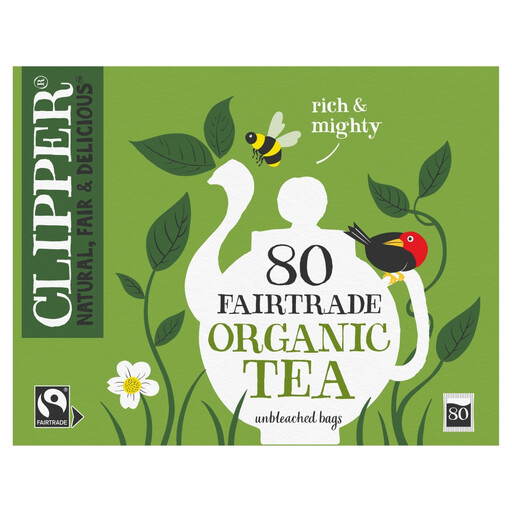
The 80-bag format suits a meeting that needs individually portioned tea. The pack is labelled Organic Fairtrade and weighs 232g; check its current packaging for ingredients and serving information.
 No image available
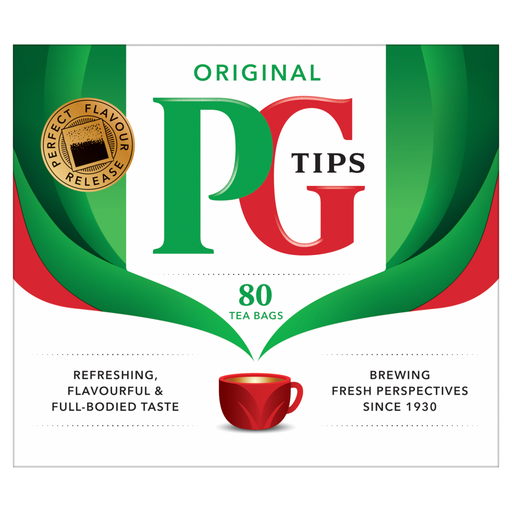
This Original variant provides an 80-bag format for a shared meeting tea point. The stated pack weight is 232g; check the exact pack for its ingredients and preparation directions.
 No image available
This labelled decaf variant gives organisers a distinct 80-bag option when attendees request decaffeinated tea. The pack states 277g; keep it labelled separately from ordinary tea.
 No image available
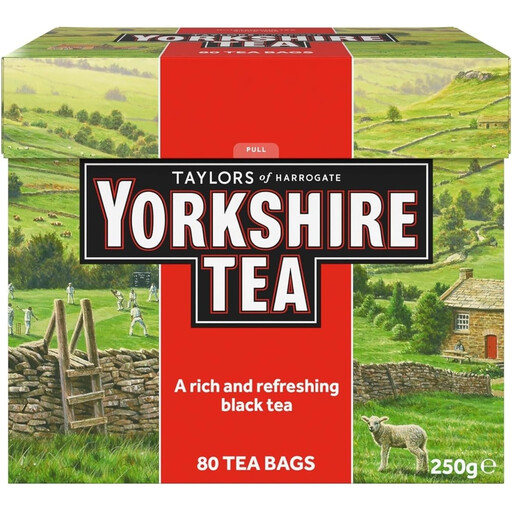
This 80-bag pack is an individually portioned option for a meeting tea point. Its stated weight is 250g; check the pack’s brewing directions when preparing the refreshments.
 No image available
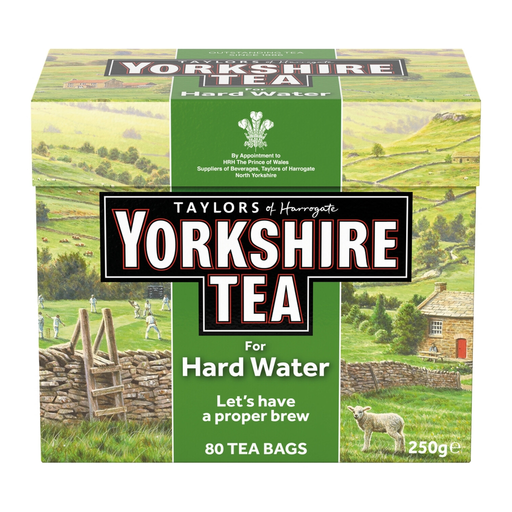
Consider this condition-specific 80-bag pack when the workplace is known to have hard water. It is labelled for hard water and states a 250g pack weight; that label alone is not a reason to replace an ordinary tea choice.
An 80-tea-bag box and loose-leaf tea are different formats: the loose-leaf ranges cited by Twinings and Fortnum & Mason label packs by weight. If 80 individual bags are required, choose a pack marked “80 tea bags”; for loose leaf, plan portions using the maker’s guidance and provide brewing equipment.
Yorkshire Tea advises a 4–5 minute brew and two bags for a regular teapot. For loose tea, its guidance is one teaspoon per person plus one for the pot; also allow for measuring, straining and clearing the leaves.
Add a separately labelled decaffeinated tea when attendees request one or the organiser knows that option is needed. An ordinary black-tea pack should not be presented as decaffeinated; check the exact variant’s label before serving it.
Keep the current packaging for each exact tea variant served and check its ingredients and allergen statement. Information from one black-tea pack cannot be applied to a different tea or infusion; the Food Standards Agency’s food-handling guidance also calls for allergens to be controlled and other foods protected from cross-contamination.