Everyday elevenses tea drinkers
If you alternate between plain tea and tea with milk, compare the maker’s flavour description and brewing directions rather than relying on the words “breakfast blend” alone.


For everyday elevenses, start with a black-tea blend whose stated flavour suits how you drink it: a balanced cup for plain tea or milk, or a fuller Assam-led blend if you prefer a stronger milk tea. For a lighter cup with cake, Whittard of Chelsea describes its English Breakfast as slightly floral and less heavy than other breakfast blends. Check each tea’s brewing directions and choose a pack size that suits how often you make it.
If you alternate between plain tea and tea with milk, compare the maker’s flavour description and brewing directions rather than relying on the words “breakfast blend” alone.
An Assam-led blend is worth considering if you want a malty, full-bodied cup. Fortnum & Mason describes its Breakfast Blend in those terms; other breakfast teas need not have the same profile.
If you serve tea with cake or use little milk, consider a lighter blend. Whittard of Chelsea describes its English Breakfast as slightly floral while retaining malty notes.
Choose the flavour profile first, then check whether the preparation and pack size fit your elevenses routine.
| Priority | What to check | Your needs |
|---|---|---|
| Flavour and milk | Read the specific blend description. Fortnum & Mason calls its Assam Breakfast Blend robust and malty; Whittard of Chelsea describes its English Breakfast as lighter and slightly floral. | I usually add milk and want a fuller cup, or I drink tea plain and would rather have a lighter flavour. |
| Brewing time | Check the maker’s leaf measure and infusion time. Twinings gives two to three minutes for its English Breakfast loose tea; Ringtons recommends three to five minutes for Valley View. | A short mid-morning break makes clear brewing directions useful; on other days, I have time to make tea in a pot. |
| Pack size | Compare the net weight with how often you make tea. The cited Whittard pouch is 100g, the Twinings pack is 125g, and the Yorkshire Tea and Ringtons packs are 250g. Check the storage instructions after opening. | If I am trying a new blend, I would rather start with a smaller pack; a larger one makes more sense when I make loose tea regularly. |
| Decaffeination | Check the exact product label if you require decaffeinated tea. A lighter flavour description does not mean that a regular black-tea blend is decaffeinated. | I want to know whether this particular tea is labelled decaffeinated, rather than judging by its taste. |
Twinings describes a light finish, Whittard of Chelsea describes a lighter floral style, and Fortnum & Mason calls its Assam blend robust and malty. The category name alone cannot tell you which you will prefer with milk or cake.
Read the flavour description for the exact blend and choose according to how you normally serve it.
A 250g pack may suit regular tea-making, but an occasional drinker will keep it open for longer than a smaller pack.
Match the pack size to your rate of use and follow the maker’s instructions for keeping loose tea airtight, cool and dry.
The lighter flavour described for a regular black-tea blend does not establish that it is decaffeinated.
If decaffeinated tea matters to your choice, look for that wording on the exact product rather than relying on its flavour description.
Twinings describes its 125g English Breakfast loose tea as flavourful with a light finish.
Bettys describes the 250g Yorkshire Tea loose blend as using Assam and African teas for flavour, strength and colour.
Whittard describes its 100g English Breakfast loose tea as slightly floral and lighter than other English Breakfast blends, while retaining malty notes.
Fortnum & Mason describes its 125g Breakfast Blend as an Assam tea blend with broken leaves and a robust, malty flavour.
Bettys lists loose-leaf tea including Yorkshire Tea and Yorkshire Gold in 250g packs.
Ringtons presents Valley View as a traditional loose black-tea blend in a 250g pack.
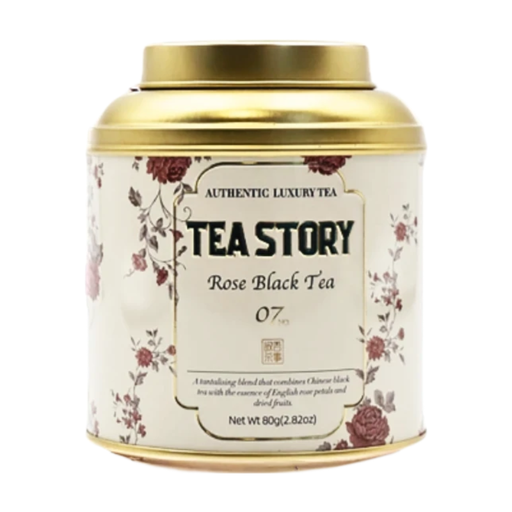
This Joybuy option is a rose black tea for shoppers considering a floral change from conventional breakfast blends at elevenses.
 No image available
Consider this loose-leaf black tea if you want a rose variation for your mid-morning cup. The 80g product is labelled Evening Blend; check whether its flavour profile and suitability with milk match how you serve tea at elevenses.
Consider a robust breakfast or Assam-led blend if you prefer a full-bodied, malty cup with milk. Fortnum & Mason describes its Breakfast Blend as robust and malty, while Bettys describes Yorkshire Gold as full-bodied and rich; the words “English Breakfast” do not guarantee the same strength across products.
A lighter English Breakfast is worth comparing with stronger breakfast blends. Whittard of Chelsea describes its version as slightly floral and lighter while retaining malty notes, and suggests serving it with rich cake.
Follow the directions on the tea you buy: the stated measures and times differ. Twinings recommends a teaspoon per cup for two to three minutes, Fortnum & Mason specifies 2g per cup for three to five minutes, and Ringtons suggests a heaped teaspoon per cup for three to five minutes.
Follow the pack’s storage directions and keep the tea in an airtight container in a cool, dry place. This is especially worth planning for if you choose a larger pack for regular elevenses.