Organisers running a self-service tea station
A filled caddy gives you a stated quantity of tea to plan around. If you prefer an empty jar, measure how much of the chosen tea fits before deciding how it will be replenished during breaks.


For a one-off conference, a filled loose-leaf caddy with a stated tea mass makes quantity planning more straightforward; for repeat events, a refillable caddy lets you choose and replenish the tea separately. An empty glass jar can work for display, but check how much of your chosen tea it holds before relying on it for service. Whichever container you choose, plan how the tea will be brewed and the leaves removed.
A filled caddy gives you a stated quantity of tea to plan around. If you prefer an empty jar, measure how much of the chosen tea fits before deciding how it will be replenished during breaks.
A refillable container may suit a team that already has a routine for buying tea, labelling blends and topping up the station. Whittard lists refillable caddies, including a large 1kg-size option; check its current availability before building a plan around it.
Twinings, Whittard, Fortnum & Mason and Bettys list loose-leaf caddies that can form part of a presented tea station. The caddy supplies storage, but the host still needs a workable brewing and serving setup.
Choose it when: You want the tea and its presentation container together for an occasional event.
Trade-off: The blend and tea mass are fixed by the product, so match both to the planned service.
Choose it when: You run repeat events and want to buy loose tea separately from its container.
Trade-off: Your team must manage refilling and labelling; check availability before relying on a particular caddy.
Choose it when: Visible tea storage suits the station and you can test the jar with the intended blend.
Trade-off: Twinings lists small and large empty glass tea jars without a stated loose-tea capacity, so their appearance cannot establish a serving quantity.
| Priority | What to check | Your needs |
|---|---|---|
| Tea quantity | Compare the stated tea mass of filled caddies with your break schedule. Twinings lists 100g and 500g loose-tea caddies, while Fortnum & Mason lists 125g and 250g formats. Test how much tea an empty jar holds rather than judging by its outside dimensions. | I need enough tea available across the planned breaks, with a way to replenish the station if demand changes. |
| Storage | Check how the container closes and where it will stand between sessions. Ringtons advises keeping loose tea in an airtight container away from sunlight. | The tea may sit at the venue before and between breaks, so I want a storage arrangement the team can maintain throughout service. |
| Brewing | Provide a brew vessel and a way to remove the leaves. Ringtons recommends one teaspoon per cup and a three-to-five-minute infusion as its preparation guidance; trial the process with your chosen tea and equipment. | I want staff or attendees to be able to prepare tea consistently, not just find it in an attractive container. |
| Tea choice | Choose and label each blend separately. Yorkshire Tea lists loose Yorkshire Tea and Yorkshire Gold; Whittard lists loose black, green, fruit and herbal options. Check the exact product when a decaffeinated choice is needed. | One blend may not suit everyone at the station, so I may need clearly identified alternatives. |
| Refilling | For repeat events, decide who buys the loose tea, refills the container and keeps its label accurate. Check the size and current availability of any refillable caddy before standardising on it. | If meetings recur, I need a replenishment routine that the venue team can repeat. |
A caddy chosen for its appearance may need frequent replenishment during an all-day event. Twinings lists filled 100g and 500g caddies, and Fortnum & Mason lists 125g and 250g formats.
Plan the main supply from the stated tea mass and a trial brew, then decide whether smaller caddies belong at the station as additional blends.
Loose leaves must be measured, infused and removed before serving. A jar or caddy does not perform those steps.
Test the brew vessel, measuring method and strainer at the batch size you intend to serve. Ringtons gives one teaspoon per cup and a three-to-five-minute infusion as preparation guidance.
Twinings lists small and large empty ribbed glass tea jars, but their listed names do not give a loose-tea capacity. Their visible size cannot tell you how many brews the chosen tea will provide.
Fill the actual jar with the intended tea and measure the amount before assigning it a role in the conference service.
The Food Standards Agency says UK retail and catering food business operators must provide allergen information for prepacked and non-prepacked food and drink. Milk and food served alongside tea also need to be considered in the station’s arrangements.
Follow the venue’s allergen-information and hot-drink safety procedures, keeping relevant supplier information available and checking the full self-service layout.
Lists both filled loose-leaf caddies and empty glass tea jars.
Offers loose teas and refillable caddies for a separately managed tea supply.
Lists filled loose-leaf caddies with decorative presentation.
Lists loose-leaf caddies, including Tea Room Blend, which Bettys describes as served in its Café Tea Rooms.
Offers loose Yorkshire Tea and Yorkshire Gold blends for organisers choosing tea separately from storage.
Lists loose teas for organisers arranging their own storage and brewing process.
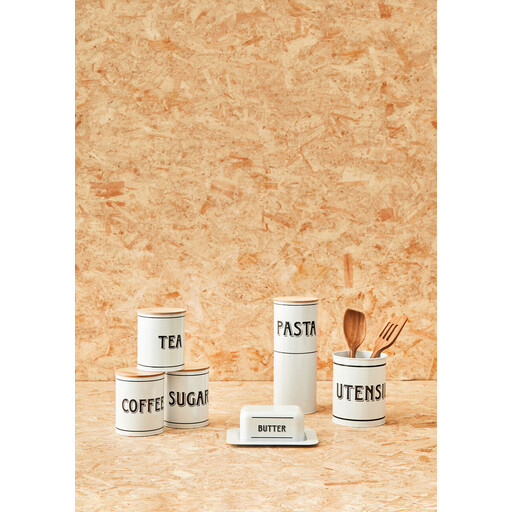
This canister is an option to assess if you plan to buy loose tea separately and set up your own storage at the conference station.
 No image available
For a station using separately purchased loose tea, this metal canister provides a container to assess. Check how much of your chosen tea it holds and how its lid fits before planning refills around it.
Use the tea maker’s preparation guidance for a trial brew, then plan against your cup size, break schedule and expected number of tea drinkers rather than treating caddy size as a serving count. Ringtons recommends one teaspoon per cup and a three-to-five-minute infusion for its loose tea.
Choose a filled caddy if its stated tea mass and blend suit your event plan; choose an empty jar if you want to source the tea separately and can measure the jar’s capacity. Twinings lists filled 100g and 500g caddies, but its small and large empty glass-jar listings do not state how much loose tea they hold.
Provide a vessel for brewing and a way to remove the leaves before serving. Test the measuring, infusion and straining steps at the batch size your conference station will use.
If a food business operates the service, the Food Standards Agency says UK retail and catering food business operators must provide allergen information for prepacked and non-prepacked food and drink. Keep relevant supplier information available for the tea, milk and any food or additions served with them, and follow the venue’s allergen process.
Assess the complete setup, including hot-water equipment, spills, the space around the station and who will replenish it. The Health and Safety Executive identifies risk management as part of catering and hospitality safety; follow the venue’s procedures rather than treating the tea container as the only consideration.