Tent campers carrying loose tea
A compact container can hold a trip-sized portion from an opened pouch. Check its closure and keep it dry, away from strong light and odours, in your food box.


For a tent or rucksack, choose a compact, securely closing caddy or other non-glass container that you can fill with the amount of loose tea needed for the trip. A glass jar makes more sense where it can travel in protected storage, such as a campervan cupboard. Whittard of Chelsea and Ringtons advise airtight storage for opened tea; keep the container dry and consider light and nearby odours too.
The way you carry your camping food matters as much as whether you prefer a jar or a caddy.
A compact container can hold a trip-sized portion from an opened pouch. Check its closure and keep it dry, away from strong light and odours, in your food box.
Protected cupboard space makes a refillable glass jar or tea caddy an option. Check that it fits the cupboard and can be kept secure while travelling.
An empty instant coffee jar needs to be clean, completely dry and free of lingering coffee odour. Check that its lid closes securely, and account for the risks of carrying glass.
Choose the container format for your transport and tea preference, then check the storage conditions and brewing equipment separately.
Choose when: You want to decant a trip-sized portion from a loose-tea pouch.
Trade-off: You need to clean and dry it before filling and check how securely its lid closes.
Choose when: You want loose tea supplied in a tin that you can consider reusing on later trips.
Trade-off: The tea variety and quantity come with the caddy, so check both against your plans.
Choose when: The jar can travel and stand in protected storage, such as a campervan cupboard.
Trade-off: Glass needs protection from knocks, and a clear jar should be kept away from strong light.
| Priority | What to check | Your needs |
|---|---|---|
| Tea storage | Check that the lid closes securely and the inside is dry. Keep opened tea away from strong light and odours, following Whittard of Chelsea’s storage guidance; Ringtons also advises an airtight container. | I want the tea I have opened to stay protected in a camping-food box, including when it sits near other foods. |
| Transport | Consider the container material, its position in your bag or cupboard and how it will be protected from knocks. Do not assume a decorative jar is made for rucksack travel. | For a tent trip, I need something manageable in my pack; in a campervan, I may have a protected place for a jar. |
| Quantity | Check the container’s usable capacity against the amount you plan to take. Compare a ready-filled caddy’s stated weight with the number of cups you expect to make. | I would rather carry a portion for this trip than devote food-box space to a full retail pack. |
| Brewing kit | Pack a scoop or teaspoon and a strainer or infuser. Follow the selected tea’s preparation instructions; Ringtons specifies one heaped teaspoon per cup and 3–5 minutes for Traditional Valley View. | I need a practical way to measure and filter loose leaves at camp, not just somewhere to store them. |
A decorative jar or tin does not establish how securely it closes or how it will cope with being carried among other camping supplies.
Check the closure and material for your packing method. If you choose glass, give it protected space rather than leaving it loose in a rucksack.
Whittard of Chelsea advises keeping its opened loose tea dry and away from odours; both Whittard and Ringtons call for airtight storage after opening.
Clean a reused jar, let it dry completely and check for lingering coffee odour before adding tea.
A storage container does not measure the leaves or remove them from the drink.
Pack a teaspoon or scoop and a strainer or infuser, then use the preparation guidance for your chosen tea.
A full retail pack can take up space when you plan to make only a few cups.
Work out the amount you expect to use, decant it into a suitable container and store the remainder at home according to its pack instructions.
Carrying unused tea also leaves less room in the camping-food box for other supplies.
These brand ranges illustrate different ways to buy loose tea and its storage; a tea-filled caddy is not the same purchase as an empty container.
Twinings lists empty small and large ribbed glass jars for tea storage, alongside loose-tea accessories.
Whittard offers loose tea in pouch and caddy formats, including its Gyokuro loose tea.
Ringtons sells loose tea and lists a separate Traditional Caddy accessory.
Bettys sells Tea Room Blend loose leaf tea in a 125g decorative caddy.
Fortnum & Mason lists loose-leaf teas in decorative caddies and tins, including 125g and 250g formats.
Yorkshire Tea lists Yorkshire Tea and Yorkshire Gold in loose form.
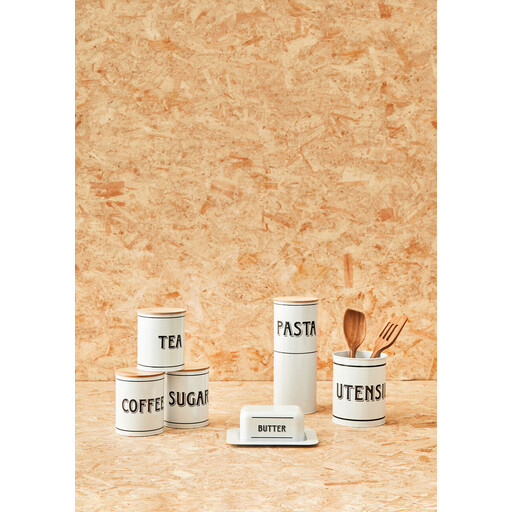
This refillable metal tea canister is an option if you want to decant loose tea for a camping-food kit. Check its capacity and lid against the amount you plan to carry and where you will pack it.
 No image available
A refillable metal tea canister for decanting loose tea. Check how much tea it holds, whether its lid closes securely and how you will protect it from knocks while travelling.
Yes, if it is clean, completely dry, free of lingering coffee odour and closes securely. Whittard of Chelsea and Ringtons advise airtight storage for opened tea, while Whittard also specifies keeping it away from strong light and odours. Protect a glass jar from knocks if you take it camping.
A compact caddy or other non-glass container is easier to consider for a packed tent or rucksack kit; a glass jar needs protected space, such as a campervan cupboard. With either format, check the closure and follow the tea maker’s storage instructions.
Work from the cups you expect to make and the dose guidance for your chosen tea, then pack a suitable trip-sized portion. For its Traditional Valley View Loose Tea, Ringtons suggests one heaped teaspoon per cup and a brewing time of 3–5 minutes; other teas may have different instructions.
Take a scoop or teaspoon to measure the leaves and a strainer or infuser to filter them. Twinings lists these types of loose-tea accessories, but check that what you pack works with your camping mug or pot.