Hosts serving a mixed group
A familiar black-tea blend gives guests a conventional cup, with milk offered separately. Check the pack size and the directions for brewing a shared pot before deciding how much to buy.


For a mixed coffee-morning group, a traditional loose-leaf black tea is a practical starting point; put milk out separately so guests can choose how to take it. Consider a lighter English Breakfast blend when you know guests prefer a more delicate cup, or a caddy when presentation matters. Check the ingredients, brewing directions, pack size and caffeine suitability rather than assuming the blend name tells you how it will serve.
A familiar black-tea blend gives guests a conventional cup, with milk offered separately. Check the pack size and the directions for brewing a shared pot before deciding how much to buy.
If the tea is part of the table setting, you may prefer a lighter blend or a caddy. Whittard describes its English Breakfast as lighter and slightly floral; Fortnum & Mason sells Royal Blend in a loose-leaf caddy.
Ordinary black tea contains caffeine, and the amount in a cup varies with the tea and preparation. Ask about preferences and consider a clearly labelled decaffeinated alternative rather than assuming one black-tea blend suits everyone.
Choose the flavour style for your guests first, then check whether the pack and brewing method work for the number of cups you plan to serve.
Choose it when: You want a familiar shared brew rather than a distinctive floral profile.
Bear in mind: These are caffeinated teas, and loose leaves need brewing equipment.
Choose it when: Guests are likely to welcome a more delicate tea alongside cakes or biscuits.
Bear in mind: Whittard’s lighter, slightly floral English Breakfast may not match a preference for a strong traditional cup.
Choose it when: The tea’s presentation is part of the occasion or it will be given as a gift.
Bear in mind: A caddy does not tell you whether its flavour will suit every guest; check the blend itself.
| Priority | What to check | Your needs |
|---|---|---|
| Shared flavour | Read the ingredient list and flavour description. Twinings lists its 125g English Breakfast as 100% black tea; Whittard describes its English Breakfast as lighter and slightly floral. | I’m serving people with different tastes, so I want to know whether the tea is a traditional black blend or a more distinctive one. |
| Strength and serving | Check the specific blend’s description rather than relying on “English Breakfast” alone. Yorkshire Tea describes Original as strong; Fortnum & Mason describes Royal Blend as malty and honey-like. | Some guests may take milk, while others prefer tea without it. I want a flavour style that fits the group. |
| Brewing a pot | Check the amount of leaf per cup, brewing time and whether you have a pot or infuser. Twinings gives 2–3 minutes for its English Breakfast; Ringtons gives 3–5 minutes for Valley View. | When several people arrive together, I need a brewing method I can measure and serve without leaving the leaves in the pot indefinitely. |
| Caffeine and ingredients | Check the exact pack’s tea type and ingredients, and look for a clearly labelled decaffeinated option if needed. Do not apply one blend’s caffeine figure to another. | I’d like guests who limit caffeine to have a choice without guessing what is in their cup. |
Twinings lists a 100% black-tea English Breakfast, while Whittard describes its version as lighter and slightly floral. The shared blend name does not settle which flavour your guests will prefer.
Compare the producers’ flavour descriptions with the way guests usually take their tea before choosing a lighter or more robust style.
Fortnum & Mason’s Royal Blend comes in a 250g caddy, but the container does not establish how many cups you will make or whether guests will like its malty profile.
Check net weight, the stated amount of leaf per cup and the blend description. Choose the caddy for an occasion where its presentation matters to you.
Loose tea must be measured and the leaves separated from the drink. Yorkshire Tea’s shared-pot method calls for one teaspoon per person plus one for the pot; other products give their own directions.
Check the chosen pack’s instructions and have a pot, infuser or strainer ready before guests arrive.
If you do not already have a way to contain or strain the leaves, you will need one to serve the tea.
Yorkshire Tea gives an average of 48mg for a cup of its Original tea made with 200ml water and brewed for five minutes. That preparation-specific figure cannot describe every blend or cup.
Offer a clearly labelled decaffeinated option when needed, and avoid estimating a guest’s total caffeine intake from the tea alone.
These examples show different black-tea styles and pack formats; a brand’s flavour description is not a guarantee of what every guest will prefer.
Twinings English Breakfast is a traditional loose-leaf option; the 125g pack lists 100% black tea.
Yorkshire Tea describes Original as a strong everyday tea and lists a 250g loose-tea pack.
Whittard describes its English Breakfast as a lighter, slightly floral black tea with malty notes.
Royal Blend is a black tea sold in a 250g loose-leaf caddy. Fortnum & Mason describes Sri Lankan Flowery Pekoe and Assam in its blend.
Bettys says its Tea Room Blend is served in its Café Tea Rooms and contains teas from Africa and India.
Ringtons Valley View is a traditional loose blend listed in a 250g bag with 100% black tea as its ingredient.
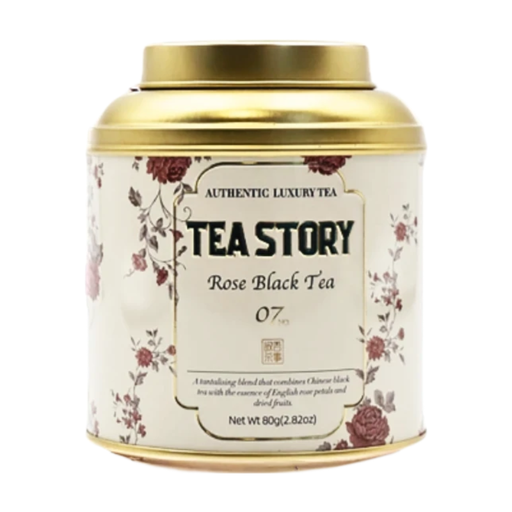
This rose-named loose-leaf tea may interest hosts considering a different blend for the table. Check its tea type against the pack before treating it as the traditional black-tea choice discussed above.
 No image available
For a coffee morning, check the ingredients and brewing directions against guests’ preferences. The product is labelled Rose Black Tea in its title, but its other product information describes green tea, so confirm the tea type on the pack before serving it as a black-tea blend.
A traditional black-tea blend is a practical starting point if guests are likely to expect a familiar cup. Twinings English Breakfast and Ringtons Valley View both list 100% black tea; offer milk separately and check the pack’s brewing directions before making a shared pot.
Follow the directions for the blend you buy. Yorkshire Tea suggests one teaspoon per person plus one for the pot, while Ringtons Valley View specifies one heaped teaspoon per cup. Their instructions are product-specific rather than a measure for every loose tea.
For tea brewed directly in a mug, Yorkshire Tea advises adding milk after brewing because it cools the water. For tea made in a pot, it says the order is a matter of preference; offering milk separately lets each guest choose.
No. Yorkshire Tea reports an average of 48mg for a cup of its Original tea prepared with 200ml water and brewed for five minutes, and says caffeine varies. That figure should not be used for another blend or preparation. NHS guidance sets a 200mg daily caffeine limit during pregnancy across all sources, not a per-cup tea allowance.
Yes: check the exact pack, particularly if serving someone with an allergy or considering a flavoured blend. Ringtons lists Valley View as 100% black tea with no allergens stated on its product page; that declaration does not apply to other teas.