Night workers reducing caffeine
If tea accompanies a late snack or follows other caffeinated drinks, an explicitly decaffeinated loose black tea lets you keep the familiar style of brew while reducing this source of caffeine.


Choose decaffeinated loose-leaf black tea if you want a familiar brew while reducing caffeine during a late shift or before planned sleep. Choose a standard breakfast blend if you prefer a stronger traditional cup during the active part of your shift and are comfortable with caffeine; the amount in black tea varies with brew strength. Decaf can still contain a trace of caffeine, so check the exact product if that matters to you.
If tea accompanies a late snack or follows other caffeinated drinks, an explicitly decaffeinated loose black tea lets you keep the familiar style of brew while reducing this source of caffeine.
English Breakfast or an Assam-led blend may suit a snack break during the active part of a shift if you want a fuller-flavoured cup and are comfortable consuming caffeine.
A larger pack is worth considering if you regularly make several cups or share a pot. Check that you have suitable airtight storage before choosing a 1kg format.
Start with caffeine status, then choose a flavour and pack size that fit how often you brew tea during a shift.
| Priority | What to check | Your needs |
|---|---|---|
| Caffeine | Check whether the exact loose-leaf product is standard black tea or labelled decaffeinated. Fortnum & Mason puts a typical black-tea cup at 40–50mg of caffeine, depending on brew strength; decaf need not be caffeine-free. | If I have already had caffeinated drinks or plan to sleep soon after my shift, I would look for an explicitly decaffeinated loose tea. |
| Flavour | Compare the stated blend: Twinings describes its English Breakfast as a rounded black tea, while Fortnum & Mason describes its Assam Breakfast Blend as robust and malty. Check the product’s guidance if you take tea with milk. | With a snack, I may want either a familiar breakfast-tea cup or a more pronounced malty flavour. |
| Brewing | Read the instructions for the chosen tea. Twinings gives one teaspoon per cup and 2–3 minutes for its English Breakfast; Ringtons advises one teaspoon per cup and 3–5 minutes for its loose teas. | On a short break, I want a dose and steeping time I can repeat without leaving the leaves in the cup. |
| Pack size and storage | Match the pack to how often you make tea, and check its storage directions. Ringtons recommends airtight storage away from sunlight. | A large bag makes more sense to me if I brew pots regularly or share tea; otherwise, a smaller pack lets me try the blend first. |
| The whole break | Consider what you will eat and drink alongside the tea. The British Dietetic Association notes possible benefits from night-time breaks that include drinks and lighter meals or snacks, without prescribing one meal-timing rule for every shift worker. | I want tea to accompany a planned snack break, rather than relying on a stronger brew alone when I feel tired. |
Decaffeination reduces caffeine but does not necessarily remove every trace; Ringtons notes that a small trace remains in its decaf tea.
Read the exact product’s caffeine wording. If you require a caffeine-free drink, check that an alternative infusion is explicitly labelled caffeine-free.
A robust flavour does not make standard black tea a decaf option. Fortnum & Mason notes that caffeine in a black-tea cup varies with brew strength.
Choose standard breakfast tea when you want a caffeinated black tea; choose an explicitly decaffeinated loose blend when reducing caffeine is the deciding factor.
A large bag suits regular or shared brewing, but it also needs space and suitable storage after opening.
Consider a smaller pack first if you are trying a blend or drink loose tea only occasionally.
The Health and Safety Executive identifies sleep loss and fatigue as significant issues for shift workers. A stronger cup does not address the whole break or your sleep routine.
Plan a break with a drink and snack rather than treating tea as the only response to tiredness.
These brand examples show formats and blend styles to compare; check the exact product when loose-leaf format or decaf status is essential.
Its English Breakfast 125g loose tea is an everyday black-tea option.
The brand lists loose-tea blends and also has a separate Decaf range.
Whittard offers Decaffeinated English Breakfast as loose black tea.
Its loose Breakfast Blend is an Assam tea that Fortnum & Mason describes as robust and malty.
Bettys lists Taylors Decaffeinated Leaf Tea in a 1kg format.
Ringtons lists several traditional loose-tea blends, including Breakfast and Northumbrian Blend.
These two teas represent different choices for a night-shift snack break: a rose-flavoured standard black tea and a decaffeinated black tea. Check the caffeine status of the exact tea you choose.
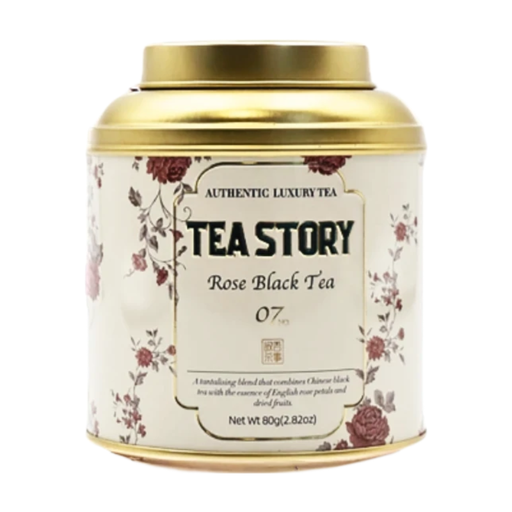 Image unavailable
A standard black tea with rose flowers for a snack break when you are comfortable with caffeine. The product description gives 2–3g per cup and a 3–5 minute brew; store the caddy in a cool, dry place. Check the caffeine information if you are limiting your intake.
 Image unavailable
This decaffeinated loose-leaf black tea is the option here for reducing caffeine while keeping a black-tea brew. The pack contains 250g; check its label for brewing directions and caffeine information if you need to manage your intake closely.
Look for a product explicitly labelled decaffeinated loose-leaf tea, such as Whittard Decaffeinated English Breakfast or Bettys’ Taylors Decaffeinated Leaf Tea. Decaf is not necessarily caffeine-free: Ringtons notes that a trace can remain.
Yes, if you want a caffeinated black tea during your shift. Fortnum & Mason puts a typical black-tea cup at 40–50mg of caffeine, depending on brew strength, so consider other caffeinated drinks and when you plan to sleep.
Follow the chosen tea’s instructions and use an infuser or strainer so you can remove the leaves. Twinings gives one teaspoon per cup and 2–3 minutes for its English Breakfast; Ringtons advises one teaspoon per cup and 3–5 minutes for its loose teas.
Keep it sealed in an airtight container in a cool, dry place away from sunlight and strong odours. Consider the space and storage needed before buying a large bag that you will open repeatedly.