Fairtrade-focused loose-tea buyers
If certification is a requirement, look for the applicable FAIRTRADE Mark on the particular tea. General statements about ethical sourcing or fair prices do not establish that an individual product is certified.


If Fairtrade certification matters most, check the FAIRTRADE Mark on the exact loose-leaf product rather than treating a brand’s ethical-sourcing language as certification. For supper close to bedtime, check ingredients and caffeine information separately: Cambridge University Hospitals notes that caffeine can remain in the system for several hours.
If certification is a requirement, look for the applicable FAIRTRADE Mark on the particular tea. General statements about ethical sourcing or fair prices do not establish that an individual product is certified.
If supper is close to bedtime, check what the tea contains and whether the product gives caffeine information. Cambridge University Hospitals notes that caffeine can remain in the system for several hours.
Loose tea lets you choose a blend and follow its brewing directions, but you will need a way to measure and strain the leaves. Check the pack’s storage instructions for use after opening.
For a late supper, settle the sourcing requirement and the timing of the drink before choosing a flavour or leaf format.
| Priority | What to check | Your needs |
|---|---|---|
| Fairtrade certification | Look for the applicable FAIRTRADE Mark on the exact pack or product listing. The Fairtrade Foundation explains that a mass-balance model can allow certified and non-certified commodities to mix, so check what any mark on the product means. | I want an identifiable certification claim for this tea, not just a brand statement about ethical sourcing. |
| Caffeine and timing | Read the ingredients and any caffeine or decaffeination information for the particular blend. Do not assume that a bedtime-themed name, or the word ‘decaf’, means caffeine-free. | If supper is close to bed, I want to know what I am brewing before choosing black tea or an infusion. |
| Ingredients and flavour | Check whether the product contains tea leaves or is a fruit or herbal infusion, and read the full ingredient list. Check Fairtrade certification separately from the drink’s caffeine information. | Perhaps I want a different flavour from black tea without assuming that the alternative meets my sourcing or caffeine requirements. |
| Brewing and storage | Check the maker’s quantity and steeping directions, whether you need an infuser or teapot, and how to store the opened pack. Ringtons suggests one teaspoon per cup and a three-to-five-minute steep for its loose tea. | I would like loose leaves at supper, provided the preparation and storage fit my routine. |
A brand’s sourcing policy may matter to you, but it does not establish Fairtrade certification for the loose tea you are buying.
Check that product for the applicable FAIRTRADE Mark. If it carries mass-balance information, read what that means for the ingredients in an individual pack.
Cambridge University Hospitals notes that caffeine can remain in the system for several hours, which matters when tea is served close to bedtime.
Check the particular blend’s ingredients and caffeine information. If you want a caffeine-free infusion, confirm that description on the product rather than inferring it from its name.
Twinings lists an Organic & Fairtrade collection, but the collection title alone does not identify the certification and leaf format of each item you might choose.
Check both the FAIRTRADE Mark and the loose-leaf description on the specific pack or listing.
Loose leaves need measuring and straining. The pack’s brewing and storage directions also matter once it has been opened.
Check that you have a suitable infuser or teapot, follow the tea maker’s brewing directions and store the opened tea as directed.
You may need an infuser or teapot if you do not already have one.
These brand ranges offer different places to look for loose tea; assess certification and late-night suitability on the individual product.
Twinings lists loose-leaf tea and an Organic & Fairtrade collection.
Yorkshire Tea offers loose tea alongside other tea ranges.
Whittard lists loose tea, including black teas, decaffeinated tea and infusions.
Fortnum & Mason lists a range of loose-leaf teas and blends.
Bettys offers loose teas, including blends and teas in caddies.
Ringtons lists loose-leaf teas and provides brewing guidance.
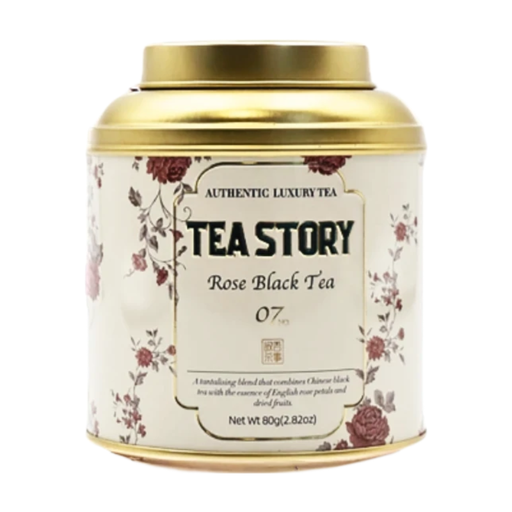
This rose black tea is an option for preparing loose leaves with supper. Check its pack for Fairtrade certification and caffeine information if either affects your choice.
 No image available
For a loose-leaf supper drink, this is an 80g rose black tea. Check the exact pack for a FAIRTRADE Mark and caffeine information, particularly if you will drink it close to bedtime; you will also need a way to infuse the leaves.
No. A brand may describe its sourcing as ethical or say that it pays fair prices without establishing Fairtrade certification for a particular loose tea. If certification is required, check the exact pack or listing for the applicable FAIRTRADE Mark.
You can choose it, but consider how close supper is to bedtime and whether caffeine concerns you. Cambridge University Hospitals notes that caffeine is a long-lasting stimulant that can remain in the system for several hours; check the particular tea’s information before deciding.
No such physical separation should be assumed. The Fairtrade Foundation explains that certified and non-certified commodities may mix under a mass-balance model, so read the information accompanying the mark on the product you choose.
Follow the directions for your particular tea. As a starting point for its loose tea, Ringtons suggests one teaspoon per cup and steeping for three to five minutes; check the pack’s storage directions after opening.