Night-shift workers who like a bold cup with food
A loose-leaf black tea described as malty or full-bodied may appeal alongside toast, biscuits or a savoury break snack. Choose for the flavour you enjoy, while considering caffeine timing separately.


For a bold cup alongside a night-shift snack, start with a loose-leaf black tea whose maker describes it as robust, malty or full-bodied, then choose the flavour and brewing method that suit your break. Twinings London Strand Strong Breakfast, Whittard Chelsea Breakfast, Fortnum & Mason Breakfast Blend, Bettys Breakfast Tea and Ringtons Breakfast Loose Tea each carry such flavour descriptions, but those words do not measure caffeine per cup. If you plan to sleep soon after your shift, consider caffeine timing separately: NHS night-shift guidance advises minimising caffeine in the evening.
A loose-leaf black tea described as malty or full-bodied may appeal alongside toast, biscuits or a savoury break snack. Choose for the flavour you enjoy, while considering caffeine timing separately.
Look at the exact blend rather than the words “English Breakfast” alone. Whittard describes Chelsea Breakfast as stronger than its lighter English Breakfast tea.
A teaspoon measure and an infuser or teapot make it easier to follow the maker’s leaf quantity and brewing window during a short break.
Choose the flavour profile first, then check how you will prepare and store the tea at work. Treat caffeine timing as a separate decision from how strong the cup tastes.
| Priority | What to check | Your needs |
|---|---|---|
| Flavour with food | Check whether the exact loose-leaf blend is described as robust, malty or full-bodied. If you add milk, check the maker’s serving suggestion for that blend. | I want a cup that still tastes substantial alongside my usual break snack or milk, rather than a lighter breakfast-tea style. |
| Brewing at work | Check the leaf quantity, water guidance and brewing window on the pack. Ringtons suggests one teaspoon per cup and a 3–5 minute steep for loose tea. | On a short break, I need a method I can repeat without guessing how many leaves to use or when to remove them. |
| Caffeine timing | Check whether the exact product is caffeinated or labelled decaffeinated. Do not use “strong” on a flavour description as a caffeine-per-cup figure. | If I intend to sleep after work, I need to think about when I have my last caffeinated cup. NHS night-shift guidance advises minimising caffeine in the evening. |
| Storage between shifts | Check the pack’s storage directions and whether its format suits how often you make tea. Keep the leaves according to those directions after opening. | A larger pack appeals if I make tea regularly, provided I have a practical way to store it between breaks. |
The tea makers use terms such as strong, robust and full-bodied to describe flavour. Those descriptions do not establish which prepared cup contains more caffeine.
If reducing caffeine matters to you, check the exact product’s labelling for a decaffeinated option rather than relying on how bold it tastes.
Breakfast blends are not described alike: Whittard calls its standard English Breakfast lighter and more refined, and Chelsea Breakfast its stronger alternative.
Compare the exact loose-leaf blends’ flavour descriptions before choosing one for milk or a substantial snack.
A different leaf quantity or steeping time can change the cup you make, making it difficult to judge whether a blend suits your taste.
Start with the maker’s dose and brewing window. Ringtons’ general loose-tea guidance is one teaspoon per cup for 3–5 minutes.
A bold flavour does not tell you whether a black tea suits the time you intend to sleep. NHS night-shift guidance advises minimising caffeine in the evening.
Consider when your last caffeinated drink falls in relation to planned sleep; check for a specifically labelled decaffeinated tea if you want a cup nearer that time.
These descriptions concern the named loose-leaf blends, not every tea each brand makes.
London Strand Strong Breakfast is an option for shoppers who want a specifically named strong breakfast tea.
Yorkshire Tea identifies loose-tea versions of Yorkshire Tea and Yorkshire Gold.
Chelsea Breakfast is the brand’s stronger loose-leaf alternative to its English Breakfast.
Breakfast Blend is an Assam-based loose-leaf choice in a 190g carton.
Breakfast Tea is a loose-leaf option for shoppers interested in a Tippy Assam profile.
Breakfast Loose Tea is a 250g black-tea pack for those making cups across repeated breaks.
The option here is a rose-blended loose-leaf black tea for a break-time cup, rather than one of the plain breakfast blends described above. Consider whether rose flavour suits the snack and tea style you want.
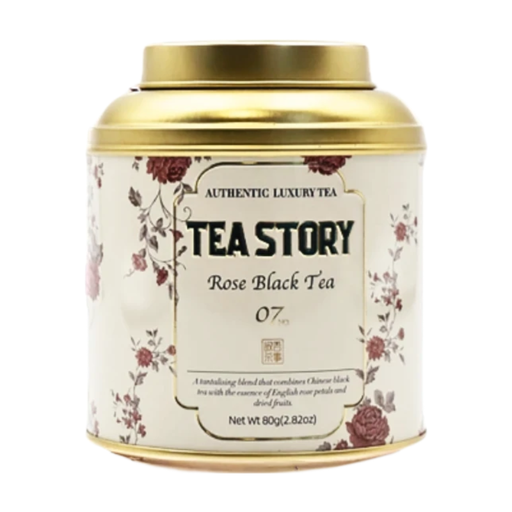 Image unavailable
For a break-time cup if you prefer rose-blended black tea to a plain breakfast blend, this tea is described as rich and full-bodied. Its stated ingredients are black tea and rose flowers, with 2–3g of leaves per cup and a 3–5 minute infusion. Check the exact pack if caffeine content matters near planned sleep; a full-bodied flavour does not give a caffeine-per-cup figure.
A stronger-tasting tea is not necessarily a higher-caffeine tea. Twinings, Whittard and the other makers discussed here use words such as “strong” and “full-bodied” to describe flavour, not a comparable caffeine amount per prepared cup. Check for a specifically labelled decaffeinated product if reducing caffeine is your aim.
Start with the leaf quantity and brewing time given for your tea, then adjust within the maker’s instructions to suit your taste. Ringtons’ general loose-tea guidance suggests one teaspoon per cup and a 3–5 minute steep.
A black breakfast blend described as robust, malty or full-bodied is a sensible starting point if you want a bold flavour alongside milk or food. Whittard calls Chelsea Breakfast a stronger alternative to its English Breakfast, while Fortnum & Mason describes its Breakfast Blend as making a strong, full-bodied brew. Choose between them by the flavour you prefer rather than assuming one has more caffeine.
Consider when you intend to sleep before having another caffeinated cup. NHS night-shift guidance advises minimising caffeine in the evening; a lighter-tasting black tea should not be treated as decaffeinated. Check the exact product’s labelling if you want a decaffeinated drink instead.