Who is each storage choice for?
The useful starting point is whether you need an everyday refill container, tea and storage together, or jars that will be visible with the rest of the breakfast setup.
Everyday breakfast-tea drinkers
If you make the same loose black tea regularly, a dedicated container can sit near the teapot and leave room to measure out the leaves. Choose the tea you want to drink, including whether you serve it with milk, before choosing its container.
Buyers who refill an existing tea supply
If you already have a preferred loose tea, match the container to the amount you normally keep open. Whittard of Chelsea specifies approximately 100g for its Fill-Me-Up Caddy, depending on tea type; its Large Blue Caddy is specified at 1kg.
Hosts arranging a visible breakfast station
Glass tea jars can sit with coffee jars and breakfast tableware, but decide where they will stand before buying. The UK Tea & Infusions Association advises cool, dry tea storage away from strongly flavoured or perfumed foods; Bettys also instructs customers to keep its tea away from direct sunlight.
What should you check before choosing?
Decide on the tea and where it will live, then compare container capacity and the practical steps involved in making breakfast.
| Priority |
What to check |
Your needs |
| Storage position |
Check that the spot is cool and dry and away from strong food odours. If using glass, check whether direct sunlight reaches it. |
I want tea within reach at breakfast, but not in a sunny or damp position. The UK Tea & Infusions Association advises cool, dry storage away from strongly flavoured or perfumed foods; Bettys advises keeping its tea out of direct sunlight. |
| Morning preparation |
Check that you can open and close the container easily and keep a clean, dry spoon nearby. Allow for measuring and brewing loose leaves. |
On busy mornings, I want the leaves and equipment together. In its 2025 Tea Census of over 1,000 Britons, the UK Tea & Infusions Association reported that 93% preferred the convenience of making tea with a tea bag over preparing a loose-leaf infusion; that measures a preparation preference, not a preference for any jar. |
| Tea for the cup |
Check the tea format, the pack’s brewing instructions and whether the maker describes the blend as suitable with milk, if guests may add it. |
If I serve tea with milk at breakfast, I want to choose the blend before choosing its packaging. Fortnum & Mason describes its Breakfast Blend as robust and malty with milk. |
| Container size |
Compare the amount of tea you normally keep open with the stated capacity. Check whether a capacity is given by weight or volume and whether leaf type affects it. |
I would rather refill a container that fits my usual tea quantity than buy a bulk caddy for occasional use. Whittard of Chelsea states that its Fill-Me-Up Caddy holds approximately 100g, depending on tea type, while its Large Blue Caddy is specified at 1kg. |
| Jar and lid |
For a repurposed jar, check that both the container and lid are suitable for food storage. Check the closure and the space needed to reach the leaves. |
For a jar displayed beside breakfast tableware, I want to know it is intended for storing tea, not just decoration. I also need a place for it that meets the tea’s storage instructions. |
| Tea and storage together |
Check whether the purchase is an empty container or a caddy filled with tea, and whether a matching refill is offered. |
I may want a filled caddy to start with, or I may prefer to put my existing tea into an empty one. Fortnum & Mason sells Breakfast Blend in a 250g loose-leaf caddy and a separate 190g refill intended to top up a tea caddy. |
Which brands offer relevant tea or storage?
These examples distinguish empty storage from tea supplied in a caddy; a brand’s inclusion here does not mean its products are in the Joybuy selection below.
Twinings
An option if you want to choose loose tea and a separate glass tea-storage jar from the same retailer.
- Twinings lists 125g loose English Breakfast and Earl Grey teas, as well as empty small and large ribbed glass jars in its tea-storage range.
- For a particular quantity of tea, check the chosen jar’s capacity and closure before buying.
Yorkshire Tea
A tea-first choice if you intend to make loose black tea in a teapot and choose storage separately.
- Yorkshire Tea identifies both Yorkshire Tea and Yorkshire Gold as available in loose-tea formats.
- Choose a separate container that fits the tea quantity and your breakfast setup.
Whittard of Chelsea
Relevant if you want an empty refillable caddy or tea already supplied in one.
- Whittard specifies approximately 100g, depending on tea type, for its Fill-Me-Up Caddy and 1kg for its Large Blue Caddy. It also sells English Breakfast tea in a caddy.
- Match the caddy to the leaf type and quantity you use; a stated capacity is not the same as a guaranteed fit for every tea.
Fortnum & Mason
A filled-caddy route if you want its Breakfast Blend and a separately sold refill.
- Fortnum & Mason lists a 250g Breakfast Blend loose-leaf caddy and a 190g refill intended to top up a tea caddy.
- The filled caddy is a purchase of tea and storage together, not an empty container for a blend you already own.
Bettys
A choice for buyers who want Bettys loose tea presented in a traditional caddy.
- Bettys sells Tea Room Blend loose leaf tea in a caddy.
- If you need only an empty jar, check the contents: a filled tea caddy is a different purchase. Bettys instructs customers to store its tea cool and dry, away from direct sunlight.
Joybuy tea-storage options
These Joybuy options are containers for a breakfast tea setup: a set of glass jars for separate dry goods and a metal tea canister. Check each container’s food-storage suitability and capacity for your loose tea before choosing.
 No image available
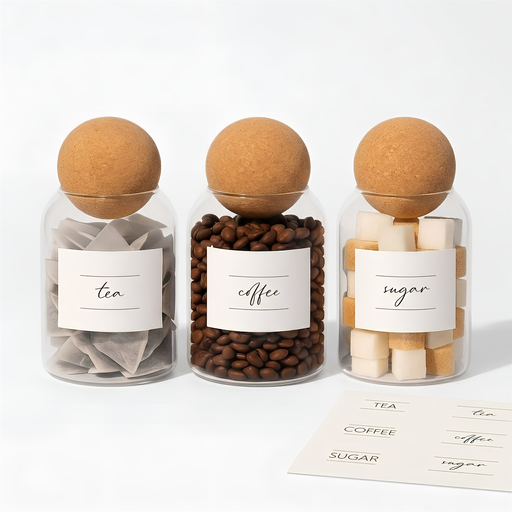
Argon Glass Tea, Coffee and Sugar Jars, Set of 3
Three glass jars with cork-ball lids offer separate containers for a breakfast station. Before storing loose tea, check that the jar and lid are suitable for food storage and that a jar fits your usual quantity of leaves. Keep the tea cool and dry, away from direct sunlight and strong odours.
View on Joybuy
 No image available
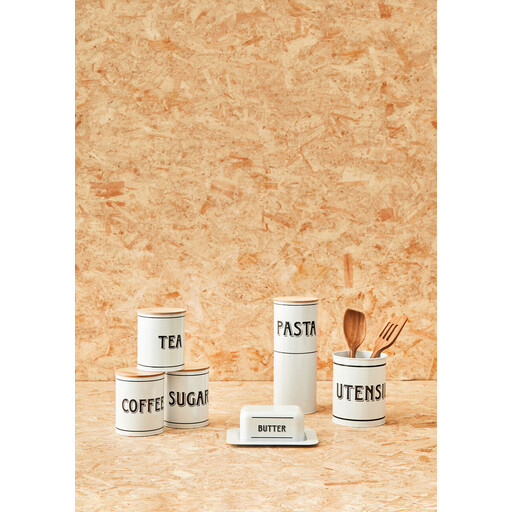
Maison by Premier Grocer White Metal Tea Canister
This metal tea canister is an alternative to glass jars for keeping tea near the breakfast-making area. Check that the canister and lid are suitable for food storage and that its capacity fits the amount of loose tea you keep open. Store the tea in a cool, dry place away from strong odours.
View on Joybuy
Questions about loose-tea storage
Should I use a jar or a caddy for loose-leaf tea at breakfast?
Choose a caddy if you want a dedicated refill container with a stated loose-tea capacity: Whittard of Chelsea specifies approximately 100g for its Fill-Me-Up Caddy, depending on tea type. A glass jar is another option for visible storage, provided its capacity, closure and food-storage suitability fit your tea and you can keep it cool, dry and out of direct sunlight.
Where should I store loose-leaf tea in the kitchen?
Keep loose tea in a cool, dry place away from strongly flavoured or perfumed foods, as the UK Tea & Infusions Association advises. Bettys also instructs customers to keep its tea away from direct sunlight, so a sunny breakfast counter is not a suitable position for that tea.
Which loose tea should I consider if guests may add milk?
Look at black breakfast blends whose makers explicitly describe serving them with milk. Fortnum & Mason describes its Breakfast Blend as robust and malty with milk; choose according to the cup you want to serve and follow the selected tea’s brewing instructions.
What should I check before repurposing a jar for tea?
Check that the jar and lid are identified as suitable for food storage, that the closure works for your intended use and that the container holds your usual amount of loose tea. Do not assume an ornamental jar is intended to hold food.
Can I refill a tea caddy with a different loose tea?
You can use a refillable caddy for a different loose tea if it is suitable for food storage and is clean and dry before refilling. Whittard of Chelsea presents its Fill-Me-Up Caddy as refillable; avoid carrying over strong odours from the previous contents if you want to keep the teas distinct.


