Coffee-jar reusers
If you already have an empty instant-coffee jar, the deciding checks are its cleanliness, lingering smell, lid fit and storage position.


An opaque tea tin or caddy with a secure closure is a sensible choice when storage conditions may expose tea to light; TWG Tea UK recommends airtight, opaque tins, while Whittard of Chelsea advises cool, dry storage away from strong light and odours. You can reuse an instant-coffee jar if it is clean, completely dry, free of coffee odour and securely closed, but keep it in a dark cupboard. A purpose-sold glass jar needs the same light and lid checks.
If you already have an empty instant-coffee jar, the deciding checks are its cleanliness, lingering smell, lid fit and storage position.
A jar or caddy can be part of the table setting, but the place you keep the tea between occasions matters as much as its appearance when serving.
If you want to preserve the aroma of scented or delicate loose tea, pay particular attention to nearby kitchen odours, moisture and light.
Start with where the tea will be kept, then check the container’s closure and whether its format suits the tea you buy.
| Priority | What to check | Your needs |
|---|---|---|
| Closure and location | Check that the lid closes securely. Keep opened tea in a cool, dry place away from kettle steam; Whittard of Chelsea advises an airtight container after opening. | I want to put the tea away between brews without leaving it beside the kettle. |
| Light and odours | TWG Tea UK recommends an opaque, airtight tin. If choosing clear glass, plan a dark cupboard and check for lingering smells in any reused jar. | A visible jar suits my tea station, but I can store it out of the light between occasions. |
| Reuse or new glass | Inspect a reused coffee jar and its lid for damage; wash, dry and check both for coffee odour. Check a purpose-sold glass jar’s lid fit rather than assuming it seals tightly. | I already have a jar, so I would rather assess it before choosing another container. |
| Tea and container format | For a filled caddy, check whether it contains loose leaf tea or tea bags, its stated tea weight and whether you intend to refill it. For an empty container, check usable capacity against your tea pack. | For a tea-and-biscuits gift, I want to know what tea comes inside as well as what the caddy looks like. |
| Food use | Check that a new container is intended for food storage. Before reusing a jar, make sure the container and lid are undamaged and can be thoroughly cleaned and dried. | I want a container I can inspect and clean before putting loose tea into it. |
Clear glass lets you see the contents but does not shield them from light. TWG Tea UK recommends opaque tins, and Whittard of Chelsea advises keeping tea away from strong light.
Use a dark cupboard for glass jars between servings; consider an opaque container if the tea must stay on a bright shelf.
Whittard of Chelsea advises keeping tea away from strong odours, so a lingering smell in a reused jar matters.
Wash and completely dry the glass and lid, then check both for coffee odour before adding tea. Use another container if the smell remains.
A caddy’s appearance does not establish its seal. Ringtons describes its Traditional Caddy as a heritage product without stating an airtight rating.
Check the closure details and lid fit. If you cannot establish a suitable seal, keep the tea in a sealed inner pouch or another suitable airtight container.
A filled caddy includes tea as well as the container; format and quantity affect whether it suits your tea-and-biscuits plans.
Check for loose leaf tea rather than tea bags, read the stated weight and decide whether you want to refill the caddy later.
Twinings lists empty glass tea jars as well as filled jars, making it a reference point if you want a purpose-sold glass container.
Whittard of Chelsea provides storage guidance for opened loose tea.
Fortnum & Mason sells loose leaf tea in decorative tins and caddies for those choosing tea and its presentation together.
Bettys sells Tea Room Blend loose leaf tea in a tin and recommends a traditional caddy for storing tea.
Ringtons advises an airtight container away from sunlight and also sells a Traditional Caddy.
Yorkshire Tea lists loose tea versions of Yorkshire Tea and Yorkshire Gold for those choosing a blend before a storage container.
These options cover a metal tea canister and clear glass jars for a tea-and-biscuits setting. Check each lid and your planned storage spot before choosing between them.
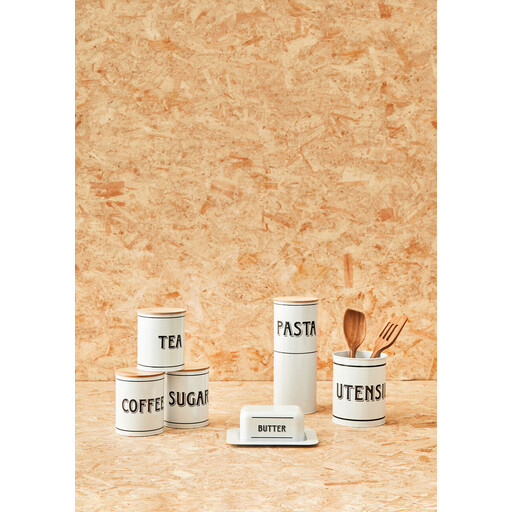 No image available
For a tea-and-biscuits setting, this white metal tea canister is an alternative to a clear display jar. Check the lid fit, usable capacity and suitability for food storage before filling it with loose tea.
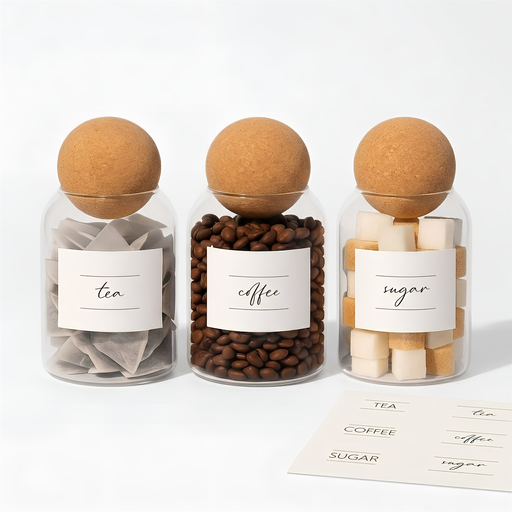 No image available
For a tea-and-biscuits table, this set provides three clear glass jars with cork ball lids. Keep loose tea out of the light between servings, and check lid fit and suitability for food storage before use.
Yes, if the jar and lid are undamaged, thoroughly cleaned and dried, free of coffee odour, and close securely. Keep a clear jar in a dark cupboard: Whittard of Chelsea advises storing opened tea away from strong light and odours in an airtight container.
Choose an opaque caddy with a suitable closure if you need to keep light off the tea; TWG Tea UK recommends airtight, opaque tins. Glass lets you see the contents, but store the jar in a cool, dry, dark place and check that its lid closes securely.
Choose a cool, dry spot away from kettle steam and strong smells instead. Whittard of Chelsea advises storage away from odours, and Ringtons advises an airtight container away from sunlight.
Compare the container’s usable capacity with the loose tea pack you intend to store. Leaf shapes and densities vary, so do not assume a fixed conversion between a pack’s weight in grams and a jar’s volume in millilitres.