Choose an 80-teabag pack if you need exactly 80 ready-portioned brews; choose loose leaf if you prefer using a teapot and can measure the tea for roughly 80 cups. For loose tea, check the dose for the particular blend: Fortnum & Mason specifies 2g per cup for its Breakfast Blend, making 160g the amount needed for 80 cups at that dose. Tea bags make portioning simpler, while loose tea requires measuring and straining.
Who is each format for?
Shoppers planning 80 ready-portioned brews
An 80-teabag pack makes the count straightforward when you use one bag per cup. It suits a breakfast routine, shared kitchen or gathering where measuring loose tea would be inconvenient. Twinings lists both English Breakfast and Strong English Breakfast in 80-bag formats.
Teapot users planning roughly 80 cups
If you prefer loose leaf, compare pack weight with the blend’s stated dose per cup. You will also need a way to strain the leaves. A weight printed on the pack is not, by itself, a serving count.
Drinkers choosing tea for breakfast with milk
Look at the description of the particular black tea rather than relying on “English Breakfast” alone. Fortnum & Mason describes its Breakfast Blend as strong and robust; a lighter blend may suit you better if you prefer a gentler cup.
What should you check before buying?
Decide whether 80 means an exact number of tea bags or an approximate number of loose-leaf cups, then compare the blend and its preparation instructions.
| Priority |
What to check |
Your needs |
| Format and portions |
Check that “80” counts tea bags if you need exact portions. With loose leaf, check the pack weight and the stated dose instead. |
I want to make tea without measuring leaves, and an 80-bag pack gives me a clear count when I use one bag per cup. In a UK Tea & Infusions Association study of over 1,000 Britons published in May 2025, 93% said they preferred the convenience of making tea with a teabag rather than preparing loose leaf; that preference does not establish which format tastes better. |
| Loose-leaf quantity |
Calculate cups using the instructions for the particular tea. Fortnum & Mason specifies 2g per cup for Breakfast Blend: 160g makes 80 cups at that dose, and its 250g caddy makes about 125. |
If I am filling a teapot for repeated breakfasts, I need enough tea at the dose I plan to use. Whittard of Chelsea states that its 100g English Breakfast pouch makes 50 cups and its 140g caddy makes 70, so either would need supplementing for an 80-cup plan on those stated yields. |
| Blend and milk |
Read the particular blend’s flavour description and preparation directions. The UK Tea & Infusions Association describes English Breakfast as traditionally blending Assam and Ceylon teas; products sold under that style name can still differ. |
For tea alongside a full English, I might choose a blend the maker describes as strong or malty, especially if I add milk. If I prefer a gentler cup, a lighter description is more useful to me than a strength claim. |
| Water hardness |
If hard water changes your usual brew, check whether the particular product is a hard-water blend, as well as its format and pack size. Yorkshire Tea says hard water can make tea look darker and thicker. |
Tea made with my tap water sometimes looks different from the cup I expect. I could consider Yorkshire Tea’s dedicated hard-water blend without assuming every tea it sells has that formulation. |
Common buying mistakes
-
Assuming an “80” pack contains loose leaf
Twinings’ English Breakfast 80 Tea Bags contains 80 individually portioned bags. Loose-leaf tea is sold by weight, and Whittard of Chelsea states yields of 50 cups for its 100g pouch and 70 for its 140g caddy.
Choose the format first. For loose leaf, use the dose and weight of the particular product to work out whether it meets your 80-cup plan.
-
Choosing on the words “English Breakfast” alone
The style name does not tell you exactly how a blend will taste. Fortnum & Mason describes its Breakfast Blend as strong and robust, while the supplied Whittard of Chelsea product description presents its English Breakfast as lighter and more floral.
Compare the descriptions of the particular blends, especially if you have a preference for a stronger cup with milk or a gentler brew.
-
Overlooking the water used to brew the tea
Yorkshire Tea says hard water can make tea darker and thicker. A change in the cup’s appearance may therefore involve the water as well as the tea.
If this happens with several teas and you use hard water, consider trying a blend labelled for hard water. Check that its pack format and quantity also meet your needs.
Breakfast-tea brands to consider
Twinings
A reference point if your requirement is exactly 80 tea bags rather than loose leaf.
- Twinings lists English Breakfast 80 Tea Bags at 200g and Strong English Breakfast 80 Tea Bags at 250g.
- Neither 80-bag product meets a requirement for loose leaves.
Yorkshire Tea
Worth considering if water hardness affects the tea you make at home.
- Yorkshire Tea offers a dedicated hard-water blend, which it says is designed to balance the effect of hard water on the brew.
- Check the format and quantity of the particular pack; a hard-water blend is not necessarily an 80-count pack.
Whittard of Chelsea
A loose-leaf English Breakfast option with stated cup yields.
- Whittard states 50 cups for its 100g pouch and 70 cups for its 140g caddy.
- Neither stated yield reaches 80 cups without more tea.
Fortnum & Mason
Its loose-leaf Breakfast Blend provides a stated dose that makes quantity planning possible.
- At Fortnum & Mason’s stated 2g per cup, a 250g caddy works out to about 125 cups.
- That calculation depends on using the stated dose; the caddy is not an 80-portion pack.
Bettys
Offers Assam-focused breakfast tea as well as a separate larger English Breakfast format.
- Bettys describes its Breakfast Tea Loose Leaf Caddy as strong and malty, and lists its English Breakfast Tea in 1kg bags.
- Check the weight and serving directions of the particular product before treating it as an 80-cup choice.
Ringtons
Offers a 250g Breakfast Loose Tea bag for shoppers choosing tea by weight.
- Ringtons describes this black tea as strong, malty and smooth.
- Use your intended dose to assess how many cups a 250g bag will make; its weight alone does not fix the yield.
80-teabag options on Joybuy
These packs suit the ready-portioned route for a full English breakfast: each contains 80 tea bags. They are alternatives to measuring loose leaf, not loose-leaf options.
 No image available
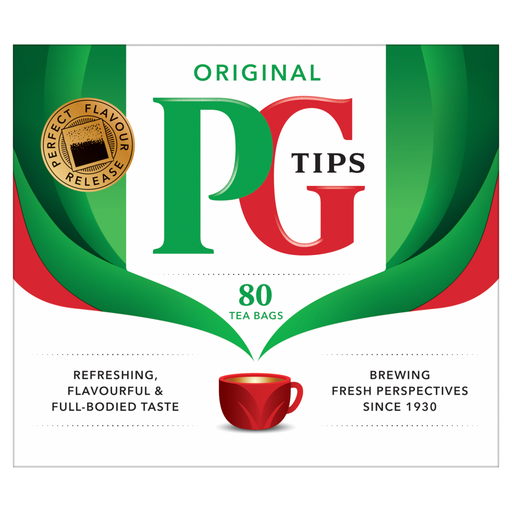
PG Tips Original 80 Tea Bags, 232g
The 80 bags make portions easy to count when you use one per cup. The product description identifies black tea, describes a robust profile and mentions serving it with milk. These are tea bags, not loose leaf.
View on Joybuy
 No image available
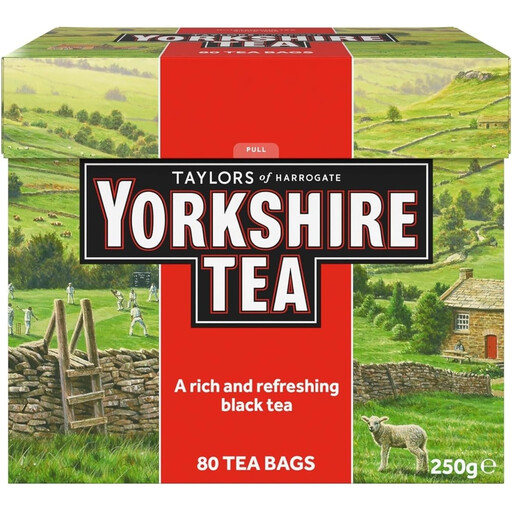
Taylors of Harrogate Yorkshire Tea 80 Tea Bags, 250g
This 80-bag black tea pack suits a breakfast routine where portions need to be counted. Its product description calls the flavour rich and robust; check the pack’s directions if how you serve it with milk matters to you. It does not contain loose leaves.
View on Joybuy
 No image available
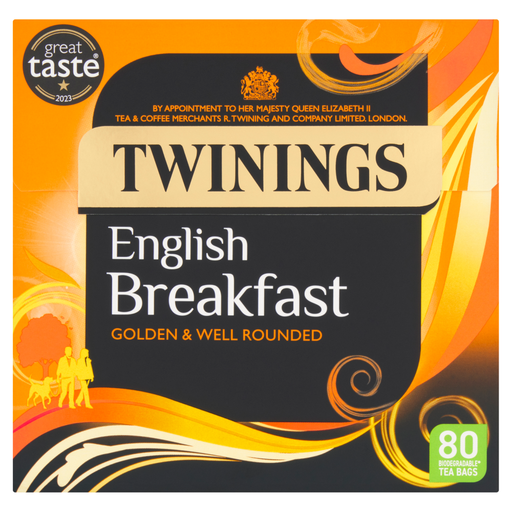
Twinings English Breakfast 80 Tea Bags, 200g
The 80-count pack is an option when you want individual portions of English Breakfast black tea. Twinings lists the same 80-bag, 200g format in its UK range. Choose a loose-tea product instead if brewing with loose leaves is essential.
View on Joybuy
 No image available
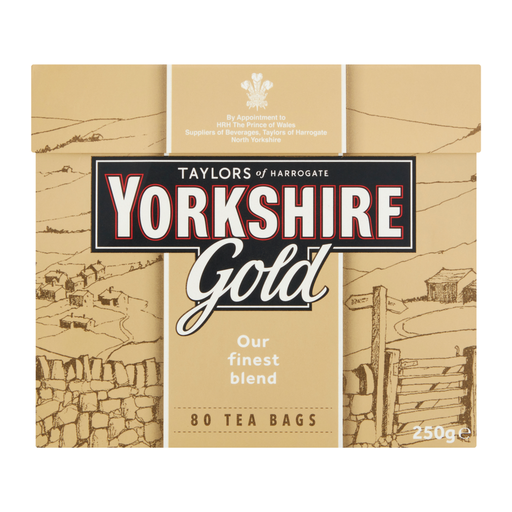
Yorkshire Tea Gold 80 Tea Bags, 250g
The pack provides 80 ready-portioned bags of black tea, with instructions stating one bag per cup. If a particular strong or malty flavour is important alongside breakfast, check this variant’s flavour description before choosing it. It is not loose leaf.
View on Joybuy
Frequently asked questions
Does a box marked “80” contain loose-leaf tea?
Check what the number counts: Twinings’ English Breakfast 80 Tea Bags is an 80-bag product, not loose leaf. If you want loose leaves for about 80 cups, compare a pack’s weight with the dose stated for that particular tea.
How much loose tea do I need for 80 cups?
It depends on the dose for the particular blend. Fortnum & Mason specifies 2g per cup for its Breakfast Blend, so 80 cups require 160g at that dose; its 250g caddy works out to about 125 cups. Do not assume another tea uses the same dose.
What kind of tea should I consider with a full English breakfast?
If you want black tea with a pronounced flavour, compare blends described as strong, robust or malty rather than relying on the English Breakfast name alone. Fortnum & Mason describes its Breakfast Blend as strong and robust; choose according to your own preference if you would rather have a gentler cup.
Do I need a different tea if my water is hard?
Not necessarily. Yorkshire Tea says hard water can make tea darker and thicker and offers a dedicated hard-water blend. If that matches what you notice at home, check the blend’s format and pack quantity before deciding whether to try it.


