Everyday tea drinkers considering an 80-pack
An 80-teabag pack provides measured portions for regular cups. Check the tea type and pack weight as well as the bag count when comparing blends.


Choose an 80-teabag pack if you want measured portions and a quick everyday cup; the 80-count packs discussed here contain tea bags, not loose leaf. Choose loose-leaf tea if you would rather measure each brew yourself and are happy to use an infuser or teapot. Decide on the format before comparing pack sizes, because bag counts and loose-tea weights answer different questions.
An 80-teabag pack provides measured portions for regular cups. Check the tea type and pack weight as well as the bag count when comparing blends.
Yorkshire Tea, Twinings and Bettys each have an 80-teabag example, but the blend and pack details differ. Choose the tea you want rather than treating every box of 80 as interchangeable.
Tea bags remove the need to measure leaves for each cup. If adjusting the amount of tea is part of your routine, consider whether that convenience is worth changing format.
Start with the preparation format, then compare the blend and pack details within that format. A stated weight does not tell you how many cups of loose tea you will make unless you also know how much you use per brew.
| Priority | What to check | Your needs |
|---|---|---|
| Pack format | Check whether 80 means tea bags. For loose tea, check the weight in grams and consider how much leaf you normally use per cup. | I want to know whether I am buying 80 measured bags or a pack of leaves that I will portion myself. |
| Preparation | Check whether you have an infuser or teapot for loose tea. Ringtons suggests one teaspoon per cup and a three-to-five-minute steep for its loose tea. | For a quick cup, I would rather use a tea bag; for loose leaf, I am willing to measure the tea and clean the equipment. |
| Blend and labelling | Read the tea type and ingredients on the current pack. If you want decaffeinated tea, look for an explicit decaffeinated label rather than assuming a standard black-tea blend meets that need. | The named blend matters to me, or I need to distinguish a decaffeinated option from an ordinary black-tea pack. |
| Storage | Check the best-before date and pack condition. Tesco advises keeping its Yorkshire Tea 80-bag pack cool and dry, away from direct sunlight; Ringtons advises an airtight container for loose tea. | I need a pack I can store as directed while I work through it. |
The 80-count Twinings, Yorkshire Tea and Bettys examples are tea bags. Loose tea is labelled by weight, and the number of cups depends on the amount used for each brew.
Choose your preparation format first. Compare bag counts with bag counts, and assess loose-tea weights alongside your usual measure per cup.
Storage directions matter when a pack will remain open over many cups. Tesco specifies a cool, dry place away from direct sunlight for its Yorkshire Tea pack.
Check the pack condition and best-before date, then follow its storage instructions. The Food Standards Agency distinguishes a best-before date, which concerns quality, from a use-by date.
A standard black-tea label does not identify a pack as a decaffeinated option.
If decaffeinated tea is what you want, select a pack explicitly labelled decaffeinated and check its current product information.
These brand ranges illustrate different pack formats and blends; the references are not a list of Joybuy availability.
Yorkshire Tea has an 80-bag black-tea example as well as loose-tea and decaffeinated options.
Twinings offers English Breakfast as an 80-teabag, 200g pack and also has a loose-tea format.
Whittard presents loose tea, traditional tea bags and tea equipment as separate choices.
Fortnum & Mason lists loose-leaf blends in caddies and cartons measured by weight.
Bettys offers Tea Room Blend in both an 80-teabag pack and a loose-leaf caddy.
Ringtons has loose tea and larger teabag bundles, with brewing guidance for its loose-leaf range.
These products cover the 80-teabag route for everyday brewing, including a decaffeinated option. If you prefer loose leaf, use the format and brewing checks above rather than treating these bags as loose-tea products.
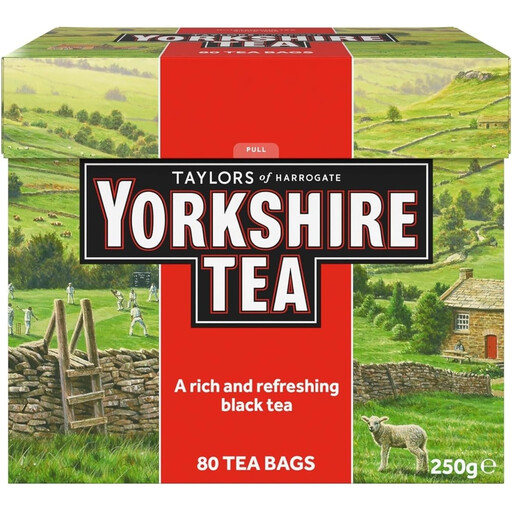 No image available
An 80-bag black-tea pack for measured everyday cups. The product information gives a three-to-five-minute brew and advises cool, dry storage; check the pack variant if you want decaffeinated tea.
 No image available
An explicitly labelled decaffeinated option in an 80-bag, 250g pack. The product information identifies decaffeinated black tea and gives a two-to-three-minute brew; check the current pack if a particular caffeine limit matters to you.
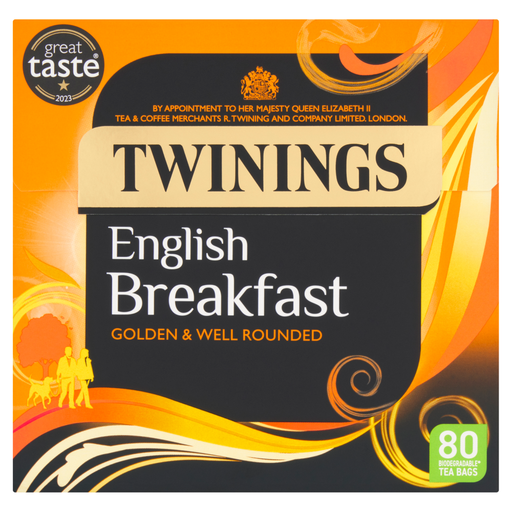 No image available
Choose this 80-bag pack if Twinings English Breakfast is the blend you want. Twinings identifies the 200g product as 100% black tea and gives a two-to-three-minute brewing direction; choose an explicitly decaffeinated product if that is your requirement.
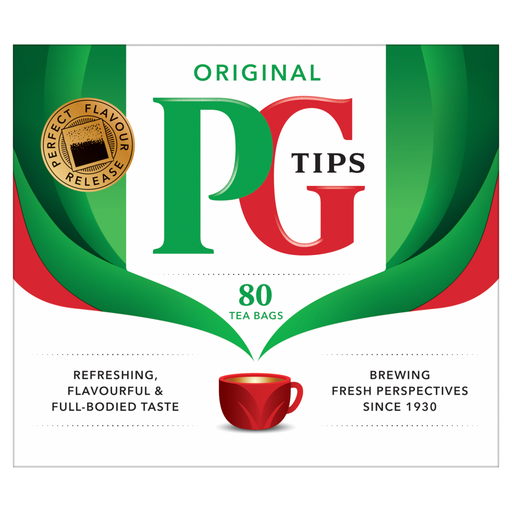 No image available
An 80-bag Original black-tea pack for portioned cups. The product information gives a 232g weight, a two-to-three-minute brew and cool, dry storage guidance; check for decaffeinated labelling if you need that variant.
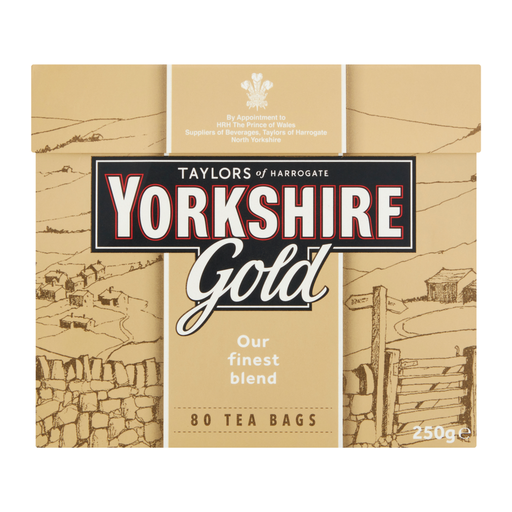 No image available
This 80-bag, 250g pack is the Yorkshire Tea Gold blend, distinct from the standard Yorkshire Tea pack above. Its product information identifies black tea, gives a three-to-five-minute brew and calls for cool, dry storage.
No: the 80-count Twinings, Yorkshire Tea and Bettys examples are packs of tea bags. Loose-leaf products are labelled by weight, and their cup count depends on how much tea you measure for each brew.
Choose loose leaf if you want to adjust the amount used per cup and are happy to brew with an infuser or teapot. Ringtons suggests one teaspoon per cup and a three-to-five-minute steep for its loose tea; an 80-bag pack avoids measuring leaves for each cup.
Follow the directions on your pack. Tesco advises keeping its Yorkshire Tea 80-bag pack cool and dry, away from direct sunlight, while Ringtons advises an airtight container away from sunlight for loose tea. Check the best-before date as a quality guide; the Food Standards Agency distinguishes it from a use-by date.
Check the ingredients and allergen information for the exact product you intend to buy, using its current pack label and product information. Do not assume that another blend or pack format has the same details.