Parents starting baby-led weaning
If your baby is approaching solids, check readiness and choose food appropriate to their stage before considering the calories on a snack packet. The NHS advises starting solids at around 6 months.


Do not choose an adult-style cereal bar for a baby starting baby-led weaning just because it is low in calories. The NHS advises starting solids at around 6 months when the baby shows the signs of readiness, and says babies do not need sweet or salty snacks or treats; for an older toddler, assess a packaged snack’s age guidance, texture, ingredients and allergens rather than its calorie count alone.
If your baby is approaching solids, check readiness and choose food appropriate to their stage before considering the calories on a snack packet. The NHS advises starting solids at around 6 months.
For a child aged 12 months or over, a packaged bar calls for a check of its age guidance, texture, sugars, salt and allergens. A lower calorie count does not answer those questions.
Check the current ingredients and allergen declaration on the exact pack, particularly when a bar contains cereals or could contain milk, soy or nuts. Follow the child’s clinical advice where an allergy or coeliac disease has been diagnosed.
Start with the child’s stage and the food’s texture; use the nutrition and ingredient label to assess a packaged option for an older child.
| Priority | What to check | Your needs |
|---|---|---|
| Readiness | The NHS advises starting solids at around 6 months, when a baby can sit with a steady head, coordinate eyes, hands and mouth, and swallow food. | My baby is beginning solids; I need to establish readiness before choosing any finger food. |
| Snack ingredients | Check the exact pack for sweet ingredients, sugars and salt. The NHS says babies do not need sweet or salty snacks or treats. | For a baby, I do not want a low-calorie label to make a sweet snack seem necessary. For a toddler, I want to compare the whole label. |
| Texture | Assess whether the food’s firmness, stickiness or hard pieces suit the child’s stage. Keep the child seated and supervised while eating. | I need food my child can manage at their stage, rather than assuming a packaged bar is suitable to eat without supervision. |
| Allergens | Read the current ingredients and allergen declaration for the exact product. The Food Standards Agency identifies wheat, rye, barley and oats as cereals containing gluten. | If my child must avoid an allergen, I need pack-specific information, not an assumption about the brand or an older recipe. |
A calorie figure does not establish whether a bar is appropriate for a baby. The NHS says babies do not need sweet or salty snacks or treats.
For a baby beginning solids, check developmental readiness and offer varied, age-appropriate foods alongside their usual milk feeds instead of choosing an adult snack bar by calories.
The NHS cautions that wholegrain foods can be high in fibre and may fill children under 2 before they obtain the calories and nutrients they need.
Consider a bar’s wholegrain claim alongside its portion, ingredients and the child’s other food, rather than treating that claim as a decision on its own.
Babies are learning to chew and swallow. The NHS distinguishes normal gagging from dangerous choking; a bar’s calorie count says nothing about how its texture should be managed.
Assess the particular food before offering it, and keep the child seated and supervised while eating.
Ingredients and possible allergens vary between cereal-bar products, so information about one variant cannot establish what is in another.
Read the full declaration on the current, exact pack and follow clinical advice for a diagnosed allergy or coeliac disease.
These examples illustrate why the exact product matters; they are not recommendations of adult cereal bars for babies.
Nature Valley’s Crunchy Apple & Cinnamon Flavour Bars are presented as snack bars, not as baby-led-weaning food.
Kellogg's lists different serving sizes and ingredients across its Rice Krispies snack-bar products.
Alpen has listed cereal-bar variants, but its product-availability information says several are no longer made.
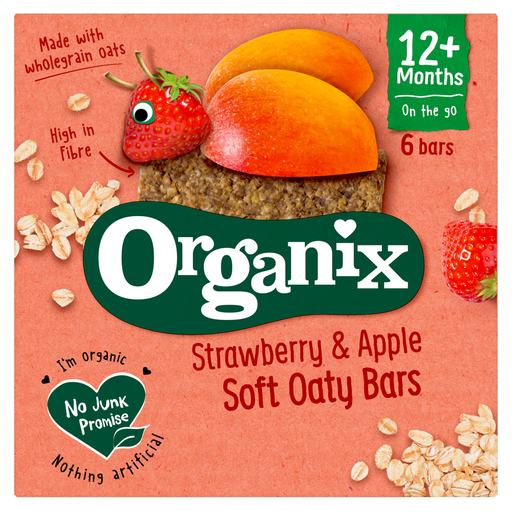
This option is labelled for children aged 12 months or over. It is a toddler snack option, not a cereal-bar recommendation for a baby beginning weaning.
 No image available
For a child aged 12 months or over when a portable snack is needed. The product name specifies soft oaty bars in a pack of six 23g bars; check the current ingredients and allergen declaration, and supervise the child while eating.
Do not use an adult-style cereal bar as the default choice simply because it is low in calories. The NHS advises starting solids at around 6 months when the baby shows the signs of readiness, and says babies do not need sweet or salty snacks or treats.
A lower calorie count alone does not settle the choice. For a toddler, check the exact product’s age guidance, ingredients, sugars, salt, allergens and texture; the NHS also cautions that high-fibre wholegrain foods may fill children under 2 before they obtain the calories and nutrients they need.
Read the declaration on the exact current pack. The Food Standards Agency identifies wheat, rye, barley and oats as cereals containing gluten, while manufacturer examples show that milk, soy, peanuts and tree nuts can also be relevant depending on the product.
Do not treat a packaged bar as food to hand over without supervision. Keep the child seated and actively supervised, and assess the particular bar’s texture and hard pieces before offering it; the NHS distinguishes gagging as babies learn to eat from dangerous choking.