What should you compare?
Start with the serving you would eat at your desk, then compare the other label details that matter to that choice.
| Priority |
What to check |
Your needs |
| Calories and portion |
Read kcal and weight per bar or boost. Use per 100 g figures to compare products of different sizes, but per-bar figures to plan the portion you will eat. |
I want a small snack during a short break, without mistaking a smaller bar for a complete lunch. |
| Protein and fibre |
Compare both amounts per bar alongside kcal. Kellogg's lists 1.4 g protein and 2.1 g fibre for its 27 g Special K Red Berry Bar; Nature Valley lists around 10 g protein and 4.4 g fibre for its 40 g Peanut & Chocolate protein bar. |
If there is a long gap until my next meal, I would compare the protein and fibre figures while allowing for the Nature Valley bar's 196 kcal. |
| Sugars and other nutrition |
Check sugars and fat on the current nutrition panel, not just words such as protein or wholegrain. UK traffic-light labelling, where shown, provides another way to read the stated nutrition information. |
A claim on the front of the wrapper is not enough for my choice; I want to see the figures for the portion I will eat. |
| Allergens |
Read the current ingredients, highlighted allergens and any 'may contain' statement for the exact variant. Do not assume a vegan or gluten-free description covers every exclusion. |
I need the particular bar's label to match my dietary requirements, including any relevant cross-contact warning. |
| Role in lunch |
Decide whether the bar is a snack or one component of lunch. A calorie figure alone does not describe the rest of the meal. |
When I have only a brief desk break, I still want to plan what I will eat alongside the bar rather than rely on its wrapper as my lunch plan. |
Joybuy bars to compare
These options include smaller cereal-bar portions and larger protein-bar or flapjack formats for a desk snack. Compare the exact pack's nutrition and allergens before deciding how a bar fits into lunch.
 No image available
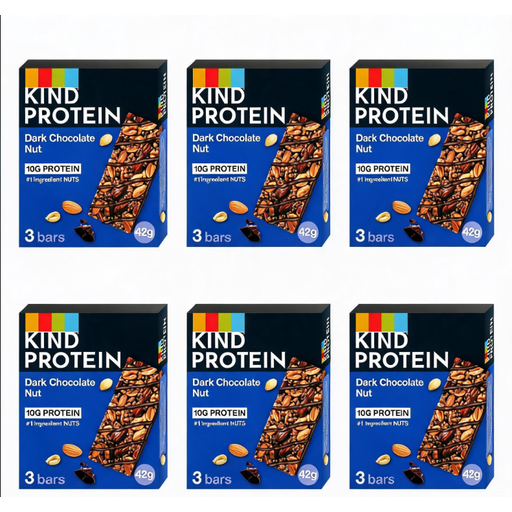
KIND Protein Dark Chocolate Nut Bars, 3 x 42 g x 6 pcs
A nut protein-bar format to compare if you are considering a larger desk snack instead of a small cereal bar. The stated pack format is 3 x 42 g x 6 pcs; check the current pack's protein figure, calories and nut, soya and milk allergen information.
View on Joybuy
 No image available
Nature Valley Protein Salted Caramel Nut Bar, 4 x 40 g
A 4 x 40 g nut protein-bar pack for comparing a larger snack with a small cereal bar. Check energy and protein per bar on the current pack, along with peanut, almond, soya and milk allergen information.
View on Joybuy
 No image available
Nature Valley Protein Peanut & Chocolate Bar, 4 x 40 g
This 4 x 40 g pack is the named protein-bar format discussed in the comparison above. Check the current pack's energy and fibre figures for this pack, and read its peanut, soya, milk and precautionary nut information.
View on Joybuy
 No image available
Special K Dark Chocolate Snack, 6 x 21.5 g
A smaller 21.5 g cereal snack bar to consider as one part of a desk lunch. This is the Dark Chocolate variant, not the Red Berry bar used for the nutrition comparison; check its own pack for calories, protein and allergens.
View on Joybuy
 No image available
Trek Salted Caramel Protein Flapjacks, 3 x 50 g
A 3 x 50 g protein-flapjack pack for comparing a larger serving with a small cereal bar. It is a different variant from the Trek Original Oat example above, so use the Salted Caramel pack's own calories, sugars and allergen declaration.
View on Joybuy
Questions about cereal bars at your desk
Is a low-calorie cereal bar enough for a quick desk lunch?
Treat a small bar as a snack or one component of lunch rather than assuming it makes a complete meal. Kellogg's lists its 27 g Special K Red Berry Bar at 104 kcal, and Waitrose lists its 30 g Graze Cocoa Vanilla Oat Boost at 116 kcal; plan what else you will have for lunch.
Does a protein bar automatically make a better desk lunch?
No. Nature Valley lists around 10 g protein for its 40 g Peanut & Chocolate protein bar, but also 196 kcal. Compare protein and fibre with calories, sugars and allergens, and decide whether the bar is a snack or part of your lunch.
Which allergen details matter when choosing a cereal bar?
Read the current pack's ingredients, highlighted allergens and any 'may contain' statement for the exact variant. The named bars have different declarations involving gluten-containing cereals, milk, soya, peanuts and nuts; do not apply one product's label to another.
Can I use an online nutrition listing to choose a bar?
Use it to compare candidates, then check the current pack before buying or eating. Ingredients and nutrition information can change, and figures for a different flavour or serving size may not apply to the bar in your hand.


