What matters when choosing a bar?
Start with the portion you will eat, then compare its nutrition information and check whether the exact bar suits your packing and dietary needs.
| Priority |
What to check |
Your needs |
| Portion and calories |
Read kcal alongside serving weight and the number of bars in a serving. If you expect to eat more than one serving, compare the amount you will actually eat. |
I want to plan snacks by the portion I will eat, not mistake a smaller bar for a directly equivalent serving. |
| Sugars and saturates |
Compare the nutrition values for the exact flavour and serving. Kellogg’s UK lists 5.2 g sugars and 1.6 g saturates for its 20 g Coco Pops bar; Tesco lists 2.7 g sugars for a 30 g Graze Cocoa Vanilla Oat Boost. |
Calories are my starting point, but I also want to see how the bars differ on the rest of their labels. |
| Protein and fibre |
Check the grams per stated serving rather than treating a protein or oat description as a calorie figure. Tesco lists 10.4 g protein and 2.2 g fibre alongside 198 kcal for the 40 g Eat Natural protein bar. |
If protein or fibre matters to my food plan, I can compare those figures without assuming the bar has fewer calories. |
| Allergens and suitability |
Read the current pack’s ingredients, declared allergens and any precautionary statement. Check vegan or gluten-free wording on the exact variant rather than across a whole brand. |
I need every bar I pack to meet the relevant dietary requirements, including when snacks will be shared. |
| Storage and packing |
Follow the pack’s storage instruction and check its portion format. Tesco describes the Eat Natural bars as individually wrapped and instructs shoppers to store them in a cool, dry place. |
I want to know how to keep the bars sealed and stored as instructed until they are eaten. |
Joybuy bars for festival camping
These Joybuy listings cover compact cereal bars and oat flapjacks that you can compare by pack format when planning festival snacks. Check each current product pack for its per-bar nutrition, ingredients and storage instructions.
 No image available
Special K Dark Chocolate Snack, 6 × 21.5 g
Six 21.5 g bars give you a defined pack format for planning festival snacks. Check the current pack for calories per bar, ingredients and allergens.
View on Joybuy
 No image available
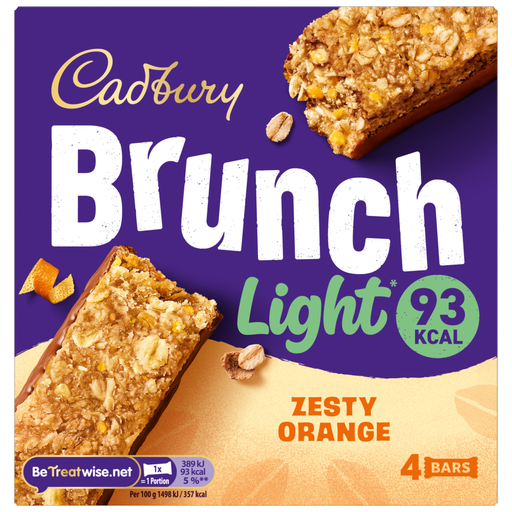
Cadbury Brunch Light Orange Cereal Bar, 4-pack, 104 g
This four-pack is an option to compare with other compact bars for a festival food bag. Use the current pack’s serving information, rather than the word “Light”, to check calories and sugars per bar.
View on Joybuy
 No image available
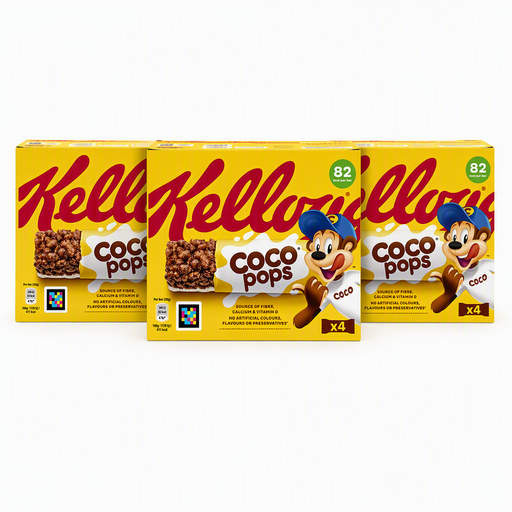
Kellogg’s Coco Pops Chocolate Breakfast Cereal Bars, 3 × 4 × 20 g
The 240 g listing specifies three packs of four 20 g bars, useful when planning how many portions to take. Confirm the nutrition and allergen details on this exact pack before comparing it with other Coco Pops bars.
View on Joybuy
 No image available
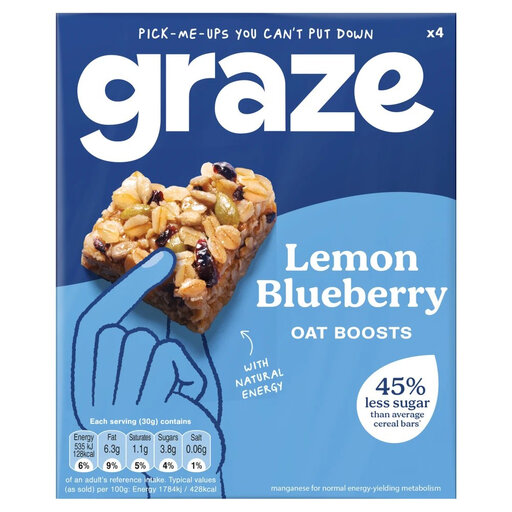
Graze Oat Boosts Lemon Blueberry, 4 × 30 g
This pack offers four 30 g oat bars to compare with smaller cereal-bar portions. Read the Lemon Blueberry pack for its own calories, sugars, dietary-suitability statement and allergens; figures for another Oat Boost flavour do not establish these values.
View on Joybuy
 No image available
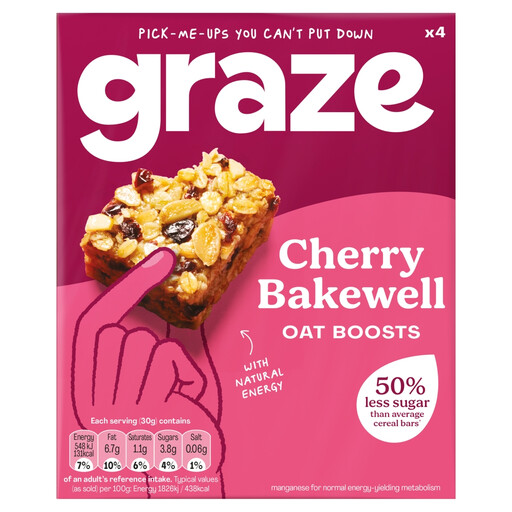
Graze Oat Boosts Cherry Bakewell, 4 × 30 g
Four 30 g bars provide another oat-based pack format for festival snacks. Compare this flavour’s own per-bar nutrition and allergen statement with the Lemon Blueberry variant rather than assuming they match.
View on Joybuy
Questions about packing cereal bars
How do I compare calories in cereal bars of different sizes?
Compare kcal per declared serving together with its weight and bar count, then consider how many bars you expect to eat. Kellogg’s UK lists 82 kcal for a 20 g Coco Pops bar, while Nature Valley UK lists 195 kcal for a two-bar, 42 g Apple & Cinnamon serving. A per-100 g figure offers another basis for comparison but is not necessarily the portion you will eat.
Is a protein bar automatically lower in calories?
No. Tesco lists 10.4 g protein and 198 kcal per 40 g Eat Natural Peanuts, Almonds & Salted Caramel bar. If calories per snack are your priority, compare its stated serving with the portions of the cereal bars you are considering.
Which allergen details should I check before a festival?
Check the exact current pack’s ingredients, declared allergens and any precautionary allergen statement. UK Food Standards Agency guidance identifies cereals containing gluten, milk, peanuts, soybeans and tree nuts among allergens that food businesses must disclose when used as ingredients. Do not assume different flavours share an allergen profile.
Can I use an online nutrition panel to make my final choice?
Use it to compare candidates, then read the physical pack before packing the bars. Kellogg’s and Nature Valley advise checking current pack information because recipes can change.
How should I store cereal bars in a camping-food bag?
Follow the instruction on the exact pack and keep bars sealed until you need them. For example, Tesco’s listing for the Eat Natural protein bars says to store them in a cool, dry place; another product may give different instructions.


