Cyclists choosing a smaller savoury snack
If you want crisps around an everyday ride or commute without eating a sharing bag, start with the calories in the pack you intend to eat. Check its carbohydrate and salt values as well.


For a smaller bag of potato crisps, Walkers UK lists 96 kcal and 16g carbohydrate in a 22g pack of Oven Baked Sea Salt; a conventional crisp bag may be larger, so compare the calories in the portion you will eat. If a potato snack rather than crisps suits you, Seabrook lists 82 kcal per 18g bag of Sea Salted Crunchies. Neither low-calorie figure tells you whether the snack provides enough food for a particular ride; the UK Sports Institute emphasises sufficient energy and an individual approach to sports nutrition.
If you want crisps around an everyday ride or commute without eating a sharing bag, start with the calories in the pack you intend to eat. Check its carbohydrate and salt values as well.
A low-calorie crisp can be a snack without being enough food for a longer or harder ride. Consider what else you plan to eat and drink for that session rather than treating the crisp pack as a fuelling plan.
Different bag sizes make front-of-pack impressions difficult to compare. Read calories per bag for your portion, per-100g values for a common basis, and the current ingredients and allergen information for the exact flavour.
Decide whether you want potato crisps or would also consider a potato snack, then compare the portion you expect to eat. For cycling, assess that snack separately from the food planned for your ride.
Consider it: When you want potato crisps in a defined, smaller portion; Walkers UK lists 96 kcal for its 22g Oven Baked Sea Salt pack.
Bear in mind: That pack provides 16g carbohydrate and should not be assumed to cover the food needed for a demanding ride.
Consider it: When you prefer that crisp format or intend to eat a larger bag, rather than choosing on the lowest pack-calorie figure.
Bear in mind: The stated bags differ in weight, so compare both calories per bag and values per 100g before drawing conclusions about the products themselves.
Consider it: When a crunchy potato snack will do instead of crisps; Seabrook lists 82 kcal for an 18g bag of Sea Salted Crunchies.
Bear in mind: Seabrook labels Crunchies as potato snacks, not potato crisps, so they are a change of product type as well as portion.
| Priority | What to check | Your needs |
|---|---|---|
| Calories in the pack | Read kcal for the whole bag you expect to eat, then use kcal per 100g to compare different pack sizes. Walkers UK lists 96 kcal per 22g Oven Baked Sea Salt pack; Seabrook lists 164 kcal per 31.8g Sea Salted crisp bag, and Tyrrells lists 208 kcal per 40g Lightly Sea Salted pack. | I want to know what one bag contributes without treating a value per 100g as my actual portion. |
| Food for the ride | Check carbohydrate and total energy per pack alongside the food planned for your session. Walkers UK lists 16g carbohydrate and 96 kcal per 22g Oven Baked Sea Salt pack; the UK Sports Institute stresses sufficient energy in sports nutrition. | For a longer or harder ride, I need to consider the whole session’s food rather than assume a small crisp pack is enough. |
| Salt and fat | Compare both per-100g and per-pack figures. Walkers UK lists 13g fat and 0.85g salt per 100g for Oven Baked Sea Salt. NHS food-label guidance defines more than 1.5g salt per 100g as high and 0.3g or less as low. | Even when I choose by calories, I still want to see the salt and fat figures for the amount I will eat. |
| Ingredients and allergens | Read the ingredients and warnings on the exact flavour and current pack. GOV.UK says prepacked foods containing any of the 14 regulated allergens must identify them in the ingredients list; a plain-sounding flavour is not a substitute for checking the label. | If an ingredient or warning matters to me, I need the details for this product, not an assumption based on its flavour name. |
Walkers UK lists 96 kcal and 16g carbohydrate in a 22g Oven Baked Sea Salt pack. A smaller snack does not establish how much food an individual ride requires; the UK Sports Institute emphasises sufficient energy as part of sports nutrition.
Choose the crisp pack for the snack you want, and plan food and fluids for the demands of the ride separately.
Manufacturer labels put Walkers Oven Baked Sea Salt at 96 kcal per 22g pack, Seabrook Sea Salted at 164 kcal per 31.8g bag and Tyrrells Lightly Sea Salted at 208 kcal per 40g pack. Those are different portions, not equal-weight comparisons.
Use kcal per bag to assess the portion you will eat and the per-100g panel to compare products on a common weight basis.
A flavour name does not tell you the salt value. NHS guidance uses more than 1.5g salt per 100g as its high-salt threshold, so the figure on the nutrition panel matters more than the wording on the front.
Check salt per 100g and per bag on the exact product, especially when comparing bags of different sizes.
A Joybuy listing titled Tyrrells Lightly Sea Salted Crisps includes descriptions of other brands and nutrition figures that differ from Tyrrells’ product information. That makes its copy a poor basis for comparing this particular crisp.
For nutrition and allergen decisions, check the current physical pack or the manufacturer’s information for the exact product and variant.
These examples describe particular products, not every crisp made by each brand. Compare the named flavour and pack size before applying a figure to something in your basket.
Walkers UK lists Oven Baked Sea Salt as a 22g potato-crisp pack with 96 kcal, 16g carbohydrate and 0.19g salt.
Seabrook lists Sea Salted potato crisps at 164 kcal per 31.8g bag and Sea Salted Crunchies at 82 kcal per 18g bag.
Tyrrells lists 208 kcal, 11.7g fat and 0.26g salt for a 40g pack of Lightly Sea Salted potato crisps.
Kettle Foods lists 516 kcal, 29.5g fat and 0.7g salt per 100g for its Lightly Salted product.
Pipers lists 532 kcal, 30.7g fat and 0.94g salt per 100g for Anglesey Sea Salt crisps.
REAL lists 515 kcal, 30.0g fat and 1.3g salt per 100g for its Sea Salt crisps, with 35g and 150g bag sizes.
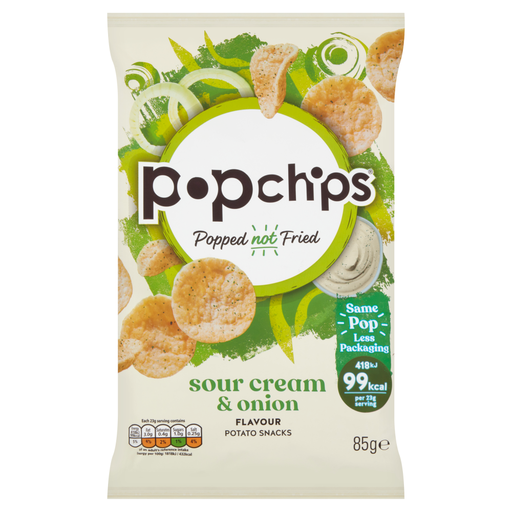
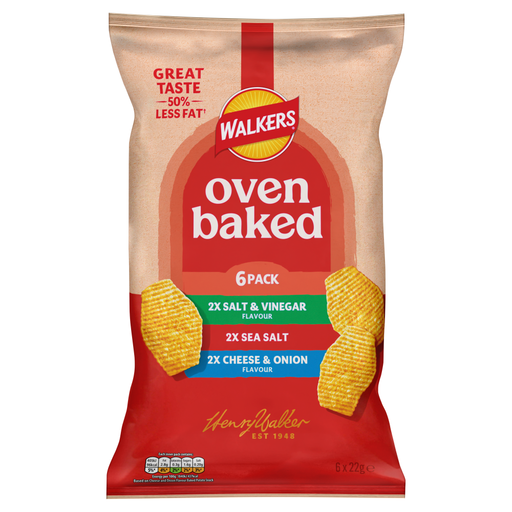
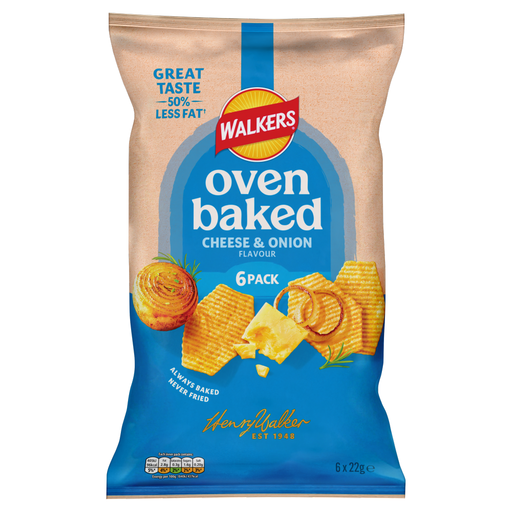
These Joybuy options include two Walkers Oven Baked crisp multipacks and an 85g PopChips pack. For a snack around cycling, check the exact flavour and the portion you will eat; an 85g pack should not be compared with a 22g bag as though they were the same serving.
 No image available
Consider this potato-snack option if you are open to a different format from conventional crisps. The pack is 85g; check its serving size before using a per-serving calorie figure as the value for the whole pack, and read the current allergen information.
 No image available
The six separate 22g bags offer defined portions when you want crisps as a snack around a ride. This is a variety pack: check the nutrition, ingredients and warnings for the flavour you choose rather than applying Oven Baked Sea Salt figures to every bag.
 No image available
The six 22g bags provide a defined crisp portion for savoury snacking. Compare the Cheese & Onion pack’s own calorie, carbohydrate and allergen information with your other options; the Sea Salt flavour’s figures do not establish this flavour’s values.
Use calories per bag when that is the amount you will eat, and calories per 100g to compare products independently of bag size. NHS food-label guidance notes that a manufacturer’s stated portion may differ from the amount you actually eat; check both figures before comparing packs.
Do not assume it is. Walkers UK lists 96 kcal and 16g carbohydrate for a 22g Oven Baked Sea Salt pack, while the UK Sports Institute emphasises sufficient energy in sports nutrition. Consider the ride’s demands and your wider food plan rather than judging fuelling by a crisp’s calorie label alone.
They are different product descriptions. Seabrook labels Sea Salted Crunchies a potato snack and lists 82 kcal per 18g bag; its Sea Salted potato crisps provide 164 kcal per 31.8g bag. Compare the portion values, but choose Crunchies only if a snack rather than crisps is what you want.
Yes. GOV.UK says prepacked foods containing any of the 14 regulated allergens must identify them in the ingredients list, and product-specific warnings also matter. Check the current pack for the exact flavour rather than assuming its name tells you what it contains.