Home workers planning a measured lunch portion
If dried fruit adds something sweet to your lunch, comparing a measured serving is more useful than judging calories by the size of a handful or pack.


For a working-from-home lunch, measure around 30g of dried fruit and compare the kcal for that amount on each pack, rather than assuming one fruit type is always lower in calories. Whitworths says a 30g serving of prunes is under 50 kcal and a 30g serving of its sweet figs is 63 kcal; those brand figures are not values for every prune or fig product. NHS guidance also advises eating dried fruit with a meal rather than between meals.
If dried fruit adds something sweet to your lunch, comparing a measured serving is more useful than judging calories by the size of a handful or pack.
Diabetes UK notes that a 30g dried-fruit serving can contain as much as 20g of carbohydrate. Check the value on the product you choose if carbohydrate is relevant to your meal planning.
A portion set aside for lunch is easier to distinguish from occasional handfuls throughout the working day. NHS guidance advises having dried fruit at mealtimes rather than between meals to reduce tooth-decay risk.
Start with the amount you intend to eat, then compare labels on that basis; pack size and a manufacturer’s suggested serving may differ from your portion.
| Priority | What to check | Your needs |
|---|---|---|
| Portion and energy | NHS guidance uses around 30g as a dried-fruit portion. Compare kcal per 100g, then calculate the kcal in the 30g you plan to eat; a whole pack may be larger. | I want to know the calories in what I actually put on my lunch plate, not in an assumed handful. |
| Carbohydrate and ingredients | Read the product’s carbohydrate and sugars values alongside its kcal figure. Check the ingredients if added syrups or sweeteners matter to your choice; Diabetes UK notes that a 30g dried-fruit serving can contain as much as 20g of carbohydrate. | If I track carbohydrate, I need the figures for my chosen portion as well as its calories. |
| Pack format | Check the total pack weight and, for individually wrapped fruit, the weight of each wrapper. A snack pack is not necessarily a 30g serving. | I’d like to set aside lunch before starting work without treating the whole bag as one portion. |
| Place in lunch | NHS guidance advises eating dried fruit at mealtimes rather than between meals to reduce tooth-decay risk. The Eatwell Guide considers food-group balance across a day or week, not just one meal. | I want dried fruit as part of lunch, rather than something I keep picking at between meals. |
Retail packs can contain more than the roughly 30g dried-fruit portion described by the NHS, so the pack’s total calories may differ substantially from the amount you meant to eat.
Weigh out 30g when planning lunch, or use the NHS examples—such as about three prunes or two figs—as a guide, then put the rest away.
Nutrition labels give energy per 100g and may also give a value for a manufacturer-defined serving. Two serving figures are not directly comparable when their serving weights differ.
Compare kcal per 100g first, then work out the value for the same intended weight of each product.
Diabetes UK notes that it is easy to eat a large amount of dried fruit in one sitting. NHS guidance advises eating it at mealtimes rather than between meals to reduce tooth-decay risk.
Put your measured portion with lunch and store the remaining fruit away from your desk.
Whitworths publishes its own guidance using 30g dried-fruit servings, which provides examples to check against individual product labels.
Tesco Groceries lists dried fruit in several pack sizes, including 50g snack-pack apricots, 60g mixed raisins and larger packs of prunes and figs.
Marks & Spencer’s fruit-snack range includes dried apricots, dates, mango, pineapple and banana chips.
These prune, fig and apricot packs are options for adding a measured serving to a working-from-home lunch. Compare their own nutrition labels for kcal in the portion you intend to eat.
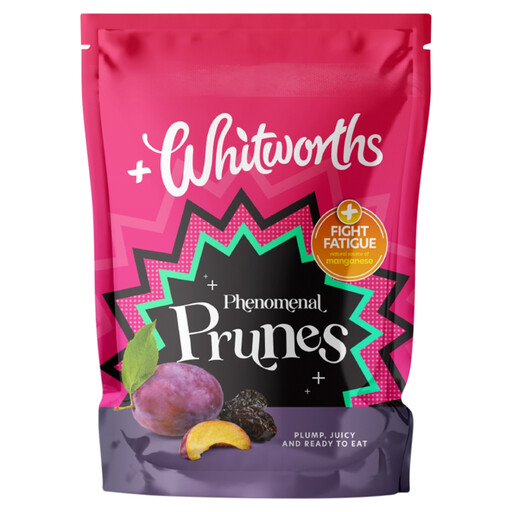 No image available
For a prune portion with lunch, set aside around 30g from the pack and use its nutrition label to calculate the kcal in that amount.
 No image available
If you prefer figs at lunch, measure your portion and check this pack’s own kcal per 100g rather than applying Whitworths’ figure for its sweet figs without checking the label.
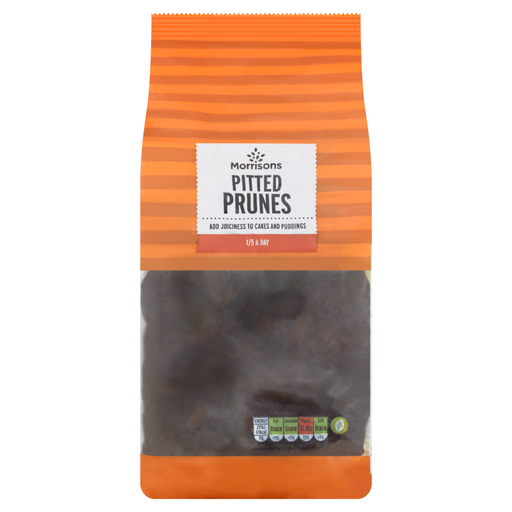 No image available
The 500g bag needs dividing into smaller lunch portions if you intend to eat around 30g at a time. Check its own kcal per 100g rather than using another prune product’s figure.
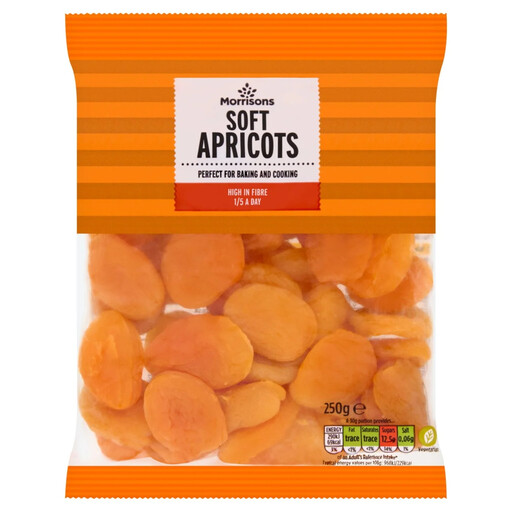 No image available
For an apricot portion at lunch, compare the kcal on this pack’s label for the weight you plan to eat. Check its ingredient and allergen information, and any warning about stones, before serving.
 No image available
For a planned prune serving, check the kcal and the weight you will eat rather than assuming a packaged portion is 30g. Read the ingredients if added syrups or sweeteners affect your choice.
Around 30g is the dried-fruit portion used in NHS guidance. Its visual examples include about two figs, three prunes or one heaped tablespoon of raisins, currants or sultanas; weigh your serving when you need a more precise amount for a label comparison.
NHS guidance advises eating dried fruit at mealtimes rather than between meals to reduce tooth-decay risk. Put the portion with lunch instead of grazing from the bag through the afternoon.
Compare kcal per 100g first, then use each label to work out the kcal for the same weight you intend to eat, such as 30g. NHS guidance notes that labels provide energy per 100g and may also show a manufacturer-defined portion, which could be a different size.
No: use the energy value in kcal to compare calories for the same weight. Read sugars and carbohydrate separately if those figures matter to your choice; Diabetes UK notes that a 30g dried-fruit serving can contain as much as 20g of carbohydrate.
Treat dried fruit as one part of lunch rather than assuming it covers the whole meal. The Eatwell Guide describes balance across different food groups over a day or week, not a fixed arrangement for every individual lunch.