Students watching food spending
If nuts are a small ingredient in several dinners, compare unit prices as well as pack sizes. A small snack pack is not necessarily the lower-cost way to buy the amount you will use.


Nuts can add flavour and texture to a student dinner, but they are not low-calorie by weight: product listings from Tesco, ASDA and Sainsbury’s show 587–660 kcal per 100g across the cited examples. If you want to keep their calorie contribution controlled, measure the amount going into the meal; then compare the exact pack’s energy, salt and unit price according to whether your priority is a plain ingredient, an unsalted option or a lower-cost pack.
If nuts are a small ingredient in several dinners, compare unit prices as well as pack sizes. A small snack pack is not necessarily the lower-cost way to buy the amount you will use.
If you are adding nuts to a meal rather than eating them as a separate snack, weigh the topping and check its labelled energy. Tesco, ASDA and Sainsbury’s list 165–196 kcal for the cited 25–30g servings.
If you need an unsalted ingredient, check the salt and ingredients lines on the exact pack. For an allergy, read its peanut, tree-nut and any additional allergen statements; the Food Standards Agency distinguishes peanuts, which are legumes, from tree nuts.
Decide how much nut you will add to dinner, then compare labels on that amount before weighing up pack size and unit price.
| Priority | What to check | Your needs |
|---|---|---|
| Portion and energy | Compare kcal per 100g and per labelled serving. Weigh the amount you plan to use rather than assuming the pack’s serving size matches your recipe. | I want a little crunch in dinner without adding an unplanned large portion of nuts. |
| Pack value | Compare unit prices for the amount and format you need. Check whether you can store and use a larger pack as directed on its label. | A pack that lasts for several meals may suit my budget, provided I will use it. |
| Salt and flavour | Read salt per serving and the ingredients list. Do not assume that a dry-roasted product is plain or unsalted. | If I need an unsalted cooking ingredient, I want to avoid adding snack seasoning to the dish. |
| Allergens | Check the exact pack for peanut and tree-nut ingredients and any additional allergen warnings. Recheck it when buying, even if you have bought the product before. | For an allergy, the name of a nut mix or a general category listing is not enough to establish whether I can use it. |
Salt and energy are separate label values. Tesco lists KP Unsalted Peanuts at 619 kcal per 100g, while Sainsbury’s lists its Unsalted Mixed Nuts at 660 kcal per 100g.
Check both kcal per 100g and kcal for the amount you will add to dinner.
A smaller pack can have a lower upfront cost without being the lower-cost choice for repeated meals.
Compare unit prices, then consider whether you will use and store the pack as directed.
ASDA’s listed Dry Roasted Peanuts are seasoned and coated, with 0.31g salt per labelled serving. Their flavour and salt contribution may matter in a recipe.
Read the ingredients and salt line if you need plain or unsalted peanuts.
Peanuts and tree nuts are distinct allergen categories, and an individual product may carry additional warnings. Ingredients and labelling can change.
For an allergy, check the physical pack each time before using it.
KP offers peanut products in several seasoned and unsalted formats. Check the particular product rather than treating the range as nutritionally interchangeable.
The cited products include salted peanuts and an unsalted mix; their ingredients, serving sizes and salt values differ.
Tesco lists own-label peanut formats alongside branded products. Select by the formulation and pack you intend to use.
The cited ASDA Dry Roasted Peanuts are a seasoned snack format, not plain raw peanuts.
The cited Nut Collection combines almonds, Brazil nuts, cashews and hazelnuts.
These peanut packs are options for preparing a measured ingredient for dinner, rather than a comparison of ready-to-eat nut snacks. Check the exact pack’s energy, salt, preparation instructions and unit price before choosing.
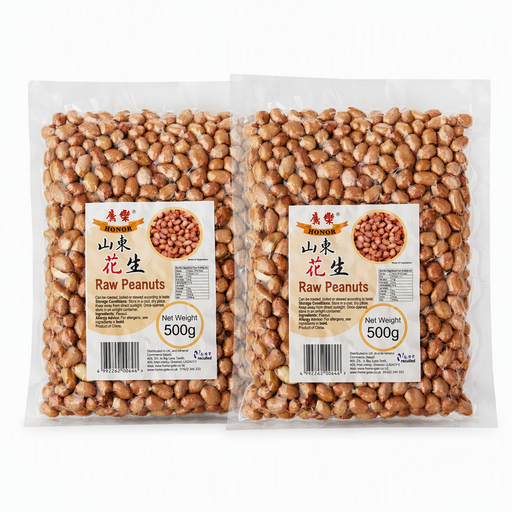 No image available
Two 500g packs offer raw peanuts to measure out for cooking across several dinners. Prepare them before eating and check how you will store the remaining nuts.
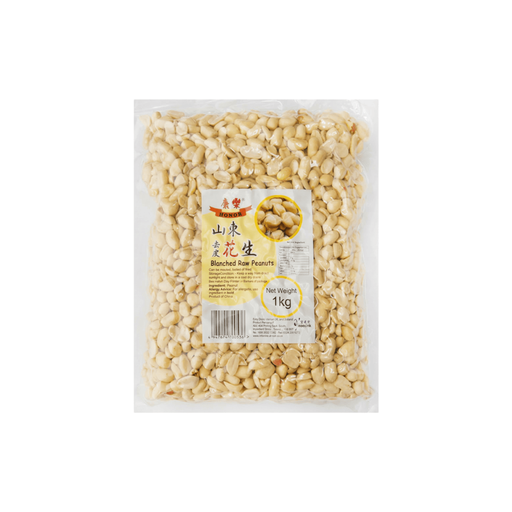 No image available
The 1kg pack suits recipes calling for skinless peanut kernels when you can use and store that quantity. These raw kernels need cooking before eating; measure the amount added to each meal.
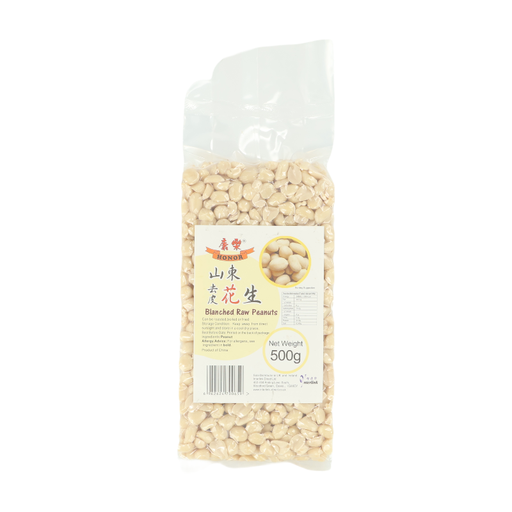 No image available
This 500g blanched-kernel pack is another size for cooking with skinless peanuts. Cook the raw kernels before eating, and check the label when deciding how much to add.
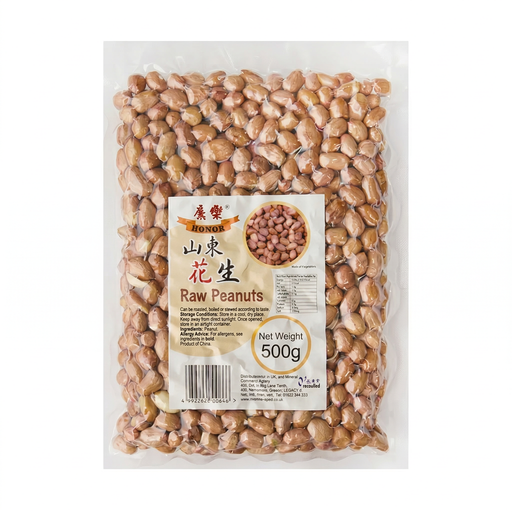 No image available
This single 500g raw-peanut pack is an option if you want less to store than the two-pack format. It needs cooking before eating; portion it for the dinner you are preparing.
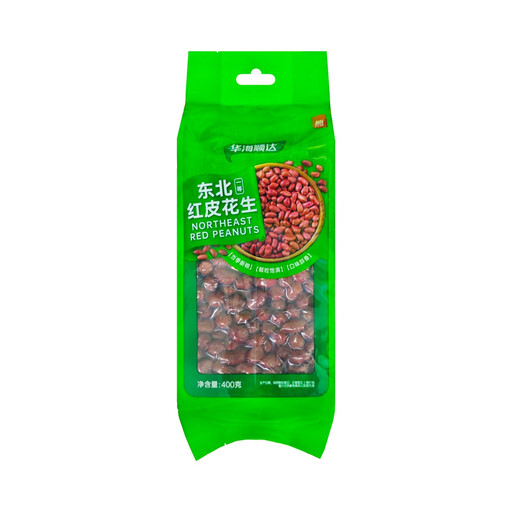 No image available
This 400g pack provides red-skin peanuts for recipes that call for them. Allow for the preparation and cooking required by your recipe, and measure the portion used.
Not by weight in the cited UK product listings: Tesco’s KP Unsalted Peanuts contain 619 kcal per 100g, ASDA Dry Roasted Peanuts 587 kcal, Sainsbury’s Unsalted Mixed Nuts 660 kcal and M&S Nut Collection 654 kcal. If nuts are a dinner topping, measure the amount you add and use the exact pack’s label to calculate its contribution.
Choose and weigh a portion using the energy value on your own pack rather than relying on a standard serving. A Kent Community Health NHS Foundation Trust leaflet gives average examples of 12 almonds at 80 kcal and 15g of pistachios at 90 kcal, and advises checking labels for exact amounts; the cited supermarket packs list 165–196 kcal for their 25–30g servings.
Choose an unsalted product if its salt content suits what you need for the dish, but do not assume it has fewer calories. Tesco lists KP Unsalted Peanuts at less than 0.01g salt and 186 kcal per 30g, while Sainsbury’s lists Stamford Street Co. Salted Peanuts at 0.19g salt and 190 kcal per 30g; compare the exact packs you are considering.
Read the exact pack’s ingredient and additional allergen statements before using it. The Food Standards Agency distinguishes peanuts, which are legumes, from tree nuts such as almonds, cashews and hazelnuts; that distinction alone does not establish whether a particular product is suitable for someone with an allergy.