Households choosing an everyday snack
If the aim is a smaller snack rather than a large protein serving, check calories and bar weight together. Myprotein UK lists its Crispy Square at 96 kcal and 5.9g protein per 30g bar.


For an everyday household snack, compare calories per wrapped bar before choosing a multipack. Myprotein UK lists its 30g Crispy Square at 96 kcal and 5.9g protein; PhD lists 21–22g protein but 245–251 kcal in the checked 64g Smart Bar flavours. The higher-protein option serves a different purpose, so check the exact pack’s ingredients, allergens and serving size before buying for several people.
If the aim is a smaller snack rather than a large protein serving, check calories and bar weight together. Myprotein UK lists its Crispy Square at 96 kcal and 5.9g protein per 30g bar.
A higher-protein bar may be a separate choice within the same household shop. PhD lists 21–22g protein and 245–251 kcal for the checked 64g Smart Bar flavours, so these are not interchangeable with a smaller snack on calories.
Check each flavour before committing to a box. The Myprotein Crispy Square contains soya and milk and carries a precautionary warning for peanuts, nuts and gluten; other bars have different ingredient statements.
Start with what one person would eat from a wrapper, then decide whether the protein amount, ingredients and pack format suit the intended eaters.
| Priority | What to check | Your needs |
|---|---|---|
| Calories per bar | Check kcal for one wrapper and whether it counts as one serving. Use the per-100g declaration to compare bars of different weights; GOV.UK says nutrition information includes energy in kJ and kcal and is expressed per 100g. | I’m putting a bar in the family snack cupboard and want to know the energy in the portion someone will actually take. |
| Protein amount | Read protein grams alongside kcal for the same bar. Myprotein UK lists 5.9g protein and 96 kcal for its 30g Crispy Square; PhD lists 21–22g protein and 245–251 kcal for the checked 64g Smart Bar flavours. | Some adults may want more protein per snack; for others, a smaller bar matters more than the protein figure. |
| Sugars and polyols | Compare sugars and energy for the exact flavour, and read the ingredients for polyols, also called sugar alcohols. PhD warns that excessive Smart Bar consumption may cause laxative effects. | A low-sugar label alone will not tell me the bar’s calorie count or whether a particular eater likes its ingredients. |
| Allergens | Read the current pack’s ingredients and any precautionary ‘may contain’ statement for each flavour. The Food Standards Agency’s UK guidance covers disclosure of the 14 listed allergens when they are ingredients. | Before a box is shared, I need to check it against the restrictions of everyone who might eat a bar. |
| Pack format | Confirm the number and weight of bars, then compare like-for-like portions. Tesco Groceries lists protein bars in differing multipack sizes as well as individual bars. | A larger box is useful only if its individual bars suit the people who will eat them. |
Protein bars differ in both size and energy. Myprotein UK lists 96 kcal for a 30g Crispy Square, while PhD lists 245–251 kcal for the checked 64g Smart Bar flavours.
Compare kcal per wrapper before choosing a box, then decide how much protein the intended eater wants.
Sugar content does not establish calorie content. Barebells explicitly says its bars are not low- or reduced-calorie foods.
Check energy, sugars, saturated fat and serving size on the exact flavour rather than relying on a front-of-pack claim.
Allergen information can matter more than the pack size when bars will be shared. Myprotein’s Crispy Square contains soya and milk; Barebells lists milk, soya and wheat for its Cinnamon Bun example.
Read each current pack, including any ‘may contain’ wording, before choosing flavours for the household.
If a flavour is unsuitable for an intended eater, those bars may go unused.
Some bars contain polyols. PhD warns that excessive Smart Bar consumption may cause laxative effects, and Barebells lists sugar alcohols in its Cinnamon Bun example.
If polyols are a concern for an intended eater, try an individual bar before buying a multipack.
These examples show why a light snack, a higher-protein bar and a larger grocery basket call for different checks; a brand name alone does not settle the choice.
Its UK Crispy Square Protein Snack is a smaller-bar example: Myprotein lists 96 kcal, 5.9g protein and 5.1g fibre per 30g bar.
The checked 64g Smart Bar flavours provide 21–22g protein and 245–251 kcal per bar, according to PhD.
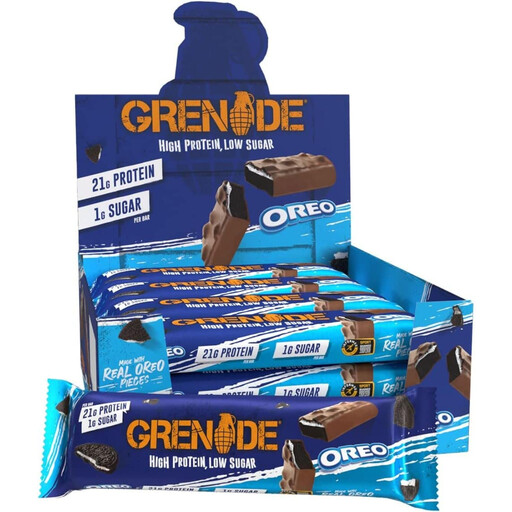
Grenade describes its protein-bar range as high in protein and low in sugar, and lists bundles of 24, 36 and 48 bars.
Barebells says its bars are not low- or reduced-calorie foods. Its Cinnamon Bun example lists 200 calories per 55g bar.
Quest’s US-facing S’Mores product page lists 190 calories, 21g protein and 12g fibre per 60g bar.
Tesco Groceries lists individual protein bars and multipacks in different sizes, providing a way to compare formats within a grocery basket.
These Joybuy multipacks cover Grenade bars in several flavours and a Nature Valley peanut and chocolate bar. Compare the current label for each flavour before choosing a box for the household; this selection does not stand in for the smaller Myprotein bar discussed above.
 No image available
This 12-bar pack is an option when several adults want the same flavour; compare its per-bar nutrition with smaller snacks before ordering.
The listing warns against use by children or during pregnancy or breastfeeding. Check the current pack for milk, soya and polyols before sharing.
 No image available
For a shared adult snack cupboard, this 12-bar format makes the exact flavour’s calories and ingredients worth checking before a box purchase.
The listing warns against use by children or during pregnancy or breastfeeding. Check the current pack for milk, soya and polyols.
 No image available
Before choosing this 12-bar peanut butter flavour for several people, check each intended eater’s ingredient restrictions.
The listing identifies peanuts, milk and soya and warns against use by children or during pregnancy or breastfeeding. Check the current pack for polyols too.
 No image available
This 60g-bar multipack is worth assessing separately from smaller everyday snacks: check its per-wrapper calories as well as the protein figure.
Check the current pack for milk, soya, wheat and polyols. The listing also cautions against use by children.
 No image available
A four-bar pack offers a different box size for a family shop; compare nutrition per 40g bar rather than by pack size alone.
Check the current pack’s peanut, soya and milk information, including any precautionary allergen statement.
No. Compare kcal per bar rather than treating a sugar claim as a calorie figure. Barebells, for example, says its bars are not low- or reduced-calorie foods; check the exact flavour’s serving size and nutrition information.
Start with kcal and protein for the wrapped bar someone would eat, then check the per-100g figures for a like-for-like comparison of different weights. GOV.UK says nutrition declarations express energy in kJ and kcal and give nutrition information per 100g.
Check the current pack for each flavour against every intended eater’s restrictions, including its ingredients and any ‘may contain’ wording. The Food Standards Agency’s UK guidance requires businesses to tell customers when any of the 14 listed allergens are present as ingredients; relevant protein-bar examples include milk, soya, peanuts, tree nuts and cereals containing gluten.
Trying an individual bar first is a practical step if an intended eater is concerned about polyols. PhD warns that excessive Smart Bar consumption may cause laxative effects, while Barebells lists sugar alcohols in its Cinnamon Bun example.