Students packing a snack for the day
If you have a calorie limit in mind, compare kcal for the complete bar you intend to eat. A low-sugar claim alone does not tell you its energy content.


For a school-day snack with a calorie limit, compare kcal for the whole bar before deciding how much protein you want: Tesco lists its Grenade Salted Caramel 35g bar at under 150 kcal with 12g protein. Larger bars can provide more protein but also more kcal per bar—Myprotein lists 18g and 204 kcal for its 52g BOUNTY HiProtein bar, while PhD lists 21g and 245 kcal for its 64g Choc Peanut Butter Smart Bar—so check the exact flavour and pack rather than treating “low sugar” as a calorie claim.
If you have a calorie limit in mind, compare kcal for the complete bar you intend to eat. A low-sugar claim alone does not tell you its energy content.
If protein amount matters to you, read grams of protein alongside bar weight and kcal. A larger bar may offer more protein while taking up more of your planned snack allowance.
Check the exact pack’s ingredients, allergen declaration and dietary claims before putting it in a school bag. Products within a range can differ by flavour and formulation.
Start with the portion you will actually eat, then compare its nutrition and ingredients with your snack plans.
| Priority | What to check | Your needs |
|---|---|---|
| Whole-bar energy | Read kcal for the complete bar and its weight in grams. If the label gives figures per 100g, check the portion figures too. | I want a portable snack that fits the calorie allowance I have chosen, rather than one that only sounds lower-calorie from its front-of-pack wording. |
| Protein and portion size | Compare protein in grams, kcal and weight for the same complete bar. Tesco’s Grenade Salted Caramel 35g bar is listed at 12g protein and under 150 kcal; Myprotein’s 52g BOUNTY HiProtein bar is listed at 18g and 204 kcal. | A smaller bar may suit my snack plans; on another day, I may prefer a larger protein portion. The protein figure alone cannot settle that choice. |
| Sugars and other nutrients | Read the sugars, saturates and salt figures as well as kcal. The NHS explains that food labels provide nutrition information that lets you compare these figures, including per 100g. | “Low sugar” is not enough for me to judge the whole bar. I want to see how the exact flavour compares on the nutrients I care about. |
| Ingredients and allergens | Inspect the selected pack’s ingredients, allergen declaration and any precautionary statement. For a vegan bar, check allergens separately: Barebells notes that some of its vegan bars contain wheat protein. | Before buying several bars, I need to know whether this particular flavour and formulation meet my dietary requirements. |
| Snack or lunch | Decide whether the bar is an additional snack or part of a wider meal. PhD advises consuming its Smart Bar as part of a varied, balanced diet. | If I am packing lunch, I will consider the whole meal rather than using the bar’s protein figure as a substitute for that decision. |
Barebells says its bars are not low- or reduced-calorie foods. PhD lists 245 kcal for a 64g Choc Peanut Butter Smart Bar, despite positioning the range as low sugar.
Set your own kcal allowance for the snack and read the energy figure for the whole bar.
Tesco’s 35g Grenade Salted Caramel bar has 12g protein, while Myprotein’s 52g BOUNTY HiProtein bar has 18g. Those figures describe different-sized portions.
Compare weight, protein and kcal per complete bar together.
Ingredients and nutrition can change with the formulation. Tesco advises reading the product label rather than relying solely on website information.
Check the current pack’s flavour, nutrition and allergen declaration before buying several bars.
PhD warns that excessive consumption of its Smart Bar may have laxative effects, which matters if you plan to eat more than one.
Read the selected pack’s guidance and consider a different snack if its formulation does not suit you.
Grenade bars come in different sizes, including a 35g Salted Caramel bar listed by Tesco.
PhD’s Smart Bar range includes full-size bars for shoppers comparing a larger protein portion.
Myprotein sells protein bars in several formats, including its BOUNTY HiProtein product.
Barebells offers several bar lines, including vegan products that need their own label checks.
Quest’s product information can help identify questions to ask when comparing formulations.
Tesco is a retailer rather than a protein-bar manufacturer; its individual product listings can help compare pack sizes and nutrition.
These bars and flapjacks offer different school-day snack formats and pack sizes. Compare the nutrition for the exact bar, and check the pack’s age guidance and allergens before choosing one for a pupil.
 No image available
The 50g bar gives you a defined portion to compare with larger bars. Check its whole-bar kcal and allergens on the pack; the product information also warns that it is not suitable for children.
 No image available
Each 60g bar is a larger portion than the 50g Grenade option above. Compare kcal and protein for this Oreo variant, and check its allergen declaration rather than using figures from another Grenade bar.
 No image available
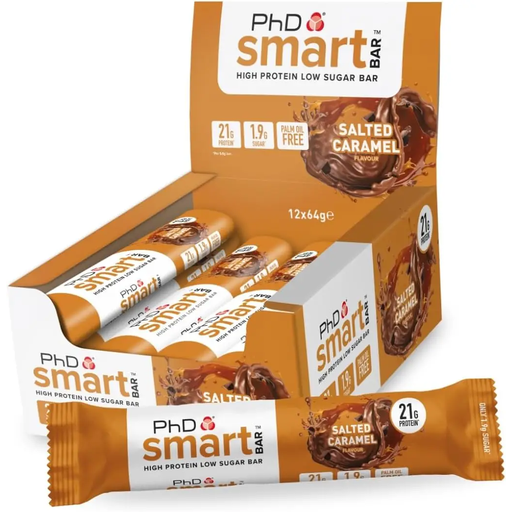
This is a 64g bar for shoppers considering a larger snack portion. Read the Salted Caramel pack’s own nutrition and allergens; PhD warns that excessive consumption of Smart Bars may have laxative effects.
 No image available
These 40g bars offer a smaller stated portion than the 50g and 64g options here. Compare kcal and protein per bar, and read the allergen declaration for this peanut-and-chocolate variant.
 No image available
This is a flapjack-format option in 50g portions. If you are comparing it with protein bars, check kcal, protein and sugars for the complete flapjack, as well as the current ingredients and allergens.
No. Check kcal for the entire bar: PhD lists 245 kcal for its 64g Choc Peanut Butter Smart Bar, while Tesco lists its smaller Grenade Salted Caramel 35g bar at under 150 kcal. Those figures apply to the named variants, not every bar in either range.
Start with kcal and protein for the portion you will eat, then read sugars, saturates, salt, ingredients and allergens. The NHS explains that pre-packed food labels provide energy and other nutrition figures; per-100g figures help compare products, but the whole-bar figures show what your chosen portion contains.
Do not judge a lunch by a bar’s protein figure alone. Consider the complete meal; PhD advises consuming its Smart Bar as part of a varied, balanced diet.
A vegan claim does not establish allergen suitability. Read the exact pack’s ingredients and allergen declaration: Barebells notes that some of its vegan bars contain wheat protein and advises checking the product label.