Walkers choosing a small snack
For an easy or shorter walk, a bar may be something convenient to carry rather than the main source of food for the route. Compare kcal for the portion you expect to eat.


For a short, easy walk, choose a bar by the kcal in the portion you will actually eat, then check its other nutrition values and allergens. On a longer or more demanding hike, do not assume that choosing the lowest-calorie bar will cover your food and fluid needs; plan for the route as a whole.
For an easy or shorter walk, a bar may be something convenient to carry rather than the main source of food for the route. Compare kcal for the portion you expect to eat.
A lower-calorie bar can still be one item in your pack, but consider the whole route when planning food and fluids. Guidance cited by the American College of Sports Medicine concerns intense exercise lasting more than an hour, not every walk.
If you need a vegan or gluten-free product, or must avoid an allergen, check the exact bar’s current ingredients and allergen declaration. A brand name or a description such as “oat” or “protein” is not enough to establish suitability.
Start with the portion you would take on the walk, then use per 100g values to compare bars of different sizes. The NHS explains that nutrition information is given per 100g and may also be shown per portion.
| Priority | What to check | Your needs |
|---|---|---|
| Calories and portion | Check kcal per bar or stated serving, how many bars make up that serving, and kcal per 100g for comparison. | For a short snack break, I want to know the energy in the amount I will actually eat, not just the figure printed for a different portion. |
| Sugars, saturates and salt | Compare sugars, saturated fat and salt per 100g, then check the values for your portion. Read the ingredients rather than relying on “fruit”, “oat” or “protein” wording. | A bar’s name might appeal to me, but I also want to see its full nutrition panel before choosing it. |
| Food for the route | Consider the walk’s duration and intensity, carbohydrate per portion, other food you will carry and access to fluids. The American College of Sports Medicine’s cited guidance addresses intense exercise lasting more than an hour. | On a demanding hike, I do not want a small snack to be my entire food plan simply because it has fewer calories. |
| Protein and fibre | Compare the declared protein and fibre for the same portion size, alongside its kcal and other nutrition values. | If protein or fibre matters to my choice, I want the figures for the bar I would carry rather than an assumption based on its product range. |
| Ingredients and allergens | Check the current pack’s ingredients, declared allergens and “may contain” statement. Assess vegan or gluten-free wording on the exact variant. | I need to know whether this particular flavour and formulation fits my dietary requirements before I eat it. |
A small bar may fit a brief snack break without being enough food for a longer, demanding route. The American College of Sports Medicine’s cited exercise guidance specifically addresses carbohydrate and fluid intake during intense activity lasting more than an hour.
Plan food and fluids around the route first, then decide what role a bar will play.
A nutrition panel may describe one bar or several. Nature Valley UK, for example, declares its Crunchy Oats & Honey serving as two bars weighing 42g.
Use per 100g values for a like-for-like comparison, then check the declared values for the amount you intend to eat.
In its November 2025 review of 458 snack bars sold by major UK retailers, Action on Salt & Sugar found that 37% were high in sugars and 55% were high in saturated fat under UK front-of-pack thresholds. Those figures describe the bars reviewed, not shoppers’ preferences or every bar on sale.
Check sugars and saturates on the nutrition panel, even when a bar is described as an oat, fruit, nut or protein snack.
Ingredients and precautionary allergen statements can differ between flavours and product lines. An oat-based bar should not be assumed gluten-free, nor a protein bar assumed free from nuts or milk.
Read the current physical pack’s ingredient and allergen information for the exact bar before eating it.
These ranges offer different label checks; a brand’s inclusion here does not establish the nutrition or dietary suitability of every bar it makes.
Graze includes Oat Boost flapjacks in its snack range.
Nature Valley UK lists both crunchy oat bars and peanut-and-chocolate protein bars.
TREK makes several plant-based bar lines, including protein flapjacks and High Protein bars.
Nakd offers fruit-and-nut bars; the brand describes its range as having no added sugar or syrups.
Eat Natural offers nut-led and protein-bar options.
Alpen is a useful name to recognise when reading older references to cereal bars.
These Joybuy listings are for individually sized protein bars sold in multipacks. Check the exact flavour’s nutrition panel and allergens when deciding what to carry on a hike; a protein-bar choice does not replace planning food and fluids for the route.
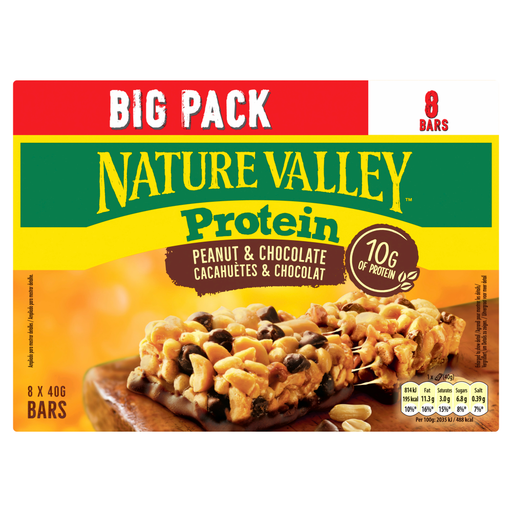 No image available
The 40g bar format lets you plan how many to carry. Check the listing and current pack for this variant’s kcal, nutrition values and peanut, milk and soya allergen information.
 No image available
Each bar in this multipack is described as 40g, which helps when choosing a portion to pack. Check this flavour’s nutrition panel and its peanut, almond, milk and soya allergen declaration.
 No image available
This multipack contains 50g bars. Compare the Double Chocolate variant’s kcal and other nutrition values per bar and per 100g, and check its milk and soya allergen declaration.
 No image available
The stated bar size is 50g. Read the Golden Caramel variant’s kcal, sugars and saturated fat values for that portion, as well as its milk and soya allergen information.
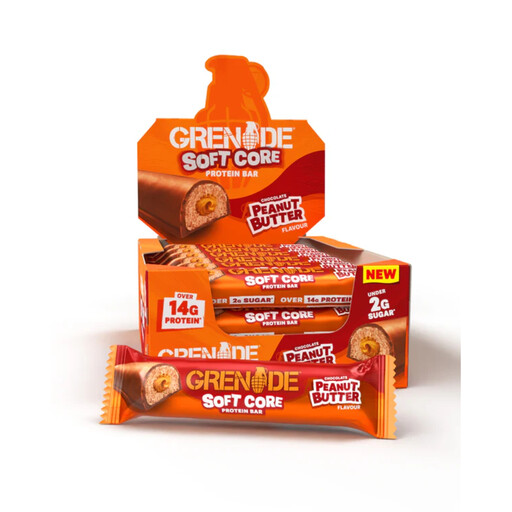 No image available
Each bar is described as 50g. Check its per-bar nutrition values for your intended snack portion and read the current milk, soya and peanut allergen declaration; do not infer gluten-free suitability from the product name.
Check kcal for the amount of each bar you would eat, then use kcal per 100g for a like-for-like product comparison. The NHS explains that nutrition information is provided per 100g and sometimes per portion, so confirm whether a stated portion means one bar or more.
Do not assume that one small bar will cover a long or demanding route. The American College of Sports Medicine’s cited guidance discusses carbohydrate and fluid intake for intense exercise lasting more than an hour; plan food and drink for your particular route rather than applying that condition to every walk.
Not automatically. Nature Valley UK says its Crunchy Oats & Honey bars are not suitable for a gluten-free diet. Check the exact current pack and its gluten-free and allergen wording before choosing another oat bar.
Check sugars, saturated fat and salt as well as the portion’s carbohydrate, protein and fibre when those affect your choice. The NHS advises using per 100g information to compare foods; the per-portion figures show what you would get from the amount you eat.
Ingredients and “may contain” statements can differ between bars and flavours. For example, the Tesco listing for TREK High Protein Choc Caramel declares soya and peanuts, while the researched Nature Valley and Eat Natural examples have other allergen considerations. Read the current physical pack before eating a bar if an allergen matters to you.