Runners looking for a lighter everyday snack
A small bar may fit a rest day, an easy day or a gap between meals. Keep that snack choice separate from how you plan to fuel more demanding training.


Choose a lower-calorie bar for a light snack, not automatically as your main fuel for a long or demanding marathon-training session. The British Dietetic Association advises a low-fat, high-carbohydrate snack or light meal two to three hours before exercise; for a particular bar, compare its serving size, carbohydrate and fat, then check protein and allergens against the occasion and your requirements.
A small bar may fit a rest day, an easy day or a gap between meals. Keep that snack choice separate from how you plan to fuel more demanding training.
If a bar is intended as a pre-run snack, its carbohydrate and fat matter more than a low-calorie label alone. The British Dietetic Association advises a low-fat, high-carbohydrate snack or light meal two to three hours before exercise.
A portable protein bar may appeal after training or between meals. Check the exact variant’s ingredients and allergen statement: peanut, soy, milk, nut and gluten information can differ between bars.
Start with when you intend to eat the bar. Then compare nutrition per bar, rather than treating a small serving or a protein label as a complete answer.
| Priority | What to check | Your needs |
|---|---|---|
| Pre-run fuel | Check carbohydrate and fat per serving, and when you plan to eat. The British Dietetic Association advises a low-fat, high-carbohydrate snack or light meal two to three hours before exercise. | For a run that needs planned fuelling, I do not want to choose a bar just because its calorie figure is small. |
| Light snack | Compare the stated serving size and energy per bar. For example, Tesco lists Graze Cocoa Vanilla Oat Boosts at 116 kcal per 30 g portion; that figure belongs to this flavour and serving. | On a rest day or between meals, a smaller portion may suit the snack I am looking for. |
| Protein snack | Compare protein alongside carbohydrate, fat and bar size. Nature Valley UK lists 10.2 g protein and 4.4 g fibre per 40 g Peanut & Chocolate bar. | After training or between meals, I want to know what the whole bar provides, not rely on the word “protein” on the front. |
| Ingredients | Read the exact pack’s ingredients, allergen declaration and precautionary wording. Recheck when buying a different flavour or pack version. | If I avoid particular ingredients, I need to assess this bar rather than assume every product from the brand has the same recipe. |
A small snack portion and a pre-run fuelling plan serve different purposes. The British Dietetic Association identifies carbohydrate as the main fuel for exercising muscles.
Use the serving’s carbohydrate figure and the demands of the session to decide what role the bar can play; do not rely on its calorie figure alone.
A protein label does not tell you whether the bar matches the British Dietetic Association’s low-fat, high-carbohydrate pre-exercise guidance.
For a snack before exercise, compare carbohydrate and fat per bar before deciding where it fits.
A different flavour or revised recipe may have different ingredients and allergen warnings. That matters particularly when avoiding an ingredient.
Read the current pack before eating, including its ingredient list and any “may contain” statement.
These figures describe the named products and serving sizes, not every bar made by each brand.
Tesco lists Cocoa Vanilla Oat Boosts as a 30 g oat-flapjack portion providing 116 kcal.
Nature Valley UK lists its Peanut & Chocolate Protein Bar at 10.2 g protein, 4.4 g fibre and 196 kcal per 40 g bar.
Myprotein lists the Original Oat Protein Flapjack at 217 kcal, 21.1 g carbohydrate and 10.2 g protein per 50 g bar.
Eat Natural lists its Peanuts & Dark Chocolate Protein Bar at 220 kcal, 14.5 g fat and 7.8 g protein per 40 g bar.
These oat flapjacks and protein bars offer options for light-snack and protein-snack occasions. Their presence here does not make any one bar a substitute for a pre-run fuelling plan.
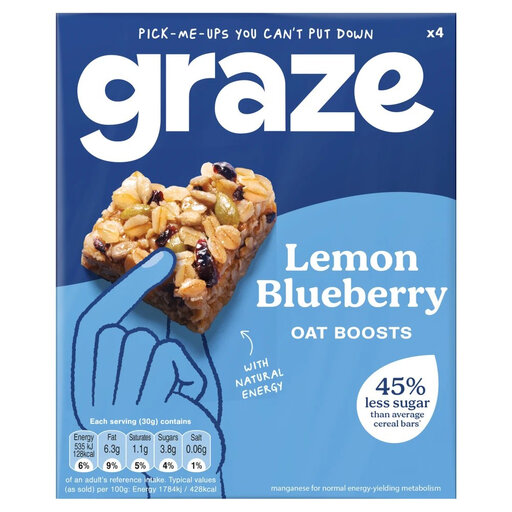 No image available
An oat-bar option to consider for a light snack rather than as your planned fuel for a demanding run. The pack contains four 30 g bars; check this Lemon Blueberry variant’s carbohydrate, fat and allergen information on the current pack.
 No image available
A portable protein-bar option for a snack after training or between meals. Nature Valley UK lists 10.2 g protein and 4.4 g fibre per 40 g Peanut & Chocolate bar; check the current pack for its full nutrition and allergen information.
 No image available
A protein-flapjack option for a snack after training or between meals. This is a pack of sixteen 50 g bars; check the Cocoa Oat variant’s nutrition and allergen declaration rather than applying figures from another Trek flapjack.
 No image available
A protein-bar option to compare for a snack after training, not to judge by its protein label alone when planning pre-run food. The pack contains twelve 50 g bars; read the current pack for carbohydrate, fat, milk and soy information.
 No image available
A smaller multipack of protein flapjacks to compare for a between-meal or post-training snack. It contains three 50 g bars; check this Salted Caramel variant’s nutrition, ingredients and soy declaration on the current pack.
Do not assume that it can. The British Dietetic Association identifies carbohydrate as the main fuel for exercising muscles, while a low-calorie figure tells you only about the stated portion’s energy. Check the bar’s carbohydrate and consider it within your wider fuelling plan for the session.
Check carbohydrate, fat, serving size and timing. For a snack or light meal two to three hours before exercise, the British Dietetic Association advises a low-fat, high-carbohydrate option; “protein” or “low calorie” on a wrapper does not establish that fit.
A protein bar does not, by its name alone, tell you how much carbohydrate it provides. If you are choosing food after training, compare both nutrients on the exact serving; the British Dietetic Association identifies carbohydrate as a fuel for exercising muscles.
Read the current pack’s ingredients, allergen declaration and any precautionary statement for the exact flavour. GOV.UK guidance requires UK food businesses to provide allergen information and identifies peanuts, soybeans, milk, tree nuts and cereals containing gluten among the allergens requiring declaration when present as ingredients.