Start with the calories per stated bar, then compare serving weight, sugars, other nutrition information, ingredients and allergens. A smaller bar may have fewer calories without having less sugar; for breastfeeding parents, NHS advice is to eat a varied diet rather than follow a special diet or use snack bars in place of regular meals.
Who is this for?
New parents choosing a small, convenient snack
An individually portioned bar can be easy to keep nearby. Compare the kcal and weight of the bar you would actually eat, rather than assuming every cereal or fruit-and-nut bar has a similar serving size.
Breastfeeding parents planning snacks around meals
A bar may be convenient between meals, but it is not a substitute for varied food and regular eating. NHS breastfeeding advice says a special diet is not needed, while NHS Lanarkshire advises eating regularly after having a baby.
Parents checking dietary requirements or allergens
Check the current pack’s ingredients and precautionary allergen statements before eating. Leeds Teaching Hospitals NHS Trust advises checking labels at purchase and again before use because recipes can change.
What should you compare?
Choose a serving size that suits the occasion, then read the nutrition panel and ingredients together rather than relying on a front-of-pack claim.
| Priority | What to check | Your needs |
|---|
| Calories in context |
Compare kcal and weight per stated bar; then check sugars, saturates and salt. Use traffic-light information where shown and the nutrition panel for the exact product. |
I want to know what one bar contributes, not judge it by a calorie claim alone. In a Food Standards Agency and Ipsos survey of 611 Northern Ireland food shoppers conducted in September–November 2024, 49% said they actively used traffic-light labelling when shopping for food; that figure is not specific to parents or snack bars. |
| Snack size |
Check the bar’s weight and its fibre or protein information if those matter to your choice. A protein claim does not establish that a bar has fewer calories. |
For a quick snack between meals, I might choose a different portion from the one I would take on a longer outing. NHS Lanarkshire advises regular eating after having a baby. |
| Sugar claims |
Read the “of which sugars” value per bar, even when the pack says “no added sugar”. Compare products using their own stated serving weights. |
I want to see the total sugars in the portion I will eat, rather than treating “no added sugar” as “sugar-free”. |
| Ingredients and allergens |
Read the current ingredients, emphasised allergens and any “may contain” statement. Check dietary claims against the exact variant. |
If I am avoiding an ingredient, I need the pack I am buying to meet that requirement, even when I have bought the same bar before. |
Common buying mistakes
-
Treating the lowest calorie figure as the whole comparison
Tesco Groceries lists the 25g Eat Natural Apple Soft Fruit Bar at 86 kcal and 13.8g sugars, while its listing for the 30g Graze Cocoa Vanilla Oat Boost gives 116 kcal and 2.7g sugars. The lower-calorie serving is not the lower-sugar serving in this comparison.
Compare serving weights and the nutrition panels alongside kcal, then check ingredients for the exact bars.
-
Reading “no added sugar” as “no sugar”
The Tesco Groceries listing for the Nakd Peanut Butter Protein Bar says “no added sugar” but lists 13g sugars per 45g bar.
Check “of which sugars” on the nutrition panel when comparing bars.
-
Assuming a protein flapjack is low in calories
Tesco Groceries lists the 50g TREK Salted Caramel Protein Flapjack at 9.5g protein and 224 kcal per bar. Its larger serving does not serve the same lowest-calorie aim as a smaller bar.
Decide whether the portion and protein content matter more for this snack than keeping its calorie count down.
-
Relying on an earlier ingredient listing
Ingredients and precautionary allergen statements matter when a bar is being chosen for someone avoiding particular foods. Leeds Teaching Hospitals NHS Trust advises checking the label at purchase and again before use because recipes can change.
Read the physical pack’s ingredients, emphasised allergens and “may contain” statement each time.
Brand and product-line references
These examples show why the exact variant and serving matter; a figure for one bar should not be applied to every product from its brand.
Graze
For the Cocoa Vanilla Oat Boost, Tesco Groceries lists 116 kcal per 30g boost.
- The same listing gives 2.7g sugars per boost and describes it as high in fibre and suitable for vegans.
- Its ingredients include oats and soya; check the exact variant’s pack before choosing it.
Eat Natural
The Apple Soft Fruit Bar is a 25g portion listed by Tesco Groceries at 86 kcal per bar.
- The listing describes this variant as gluten-free, vegan and a source of fibre.
- It also lists 13.8g sugars per bar; its ingredients include almonds.
Nakd
Tesco Groceries lists the Peanut Butter Protein Bar at 7.6g protein and 189 kcal per 45g bar.
- This variant is listed as vegan, gluten-free and dairy-free.
- Its label lists 13g sugars per bar; it contains peanuts and has a “may contain” warning for soya and nuts.
TREK
Tesco Groceries lists the Salted Caramel Protein Flapjack as a 50g bar with 9.5g protein.
- This larger flapjack offers a different portion size from the smaller bars described above.
- It is listed at 224 kcal per bar and has precautionary warnings for peanuts, nuts and milk.
Nature Valley
Nature Valley describes its Crunchy oat bars and Protein bars as separate product lines.
- The brand says its Protein bars provide 10g protein per serving.
- Check the calorie figure and serving size on the specific pack rather than applying a product-line description to every variant.
Alpen
Alpen Light and other Alpen cereal bars are distinct lines to compare by their exact pack labels.
- Check the current variant’s kcal per bar and nutrition panel before deciding whether it meets your calorie preference.
Snack bars on Joybuy
These options include smaller snack bars, oat bars and a protein bar. Compare the current pack’s per-bar nutrition and ingredients for the particular choice you are making; the toddler-labelled Organix bar has a different intended audience from the other bars.
 No image available
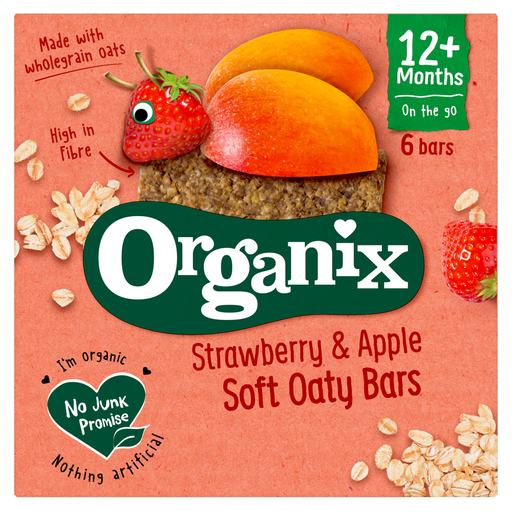
Organix Strawberry & Apple Soft Oaty Bars 12+ Months, 6 x 23g
A smaller bar to compare by its per-serving label. This product is labelled for children aged 12 months and over; check whether that intended use suits the person who will eat it.
 No image available
Special K Dark Chocolate Snack, 6 x 21.5g
The 21.5g bar provides a small stated portion for a per-bar comparison. Check its nutrition panel and ingredients if calories, sugars or dietary requirements are decisive.
 No image available
Graze Oat Boosts Lemon Blueberry, 4 x 30g
An oat-bar option in 30g portions. Compare this flavour’s own sugars and kcal per boost; figures for Graze Cocoa Vanilla describe a different variant.
 No image available
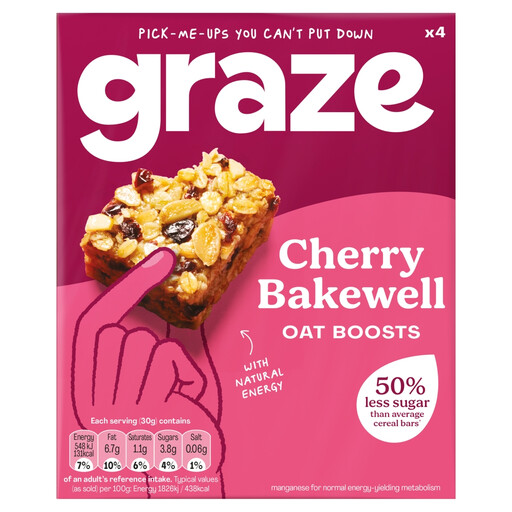
Graze Oat Boosts Cherry Bakewell, 4 x 30g
Another 30g Oat Boost flavour for a portion-level comparison. Read this variant’s nutrition and allergen information rather than assuming it matches another Graze bar.
 No image available
Nature Valley Protein Salted Caramel Nut Bar, 4 x 40g
A 40g protein-bar option if protein content matters more to this choice than finding the smallest portion. Check its kcal and sugars per bar, along with the current pack’s nut and other allergen information.
Questions about snack bars
How do I compare two bars with similar calorie claims?
Compare kcal for the stated bar and note each bar’s weight, then read sugars, saturates, salt, fibre, protein and ingredients on the exact packs. Traffic-light information, where shown, can help you compare some nutrition values, but a smaller serving and a lower sugar value are not the same thing.
Should a breastfeeding parent choose the lowest-calorie bar?
Not on calorie count alone. NHS advice says breastfeeding does not require a special diet and recommends varied food; NHS Lanarkshire also advises regular eating after having a baby. A bar can be a snack between meals, rather than a replacement for them.
Does “no added sugar” mean a bar contains no sugar?
No. Tesco Groceries lists the Nakd Peanut Butter Protein Bar as having no added sugar while giving 13g sugars per 45g bar. Read the “of which sugars” value for the exact variant.
Do I need to recheck allergens on a familiar bar?
Yes. Leeds Teaching Hospitals NHS Trust advises checking ingredients at purchase and again before use because recipes can change. Read any “may contain” statement too, and follow your allergy-management advice if you have a diagnosed food allergy.


