What should you compare?
Start with the amount you will eat during the evening; use the per-100g figures to compare products of different sizes, then return to the full portion for your decision.
| Priority |
What to check |
Your needs |
| Calories for your portion |
Check kcal per bar or pack and the number of bars you expect to eat. Use kcal per 100g when comparing different pack sizes. |
I want to choose a TV snack based on the whole amount I will eat, rather than a smaller serving printed on the label. |
| Sugars and saturated fat |
Compare total sugars and saturated fat per 100g and for your portion. Read these values even when the front of the pack highlights protein, fibre or no added sugar. |
A lighter-calorie bar is not my only consideration: I also want to see its sugars and saturated fat before choosing. |
| Protein and fibre |
Check protein and fibre for the full bar, then compare its kcal and sugars on that same basis. A protein or fibre claim does not establish a lower calorie figure. |
For a planned, more substantial snack, I may choose a protein or fibre bar if its whole-bar figures suit what I had in mind. |
| Ingredients and allergens |
Read the current ingredient list and allergen statement for the exact flavour. Check the nutrition panel separately from vegan or free-from wording. |
If I need to avoid a particular ingredient, the exact pack must meet that requirement; its calorie figure still matters to my TV-night choice. |
Brand references for snack-bar shoppers
These brand and product examples can help you recognise different types of bar; the nutrition and ingredient information for the exact pack remains the basis for choosing.
Graze
Graze includes Oat Boost flapjacks in its snack range.
- The Oat Boost range is worth checking if you prefer an oat-based bar.
- Check kcal and sugars for the flavour and number of bars you will eat; the range name does not establish a calorie figure.
Nature Valley
Nature Valley’s Protein Chocolate & Coffee bar is a 40g protein-focused option.
- Nature Valley describes this bar as providing around 10g protein and around 4g fibre per 40g bar.
- Compare its kcal and sugars per bar with other products if a lower-calorie snack is your priority.
Alpen
Alpen’s UK product pages feature muesli, and its FAQ names bar variants that are no longer made.
- The brand’s FAQ can help identify an older bar name before you rely on a listing.
- Alpen says its Apple, Blackberry & Yogurt and Apricot & Yogurt bars are no longer made; check the exact product and current pack information rather than using an old listing to compare nutrition.
Eat Natural
Eat Natural offers fruit-and-nut and protein-focused bars, including a Dark Chocolate & Peanut Protein Bar.
- Eat Natural lists the Dark Chocolate & Peanut Protein Bar at 220 kcal per 40g bar, giving you a defined portion to compare.
- Check the exact bar’s ingredients and allergen statement as well as its calories before buying.
nākd.
nākd. describes its fruit-and-nut bars as having no added sugar and as suitable for vegetarians and vegans.
- The brand’s ingredient style may be relevant if you prefer a fruit-and-nut bar.
- No added sugar does not mean no total sugars or establish a calorie figure. Check the nutrition panel and dietary information for the exact flavour.
TREK
TREK sells protein-focused flapjacks; the brand states that its Protein Flapjacks provide 9g plant-based protein.
- If protein is a reason for choosing a bar, compare the stated protein with the whole-flapjack nutrition information.
- Sainsbury’s lists the TREK Biscoff Protein Flapjack at 230 kcal per 50g bar. Check the exact flavour and portion rather than treating the protein claim as a lower-calorie claim.
Snack bars on Joybuy
These options include smaller snack-bar multipacks and protein-bar multipacks for different TV-night portions. Compare the current nutrition label for the exact flavour before choosing how many bars to eat.
 No image available
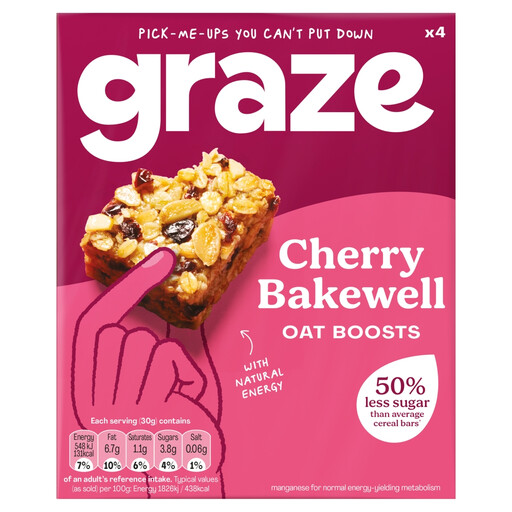
Graze Oat Boosts Cherry Bakewell, 4 × 30g
The four-bar pack lets you compare a 30g bar with other portion sizes for a TV-night snack. Check the current pack’s kcal and allergen information for this flavour, especially if you plan to eat more than one bar.
View on Joybuy
 No image available
Special K Dark Chocolate Snack, 6 × 21.5g
Each bar in this six-bar pack is labelled 21.5g. Compare the current label’s kcal per bar with other options, and use the amount you expect to eat—not the pack size alone—for your evening snack decision.
View on Joybuy
 No image available
Grenade Soft Core Protein Bar Double Chocolate, 12 × 50g
Consider this protein-bar option if that type of snack appeals to you. Its 50g bar size makes the full-bar kcal, sugars and allergen statement the relevant figures to check before choosing it for a TV night.
View on Joybuy
 No image available
Grenade Soft Core Protein Bar Golden Caramel, 12 × 50g
This is a Golden Caramel variant in a pack of twelve 50g protein bars. Compare the nutrition and ingredient information for this exact flavour with other bars; a different flavour name does not establish the same values.
View on Joybuy
 No image available
Grenade Soft Core Protein Bar Peanut Butter, 12 × 50g
This Peanut Butter variant comes as twelve 50g protein bars. Check its own kcal, sugars, ingredients and allergen statement before deciding whether a full bar suits your planned snack.
View on Joybuy
Frequently asked questions
What should count as a low-calorie bar for a TV night?
Choose a calorie allowance for the amount you expect to eat, then compare kcal per whole bar or pack against it. The NHS explains that food labels show energy in kJ and kcal; check the labelled portion as well as the per-100g figure.
Should I compare calories per 100g or per bar?
Use both figures for different purposes: per 100g helps you compare bars of different sizes, while the per-bar or per-pack information helps you assess the amount you will actually eat. If you expect to have two bars, account for both.
Does no added sugar mean a bar is low in calories?
No. No added sugar describes whether sugar was added; it does not state the bar’s calories or total sugars. Check those figures for the exact product, including fruit-and-nut bars such as those nākd. describes as having no added sugar.
Can a protein bar suit a lower-calorie TV snack?
It can suit your plan if the full bar’s kcal fits the allowance you have chosen, but protein content alone cannot answer that question. For perspective, Eat Natural lists its Dark Chocolate & Peanut Protein Bar at 220 kcal per 40g bar; compare each candidate’s labelled full-bar figure.
How should I check whether a bar meets my dietary requirements?
Read the current ingredients and allergen statement for the exact flavour before buying. Do not apply a vegan or free-from description for one product to every bar in its brand range, and check the nutrition panel separately for your calorie decision.


