Parents packing a school-holiday lunch
A bar can be a packaged addition rather than the main item. NHS Healthier Families suggests basing a lunchbox’s main item on foods such as bread, rice, pasta or potatoes, with fruit and vegetables alongside.


For a small packaged addition to a child’s school-holiday lunch, Alpen Light Chocolate & Fudge has the lowest declared calories per bar among the examples compared here: Weetabix Cereals lists 65 kcal for its 19g bar in the nutrition table, although the page headline says 67 calories. That small serving is not a lunch replacement; plan the main food first, then compare a bar’s portion, nutrition and allergen information against what the child will actually eat.
A bar can be a packaged addition rather than the main item. NHS Healthier Families suggests basing a lunchbox’s main item on foods such as bread, rice, pasta or potatoes, with fruit and vegetables alongside.
Check the calories in the whole bar the child would eat, as well as its weight. A 19g cereal bar and a 50g flapjack are different-sized portions.
Ingredient and may-contain statements matter when a child needs to avoid particular foods. Check the exact pack before buying or sending a bar to a supervised activity.
Start with the lunch itself, then compare bars by the portion that will be eaten and the information on the current pack.
| Priority | What to check | Your needs |
|---|---|---|
| Portion and calories | Read kcal per bar and serving weight. Use the per 100g figure, where shown, to compare different-sized bars on the same basis. | I’m looking for a small addition to lunch, so the calories in the bar my child will actually eat matter more than a front-of-pack description. |
| Place in the lunch | Plan the main item separately. NHS Healthier Families suggests foods such as bread, rice, pasta or potatoes for the main lunchbox item, with fruit and vegetables alongside. | If lunch needs a substantial main item, I won’t treat a snack bar as its replacement. |
| Nutrition panel | Compare total sugars, fat, saturates and salt as well as calories. Read any traffic-light labelling alongside the stated serving size. | A no-added-sugar or protein claim alone doesn’t tell me what is in the whole bar. |
| Allergens | Read the current ingredients and may-contain statement for the exact flavour. Check any food rules at a club, camp or childcare setting. | Before packing a bar for an activity, I need to know whether its ingredients or warnings conflict with my child’s requirements. |
Weetabix Cereals lists 65 kcal for a 19g Alpen Light Chocolate & Fudge bar in its nutrition table. Its small portion is an important part of that comparison.
Choose the main lunch first, then compare bar weight and calories per bar for the snack portion.
nākd. describes its Cashew Cookie as having no added sugar, while listing 13.7g total sugars and 155 kcal per 35g bar.
Read the nutrition panel rather than using one claim to judge the whole product.
The bar examples include nut ingredients and may-contain warnings. Weetabix Cereals states that Alpen Light Chocolate & Fudge is not suitable for nut allergy sufferers.
Check the exact current pack and any food policy at the place the child will attend.
These examples illustrate different bar formats; the figures and cautions apply to the named products, not every bar from each brand.
Alpen Light Chocolate & Fudge is a small 19g cereal-bar example.
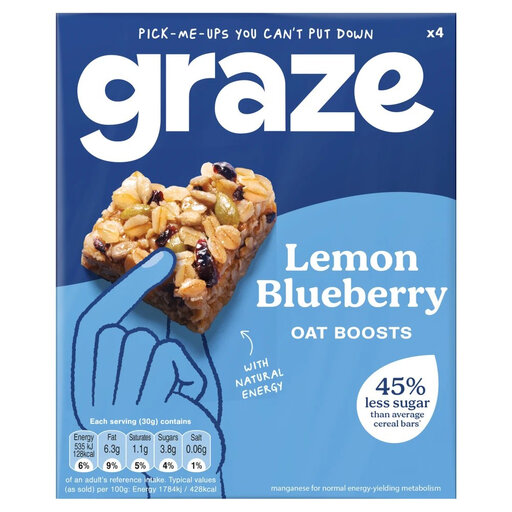
The Lemon Blueberry Oat Boost is a 30g oat-based snack.
Cashew Cookie is a date-and-cashew bar with a no-added-sugar claim.
Its Protein Peanut & Chocolate bar is a different format from a small cereal bar.
The Salted Caramel Protein Flapjack is a larger, 50g bar.
The Peanuts & Dark Chocolate Protein Bar is a nut-based, 40g example.
These options include smaller cereal and oat bars alongside larger protein bars. Compare the exact flavour and pack before choosing one for a school-holiday lunch.
 No image available
The 21.5g bar format can be considered as a small packaged addition to lunch. Check the current pack for nutrition and allergens; the product information identifies wheat, barley, oats, milk and soya.
 No image available
This oat-based option has a larger bar than the 21.5g Special K snack. Tesco Groceries lists 128 kcal per 30g Lemon Blueberry Boost; check the current pack’s ingredients and allergen warnings before packing one.
 No image available
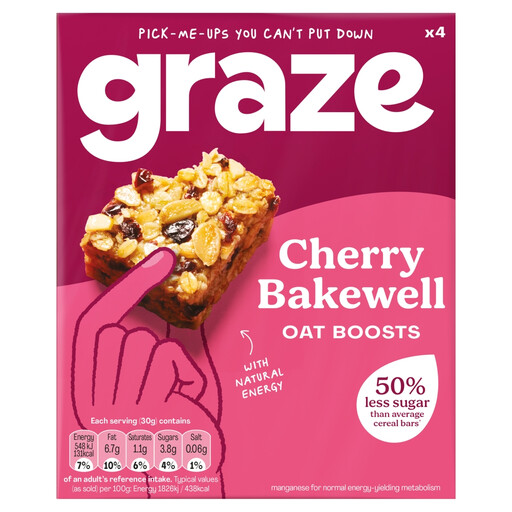
Compare this 30g oat bar by its own nutrition panel rather than assuming it matches the Lemon Blueberry flavour. The product information identifies almonds and oats; read the current pack for the full allergen and may-contain statements.
 No image available
This 40g protein-bar format is a larger snack option than the smaller cereal bars shown here. Its product information identifies peanuts, almonds, soya and milk; check the current pack if any of these matter for the child.
 No image available
Consider this peanut-and-chocolate protein bar when comparing 40g snack portions, rather than treating its protein label as a reason to skip the nutrition panel. Nature Valley UK lists around 10g protein and 4g fibre for its 40g Peanut & Chocolate bar; check the current pack for allergens.
Treat a bar as an addition, not the planned main item. NHS Healthier Families suggests basing a lunchbox’s main item on foods such as bread, rice, pasta or potatoes and adding fruit and vegetables.
Check both kcal per bar and the bar’s weight: the first describes the portion eaten, while a per 100g figure, where provided, helps compare different-sized products on the same basis.
No. nākd. describes its Cashew Cookie as having no added sugar but lists 155 kcal and 13.7g total sugars per 35g bar. Read the full nutrition panel for the portion being considered.
No. Tesco Groceries lists 224 kcal and 9.5g protein for a 50g TREK Salted Caramel Protein Flapjack. Compare calories and serving weight as well as protein when choosing between bar formats.
Read the exact current pack’s ingredients, allergen emphasis and may-contain statement, then check the provider’s food policy. The examples here have different nut and other allergen declarations; a claim about one dietary feature does not settle every allergy question.